This is the kit, not the history. The history, nine systems from a Nikonos in 1997, is in Every camera I have taken underwater. This page is what goes in the case now, by job, and why each piece made it in. Most of the reasons have more to do with my eyes and my luggage than with a specification sheet.
Wide: a lens on trial
I sold the WACP-1. I was looking at buying Nauticam’s FCP, and while I priced it, my wife was downsizing her own kit and her WWL-1 came to me. It goes on the flat port in front of the RF 24-50, and the next trip is its test. On paper it gives the same 130° as the WACP for about a quarter of the weight.
If it holds up, the flat port stays. If it does not, the FCP is next, and the flat port, the CMC-1, the WWL-1, the 8-15 and the Zen dome all go. Either way, the result gets its own article.
The WWL-1 sits on a bayonet, and that is the other reason it gets a chance. I can take it off on the dive and put the CMC-1 on in its place, so a wide dive does not end the moment something small turns up.
The wide optics side by side: the one on trial, the one I sold and the one I priced. Nauticam’s figures, each behind a 28mm-equivalent lens. The WACP was sharp at f/8 and at its best at f/11, but f/11 asks for a lot of light. On the 1DX Mark II I could stay at f/8 or a touch wider; on the R5 Mark II I paid for f/11 in ISO.
Fisheye: for the days that are already going well
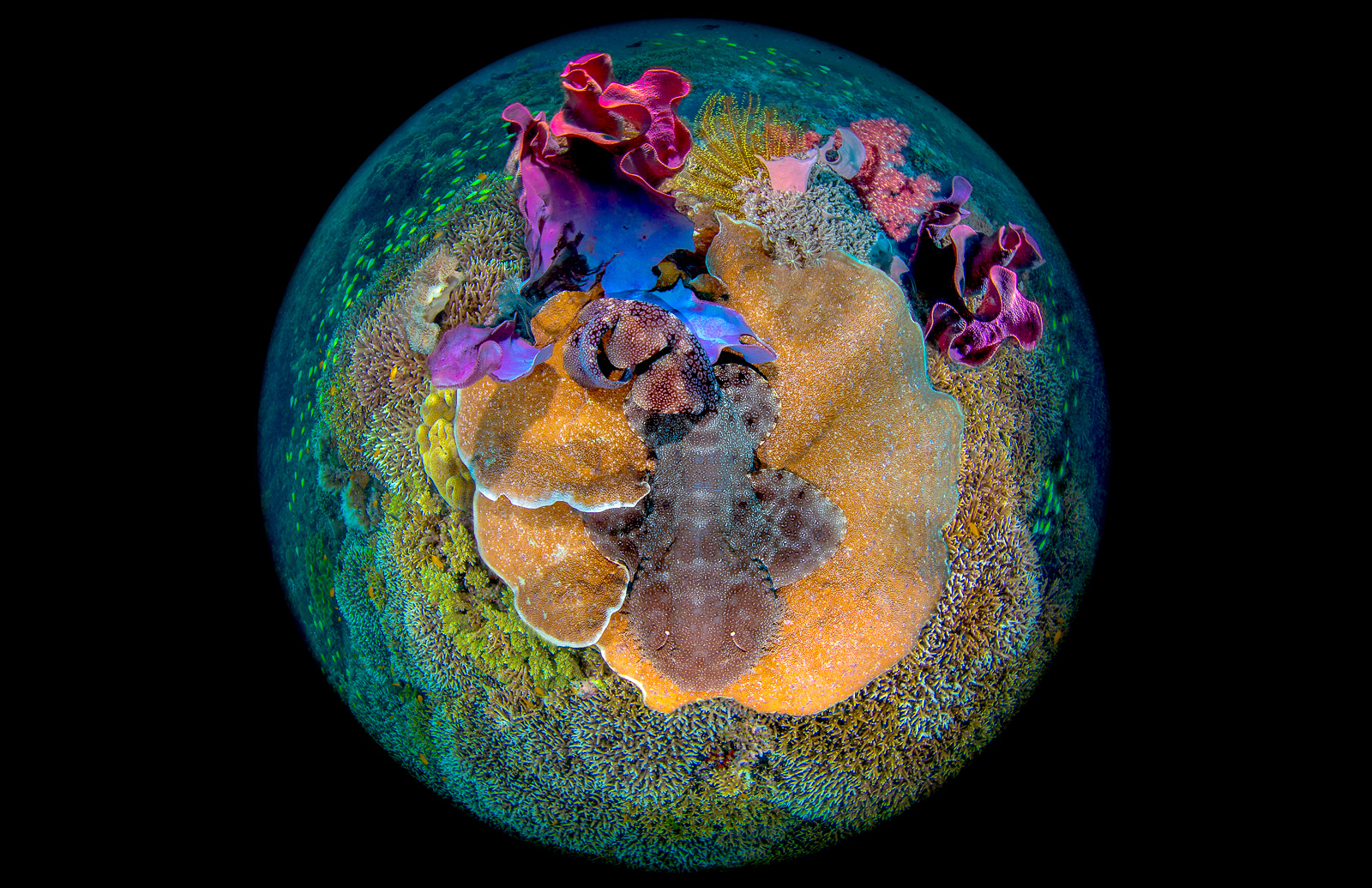
The 8-15 lives behind a Zen 100mm dome, and it comes out when I have a good day behind me. Once I have the frames I came for, I get creative, and the fisheye is where that happens: more width than anything else in the case, and the option to go fully circular. Some people love a circular fisheye and some people hate one. I would rather find out which a frame is on a dive where the safe pictures are already in the camera.
Macro: easier on the eyes
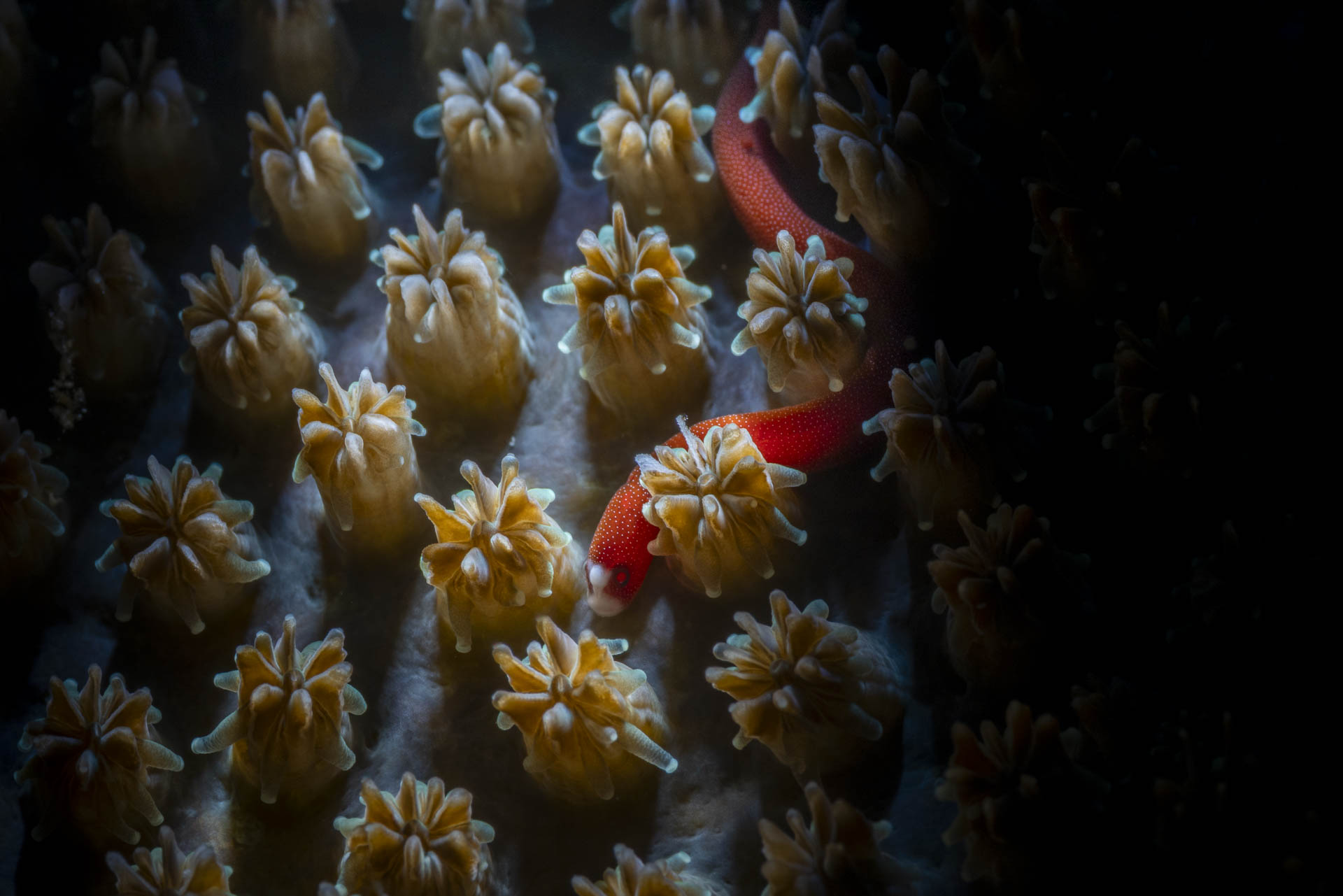
The SMC-2 was a great lens. I moved to the SMC-3 anyway, because as my eyes have got weaker I find it easier to work with. It shares a dual bayonet flip holder with the MFO-1, so the choice between them happens on the dive, not on the boat.
On blackwater and bonfire dives I use the MFO-1, not the SMC-3.
The three close-up optics, by Nauticam’s own figures. The CMC-1 works on the flat port with the 24-50, the other two on the 100mm. Magnification depends on the lens behind them, so read these as a guide.
For macro I focus through the 40° viewfinder, which has its own diopter adjustment. I set it for my eyes once, and I stop squinting.
Light: strobes for stills, lights for video
Most dives, the two Retra Maxis go down, because I shoot far more stills than video. When the dive is for video, the Keldan 4X lights go instead. Some dives I take all four. My wife shoots video almost exclusively, so the Keldans sometimes end up on her rig instead of mine.
The Retra LSD is the snoot. Cards slide into it to cut the beam into a square, a double square or a circle, which gives me control over the shape of the light I cast and where it stops.
The screen: for stepping back
The Kraken 7-inch monitor is the newest thing in the case, and it is there because it is bigger. On pelagics and large scenes I can hold the rig away from me and see the screen and the scene at the same time, instead of pressing my mask to a small display. On wide frames, where I am not looking through the viewfinder, I expect it to make focus easier to confirm.
What travels in the cabin
Nothing in this case is something I would tell you not to buy, because anything I did not like has already been sold. The one caution is size. The Maxis are big, and fitting them into a carry-on is a struggle, so they go in checked luggage. The Keldans, the WWL-1 and the CMC-1 travel with me in the cabin. If a bag goes missing for a couple of days, I can still shoot video, and I can still choose between wide and close.