Nine camera systems in thirty years, starting with a Nikonos on the boats in 1997. Every one of them cost more than the last, and not one of the first six is something I could buy again today. That is the honest shape of this hobby, and it is worth knowing before you spend.
What follows is not a buying guide. It is what those systems taught me, in the order they taught it, and most of the lessons cost money to learn.
Read down the right-hand column rather than the left. The housings changed five times in thirty years; the lighting changed every time and never once got smaller. Two strobes became two strobes and a focus light, then two strobes and two video lights at ten thousand lumens, then eleven. Nothing on that list was bought because the camera needed it. Each one was bought because the last system showed me something I could not light.
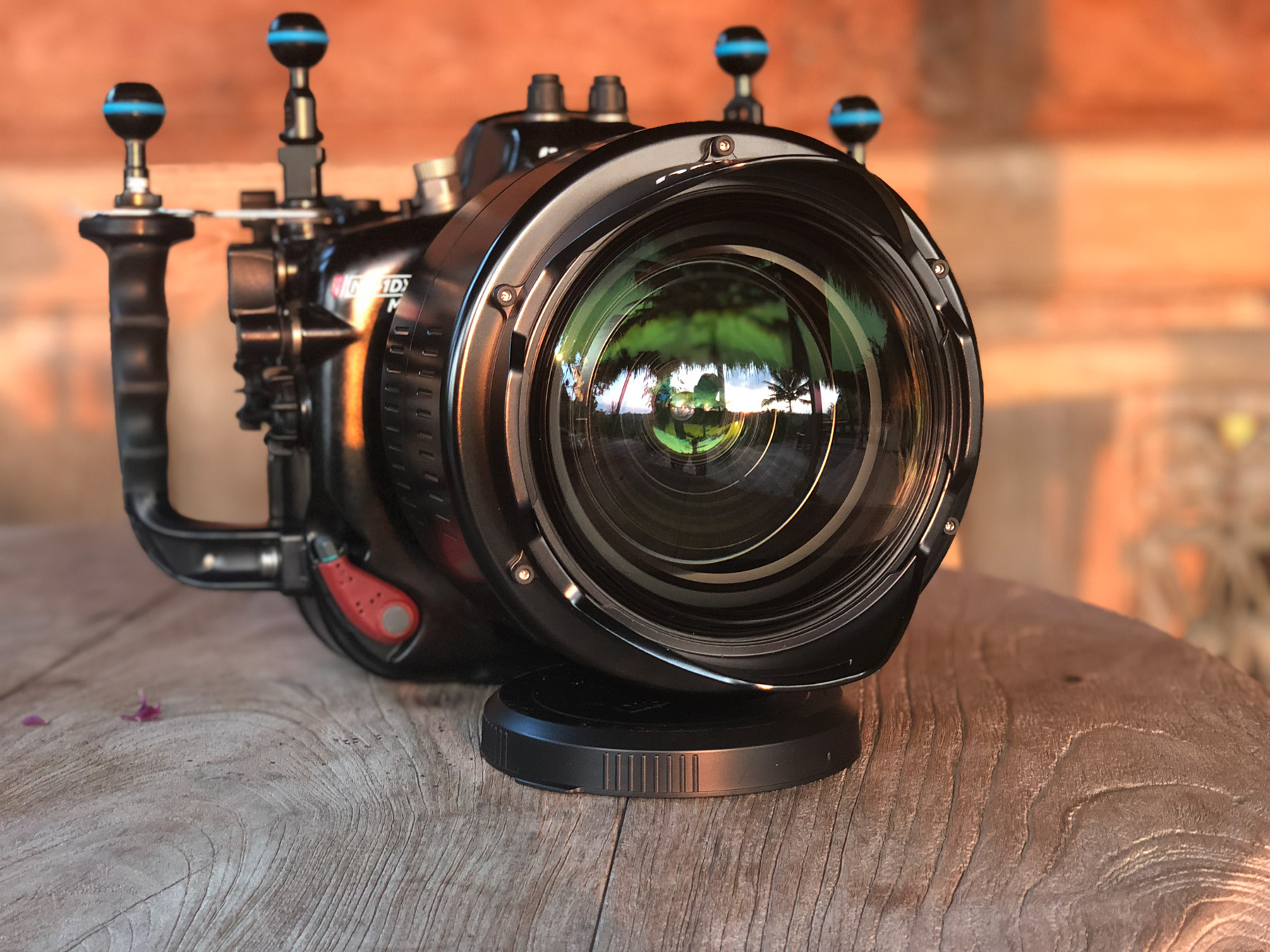
House the best camera you can afford, not the one you own
I had a Canon 40D when I first priced a serious housing. The housing was going to cost me around $2,500 on its own, and the camera inside it was already two generations behind. So I bought a 5D Mark II first and housed that instead.
That is the one decision in thirty years I have never second-guessed. The housing is the expensive, illiquid half of the purchase and it is welded to one camera body for its whole life. Put a compromise inside it and you have bought the compromise twice.
One of them changed what I could shoot
Eight of those nine systems were upgrades. The 1DX Mark II was a change of kind, and for two reasons that have nothing to do with resolution.
Low light. Twenty megapixels across a full frame is a large photosite, and large photosites see in the dark. After two years of a 5DsR that wanted every stop I could give it, having a camera stay clean where the light ran out meant dusk, overhangs and deep walls became things I could shoot rather than things I photographed badly. It is the exact inverse of the trade in the resolution piece: I gave up detail and got the water back.
Video quality, and white balance. The footage itself was a step change, and underwater video lives or dies on white balance. Water takes the red out first and keeps taking it as you descend, so you are correcting a target that moves with every metre. Getting it to sit properly meant ambient-light video stopped being something I repaired afterwards and became something I could shoot on the dive. That is the single change that pushed me from carrying a focus light to carrying ten thousand lumens of video light, not because the camera needed it, but because footage was suddenly worth lighting.
Those two things are why that system stayed on the boat for eight years, longer than anything before it.
Weight is the constraint, not price
My housing and accessories live in a Pelican case that weighs 49.6 lb. That is deliberate: it clears the fifty-pound checked limit with four ounces to spare, which means dive gear, clothes and everything else has to fit in a second bag under the same limit. Every purchase after that point is a weight decision before it is a money decision.
My wife dives a Canon G10 with a single strobe. Her whole system fits a carry-on Pelican roller inside the dimension limits on most flights. It weighs up to 32 lb, so it is occasionally gate-checked, but it is gate-checked inside a bulletproof case, which is a different problem from a flooded one.
Batteries decide how long the day is
I have strobes that take four AAs each. A full day of diving needs at least sixteen charged cells, and that is before focus lights. Sealed rechargeable packs are tidier right up until the surface interval is shorter than the charge, at which point you need two of everything.
Cold water shortens both ends of this: your bottom time and the battery's. If you are building a rig for cold water rather than the tropics, work out the day's power budget before you work out the optics.
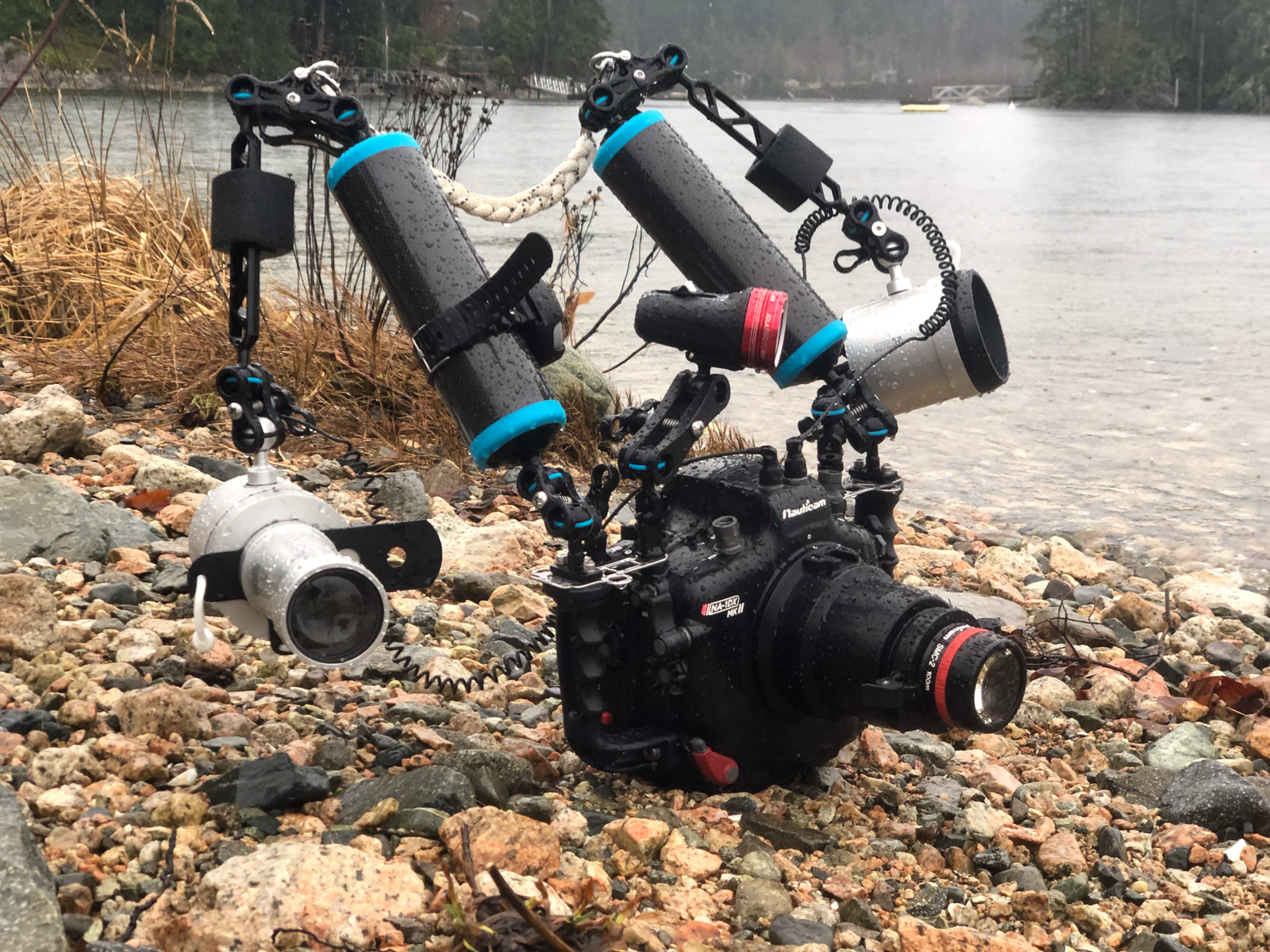
Buoyancy is a property of the whole rig, not the housing
The first dive I did with the WACP, the rig was three pounds positive with the same carbon-fibre floats that had balanced it perfectly the week before. Twelve pounds out of the water, and it still tried to take me up.
I want a system slightly negative. Too negative and your forearms are finished by the third dive; too positive and you spend the whole dive being lifted. Neither is a preference you can settle on land, so test in shallow water somewhere you can stand up. Drag and buoyancy will cost you more bottom time than gas planning will.
Insure it, and assume the airline will not
Most airline liability for checked baggage runs out around $500, which does not cover a port. Insure through household cover or a diving policy. Use a hard case, use carry handles on land, and rig a tether that lets you let go of the camera without losing it. A tether that compromises your ability to get out of trouble is worse than no tether.
Arrive three days early
Gear gets delayed. Usually because someone in the queue behind you put a lithium battery in the hold. I build two or three days into the front of every trip before the diving starts, so a 48-hour delay is an inconvenience rather than a week without a camera. On a remote route like Misool or Browning Pass, that buffer is the difference between shooting the trip and watching it.
The last one is not about equipment
Photographers have a reputation as the worst buddies on the boat, and it is earned. A rig this size makes you slow, absorbed and wide. Watch what your fins are doing, know where your buddy is, and do not move an animal to improve a frame. The best gear on the boat does not buy you the right to wreck the site you came to photograph.