Misool, Southern Raja Ampat, Indonesia
Guides  /  Southern Raja Ampat, Indonesia
Destination guide

Misool

Some places exceed expectations. Misool redefines them.

Last visited 2026Southern Raja Ampat, IndonesiaResort · day boats Level AdvancedTen days, all in $$$$$Scores reviewed August 2026
ScoreWhat it takesWhy this placePicturesBest time to diveSignature divesOperatorsBefore you goWho it suitsGetting there
01The score

Once a network of shark-finning camps, stripped bare by the fishing that followed, this corner of southern Raja Ampat has become a quiet proof of what marine recovery can look like. Its 300,000-acre no-take zone now holds reefs that have grown past simple survival. The Misool Foundation puts fish biomass inside the reserve at more than three times what it was.

Underwater · the place
The story

Twenty years ago these waters were a shark-finning camp. Men worked these reefs cutting fins and dumping the bodies, and what the finners left, dynamite and gillnets took. The zebra sharks went early—slow, docile, asleep on open sand where anyone could reach them—until so few remained that the population could no longer rebuild itself.

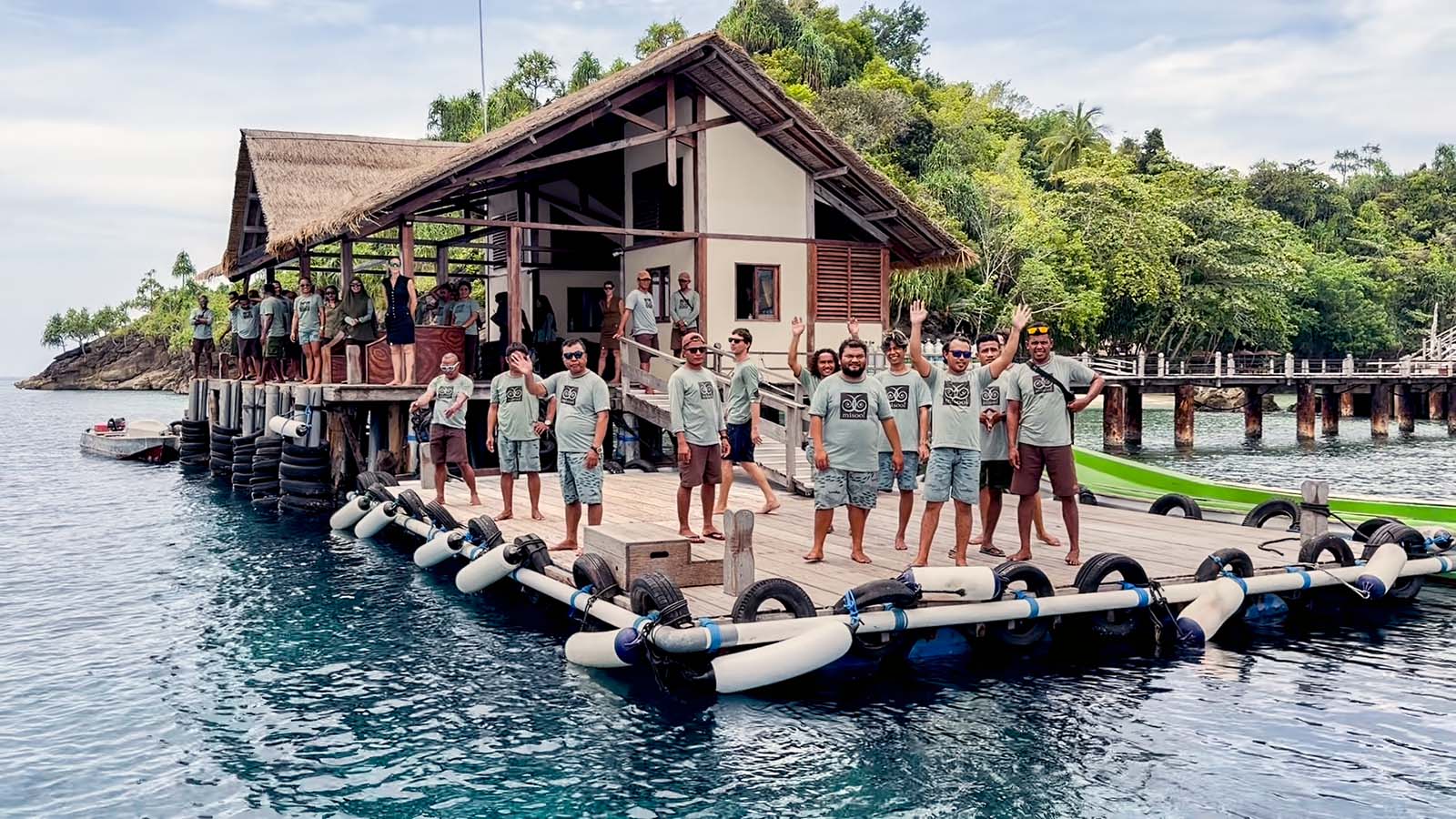
Today rangers who grew up in the surrounding villages patrol the 300,000-acre reserve around the clock. The strategy works: there are twenty-five times more sharks inside the boundary than in the water immediately outside it.

The zebra sharks could not return on their own, so they are being carried back. Aquariums around the world ship eggs to a sea nursery off Batbitim, where the pups are raised until they can feed themselves, tagged, and released over the reef. Seventy-five now swim in Raja Ampat. It will take two hundred to three hundred before the population holds itself together.

The reserve is funded by the beds. Your week pays the rangers, the patrol boats and the nursery. You can go and watch a species being put back, knowing your presence is the reason it survives.

02What it takes

Am I good enough for this?

Yes, if you can descend without fuss and hold position in moving water. Nothing here is deep or technical and every dive is a backroll off a day boat. What Misool asks is that you can get down before the current takes you past the pinnacle, and that you can hover close to coral without touching it. The guides will hook you in; they cannot fix your buoyancy for you.

01
Open Water
02
Intermediate
03
Advanced
04
Demanding
05
Expedition
Water
28–30 °C
3 mm or skin
Visibility
20–30 m
Plankton drops it, and brings the mantas
Best months
Oct – Apr
Resort closed mid-year
Format
Resort
Day boats, 3–4 dives
Getting there
Sorong (SOQ)
Then ~4 hr boat transfer
Current
Moderate to strong
Site-dependent, tide-driven
03Why this place

Why Misool?

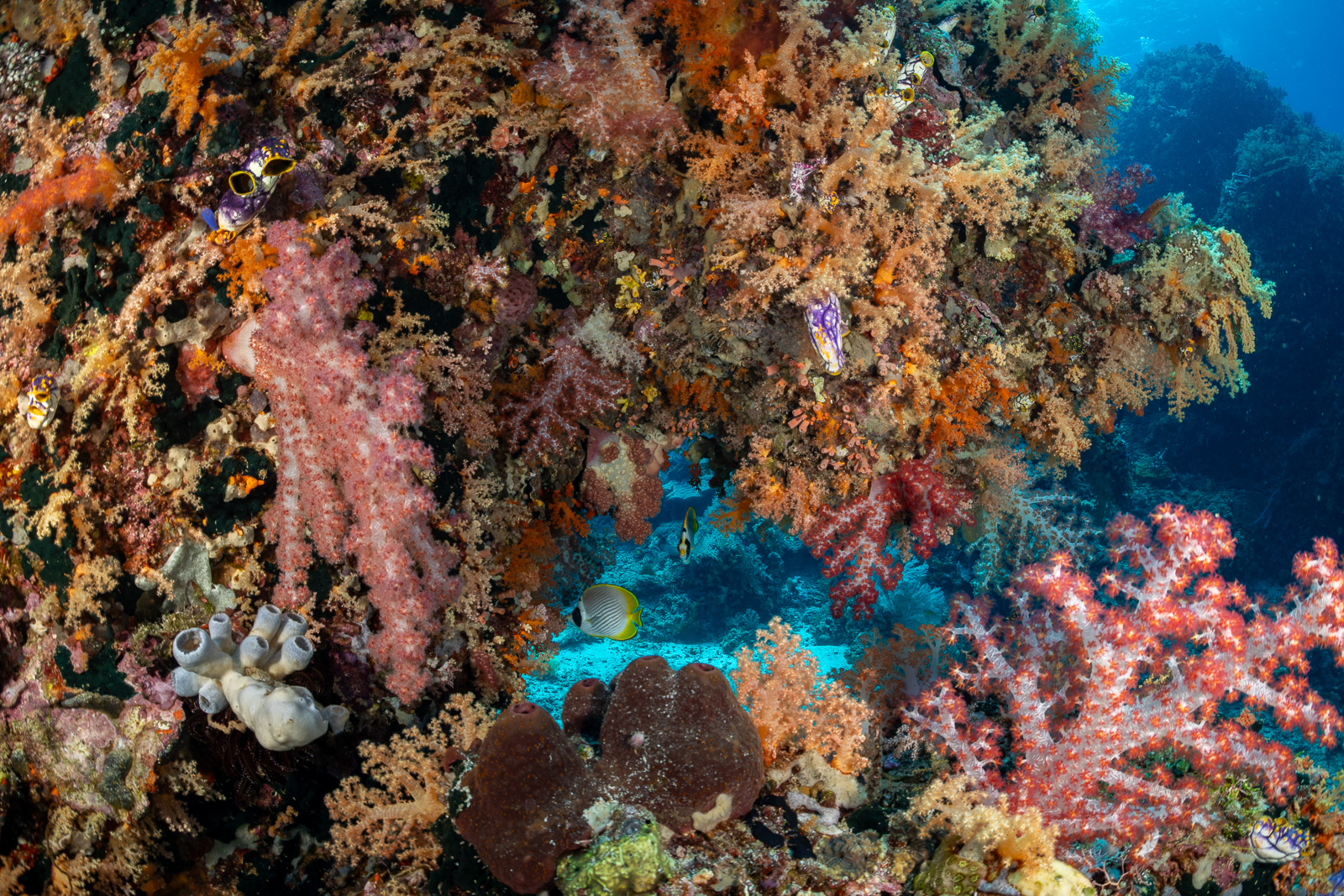
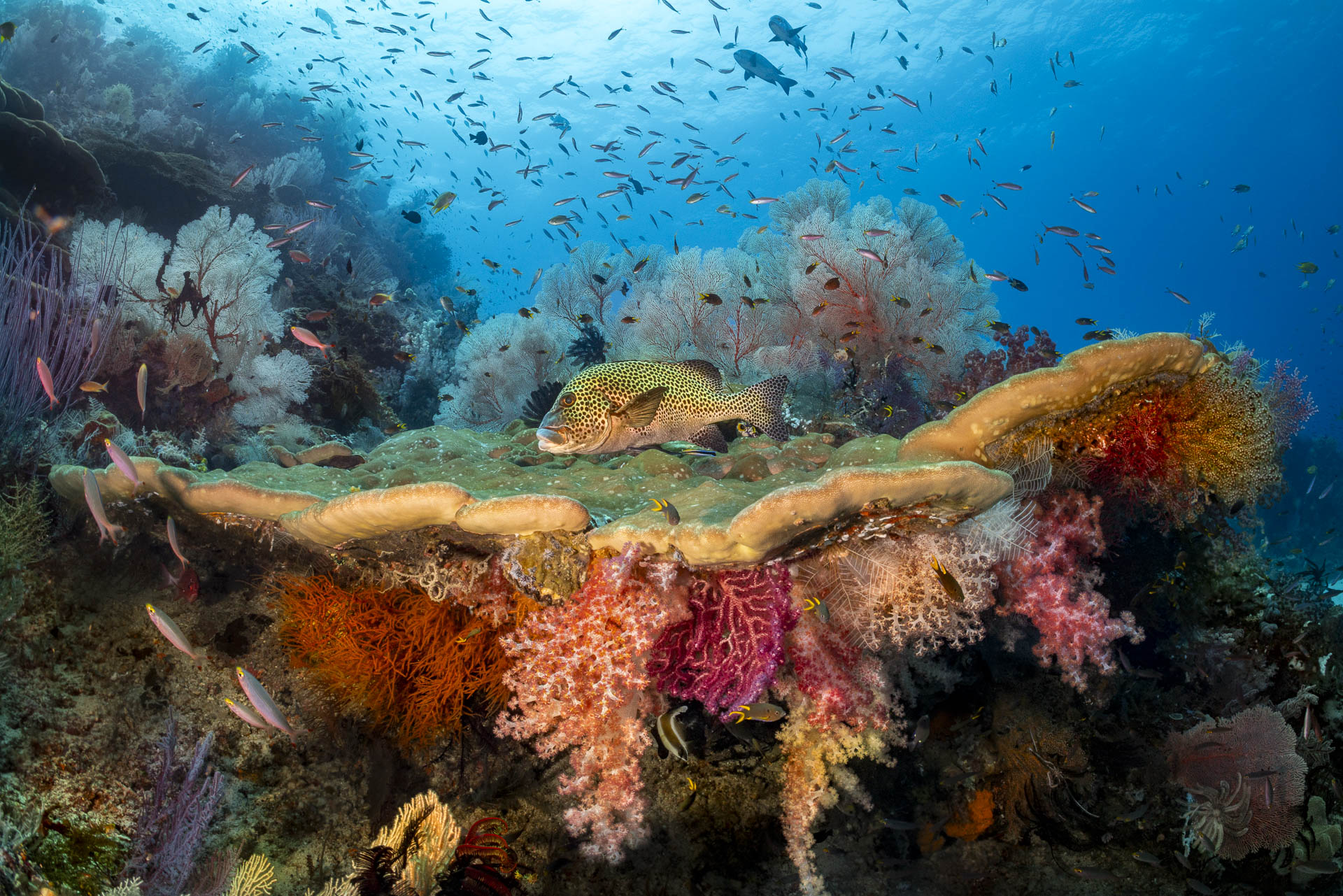
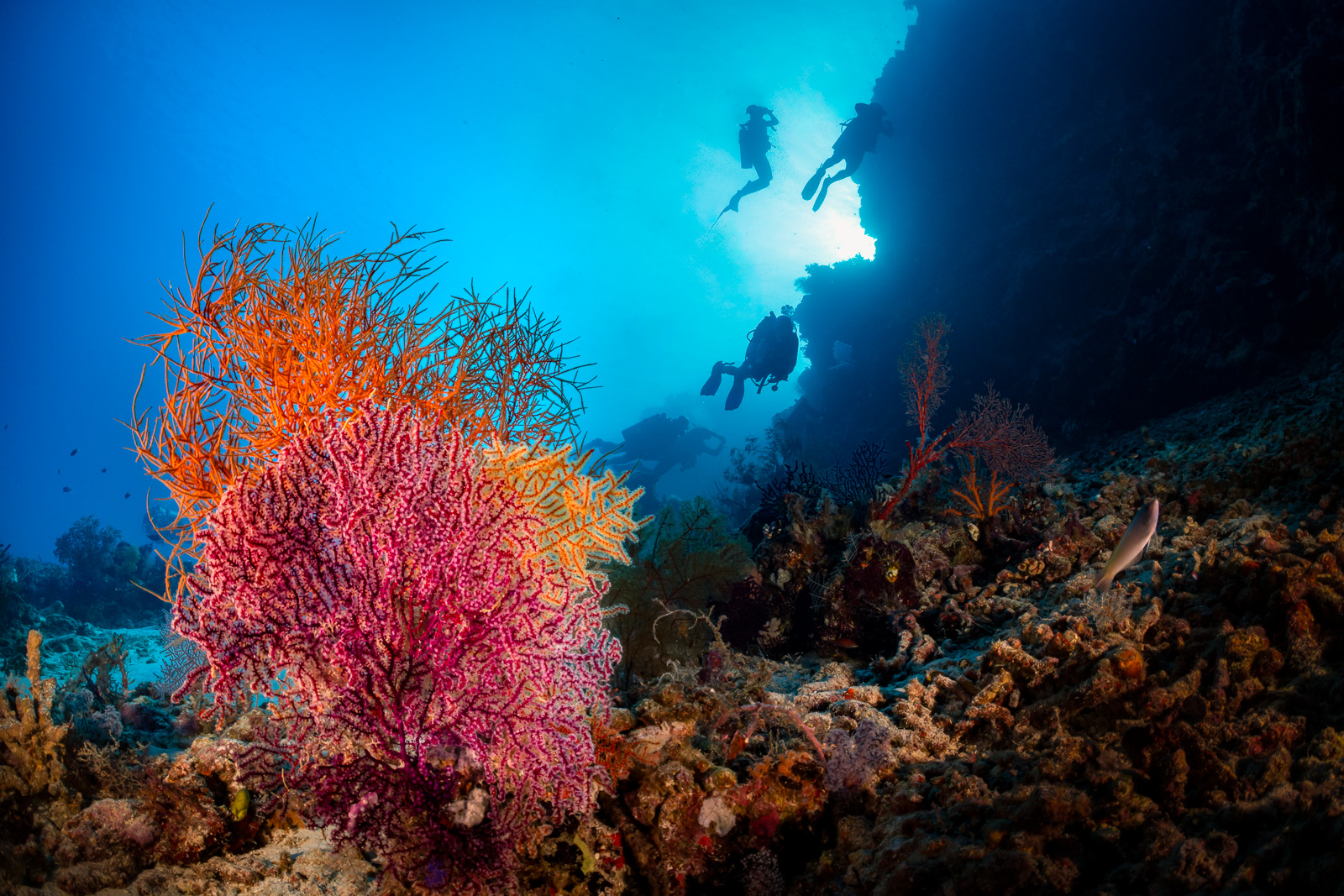
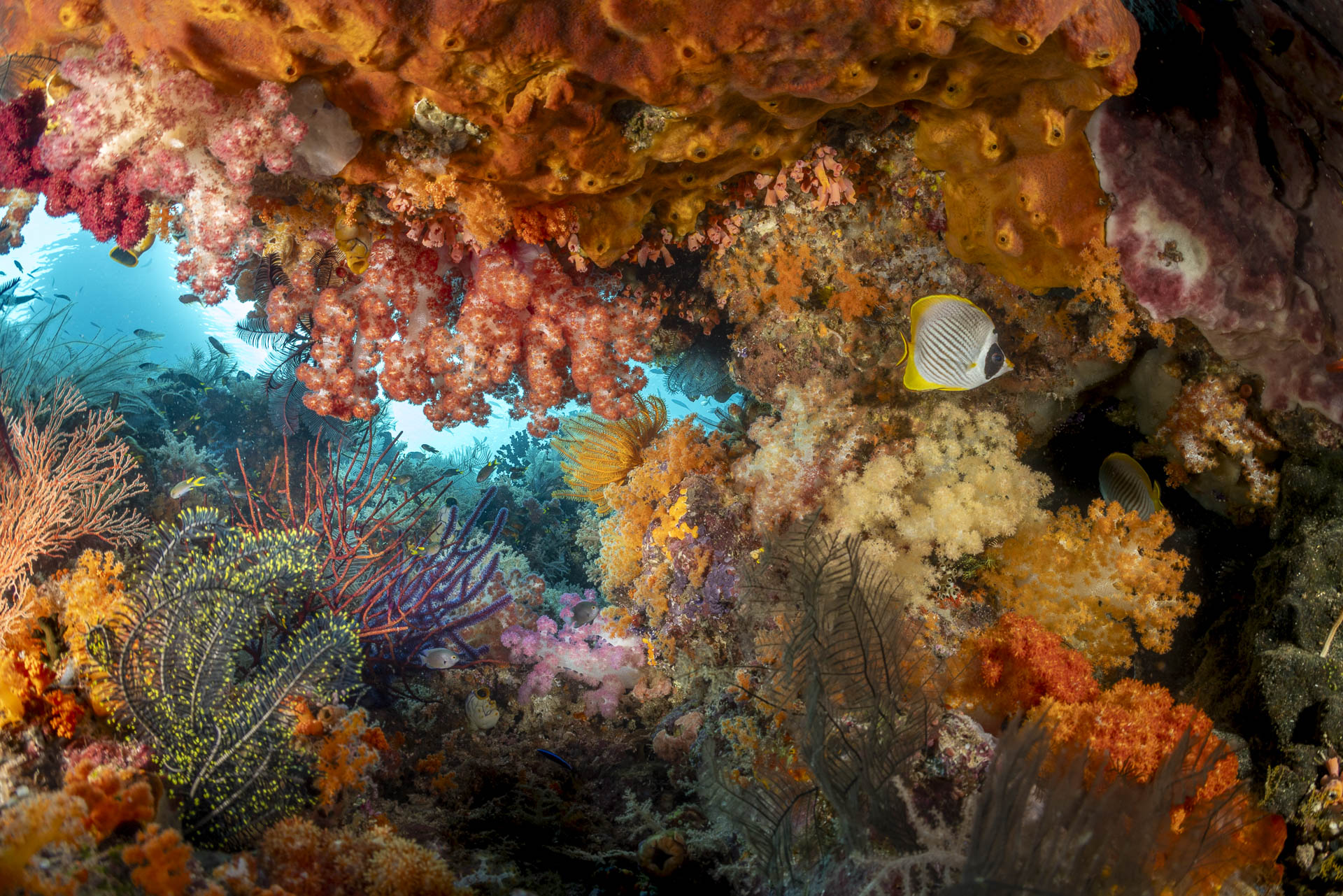
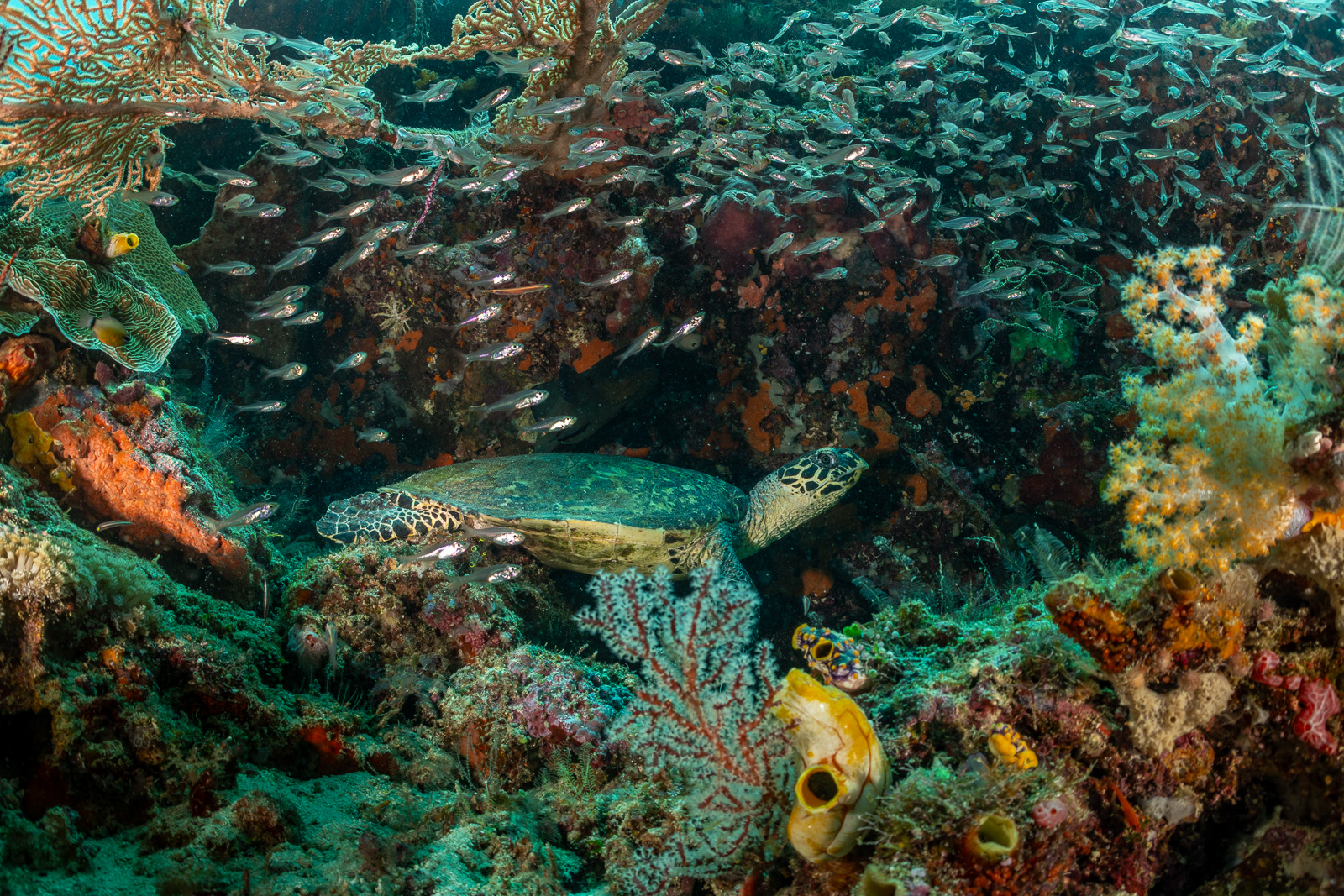
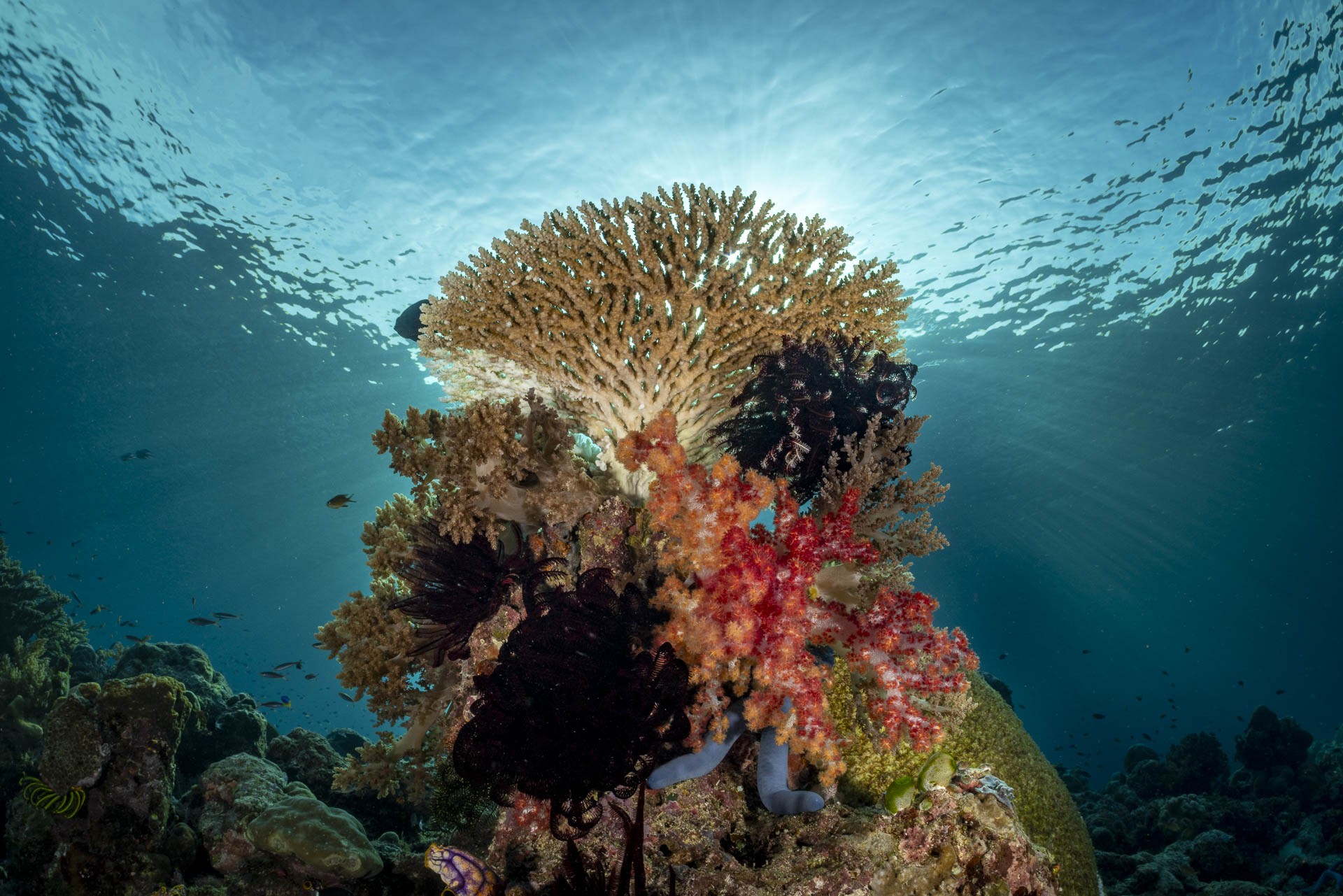
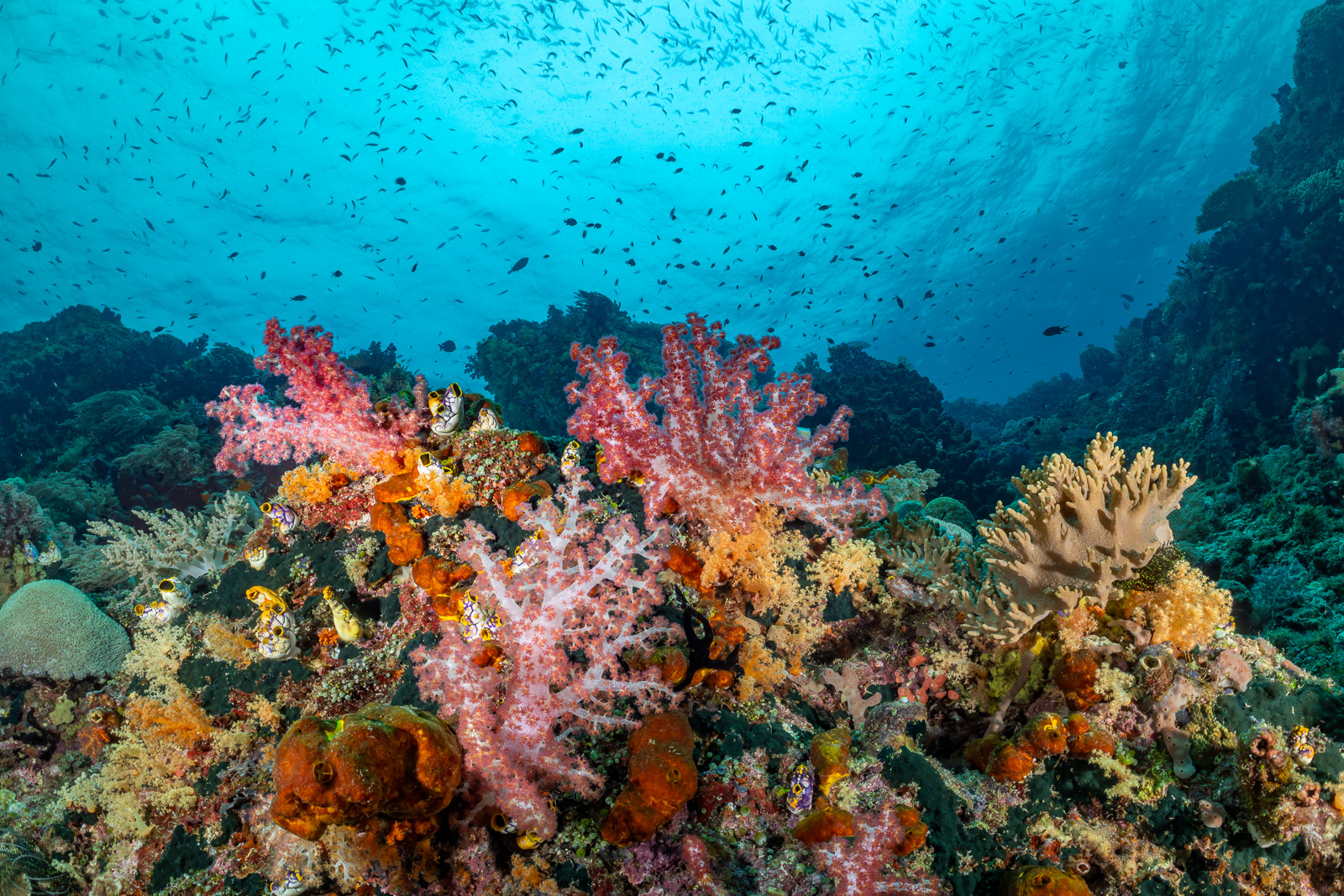
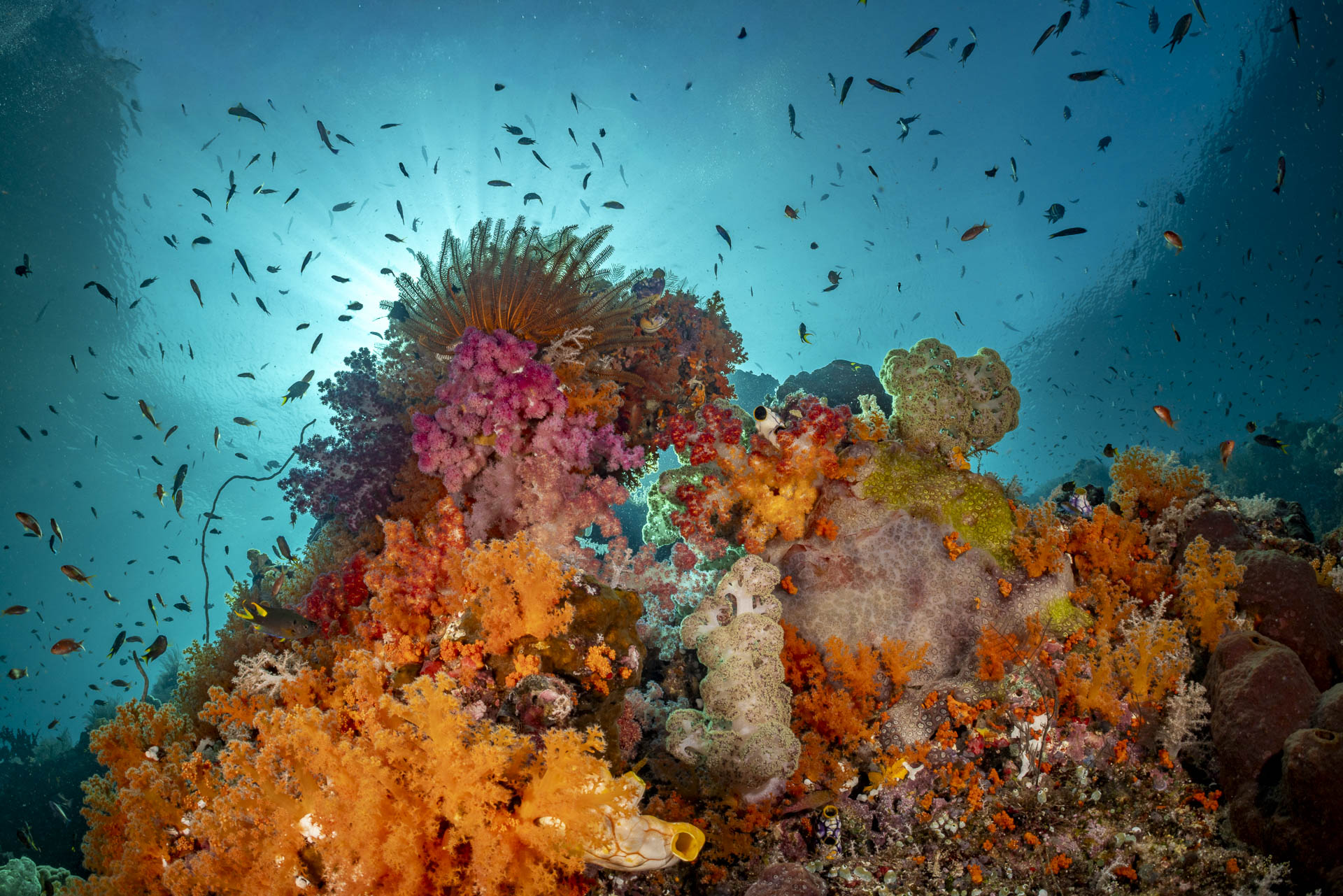
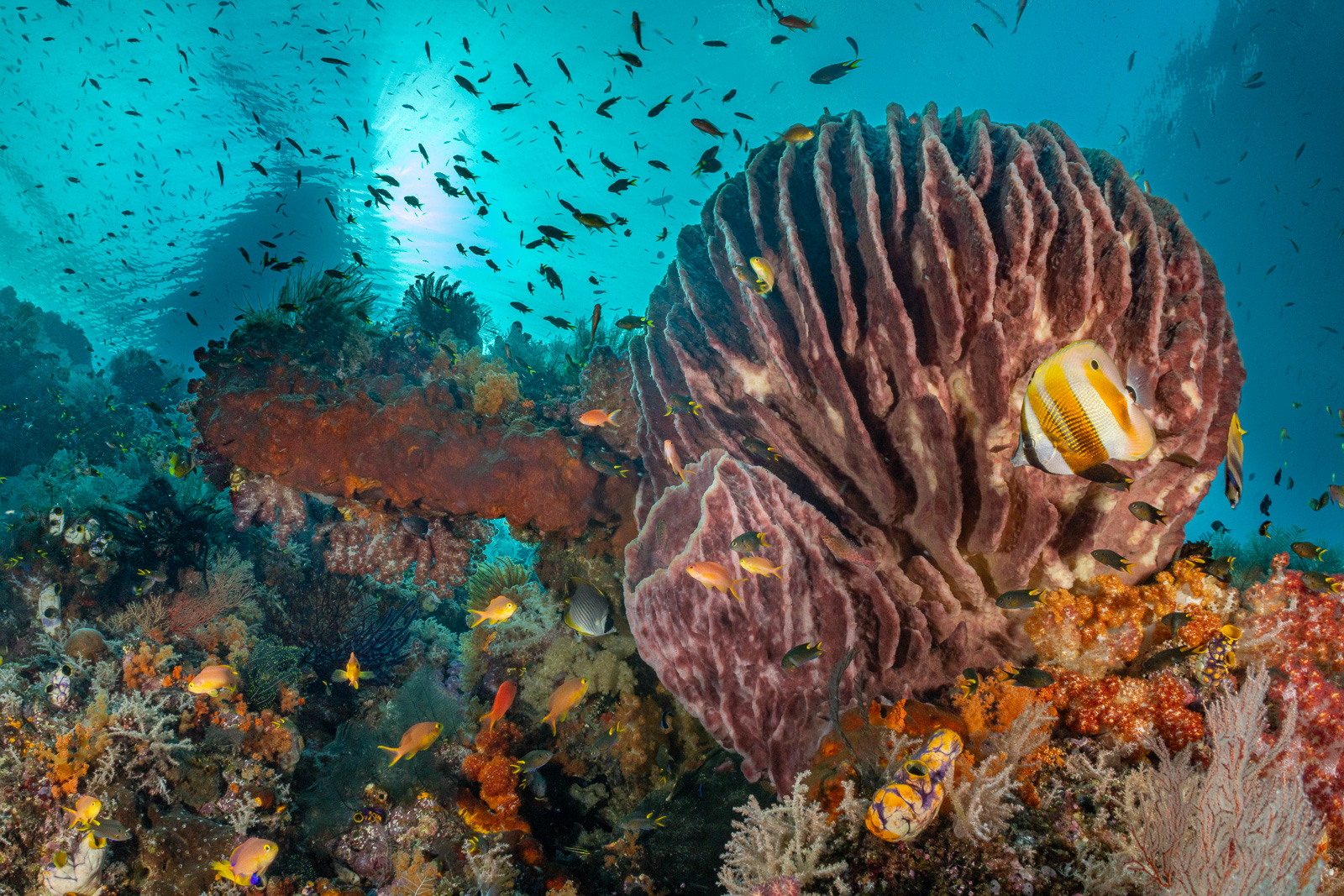
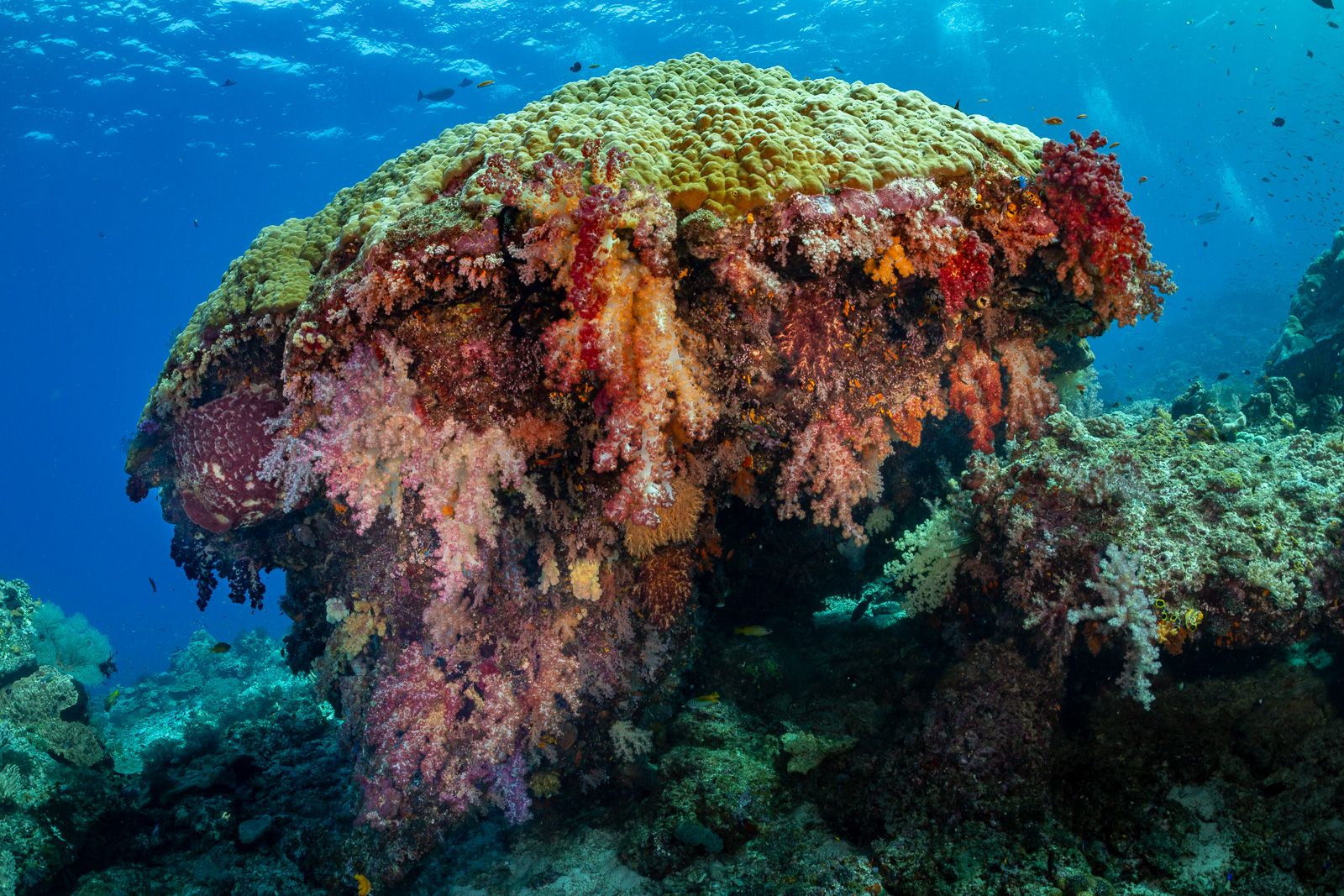
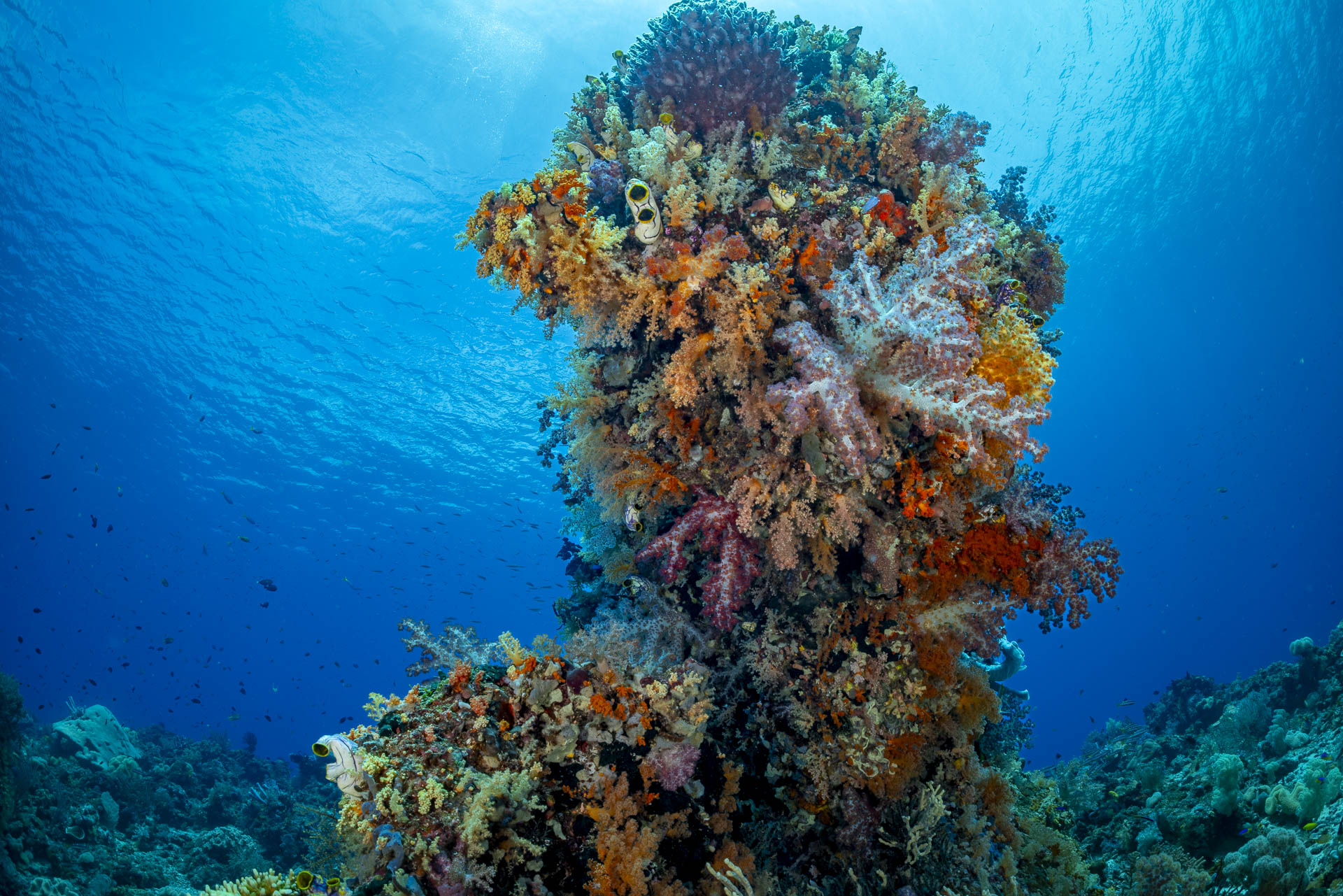
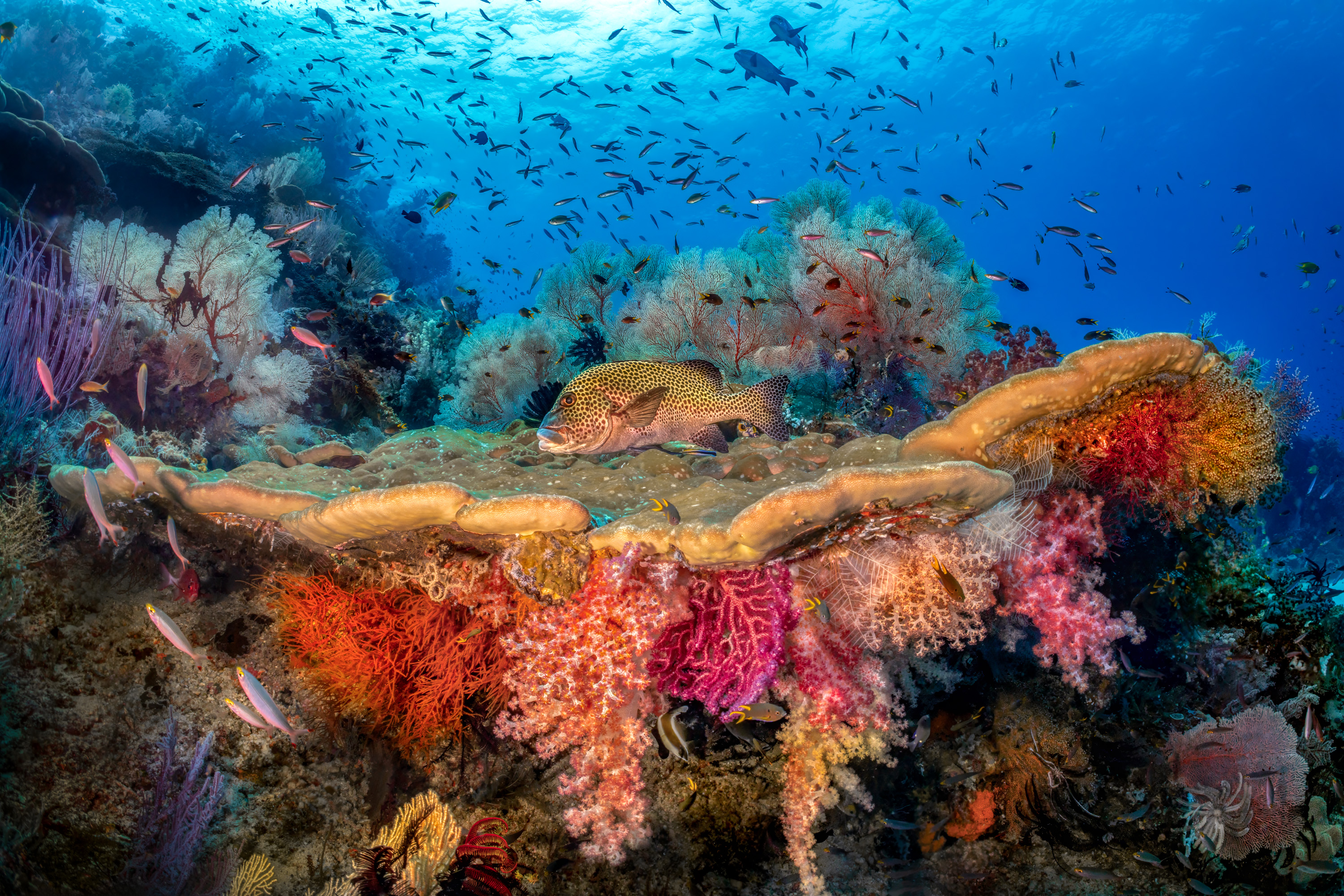
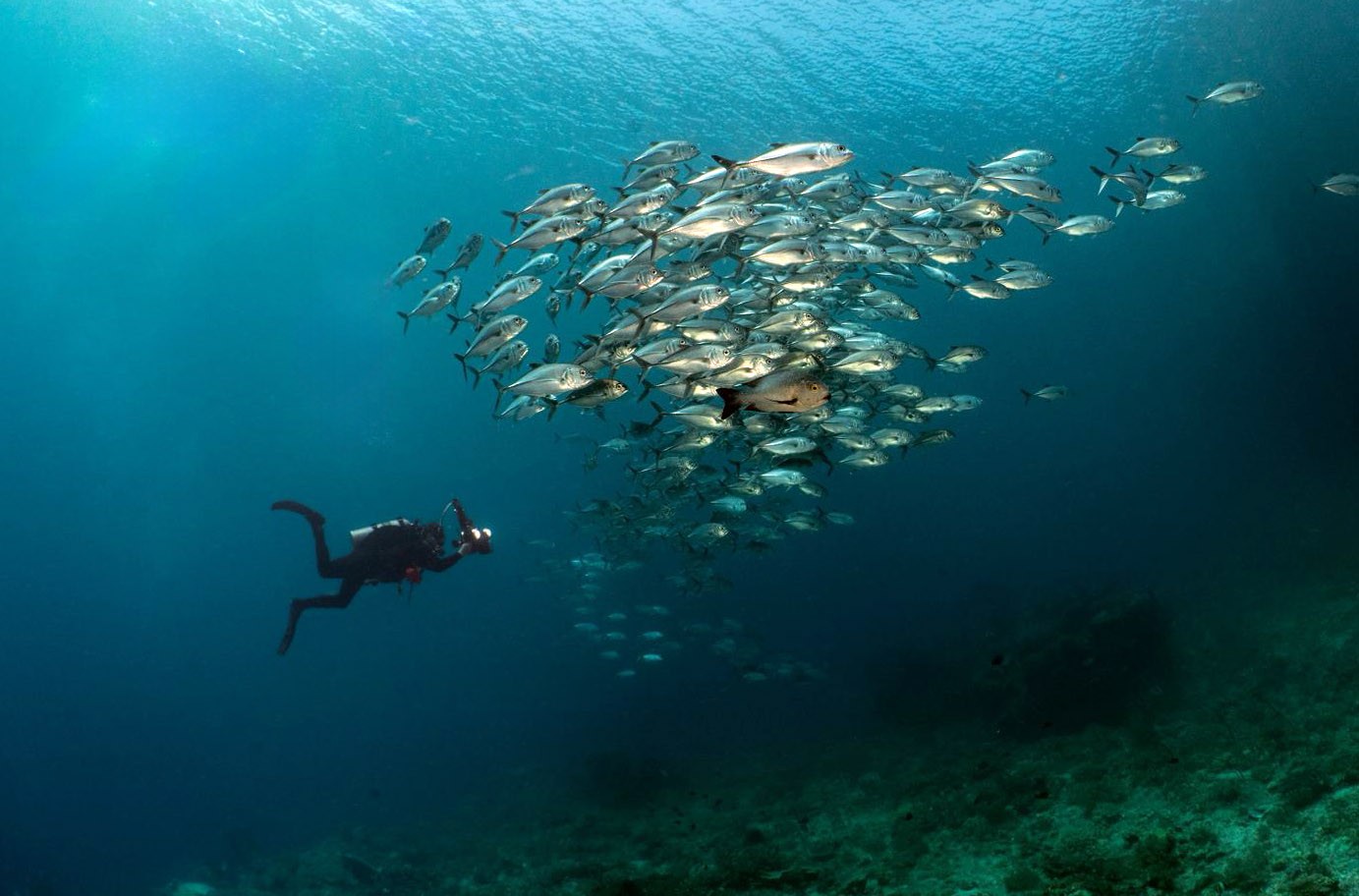
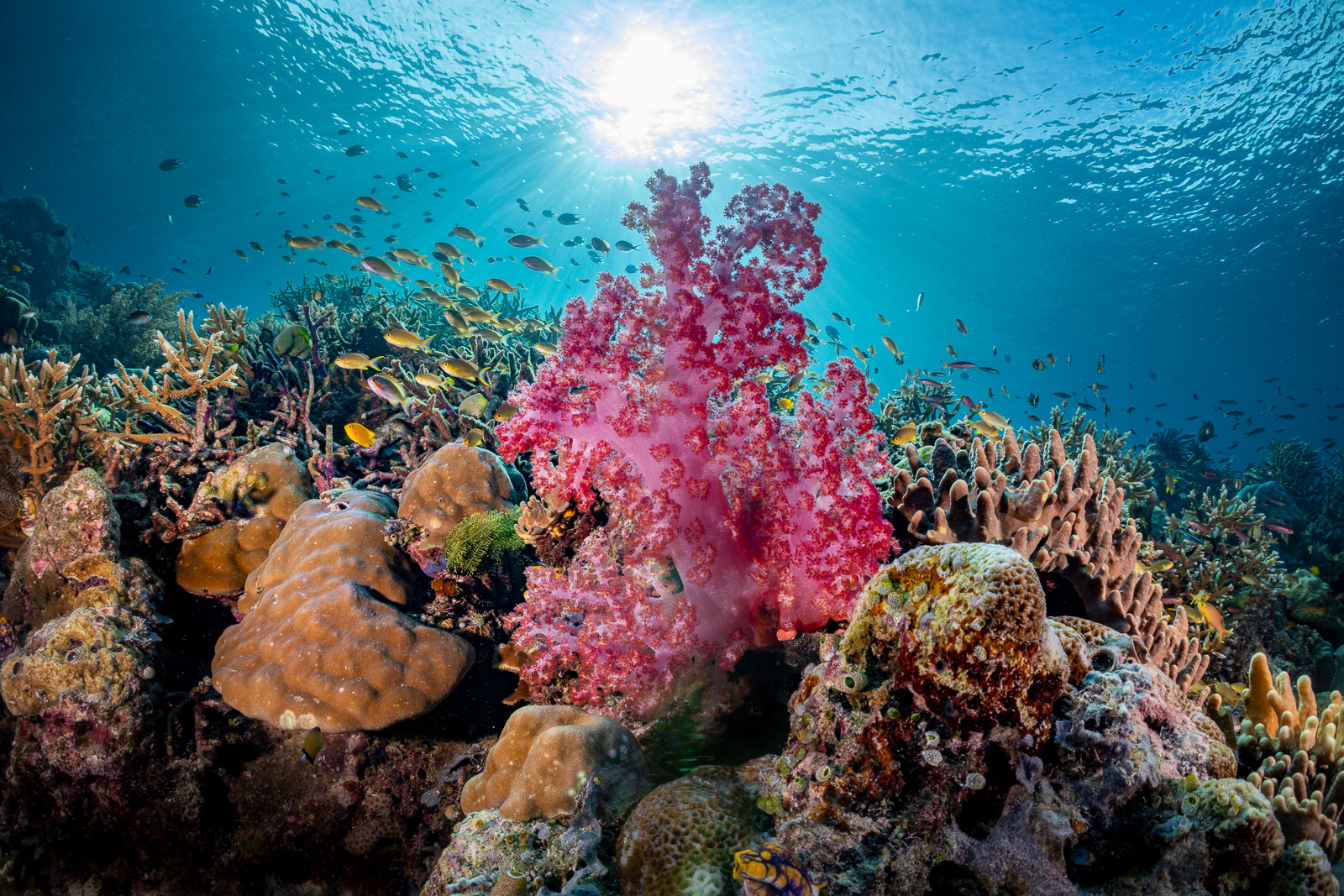
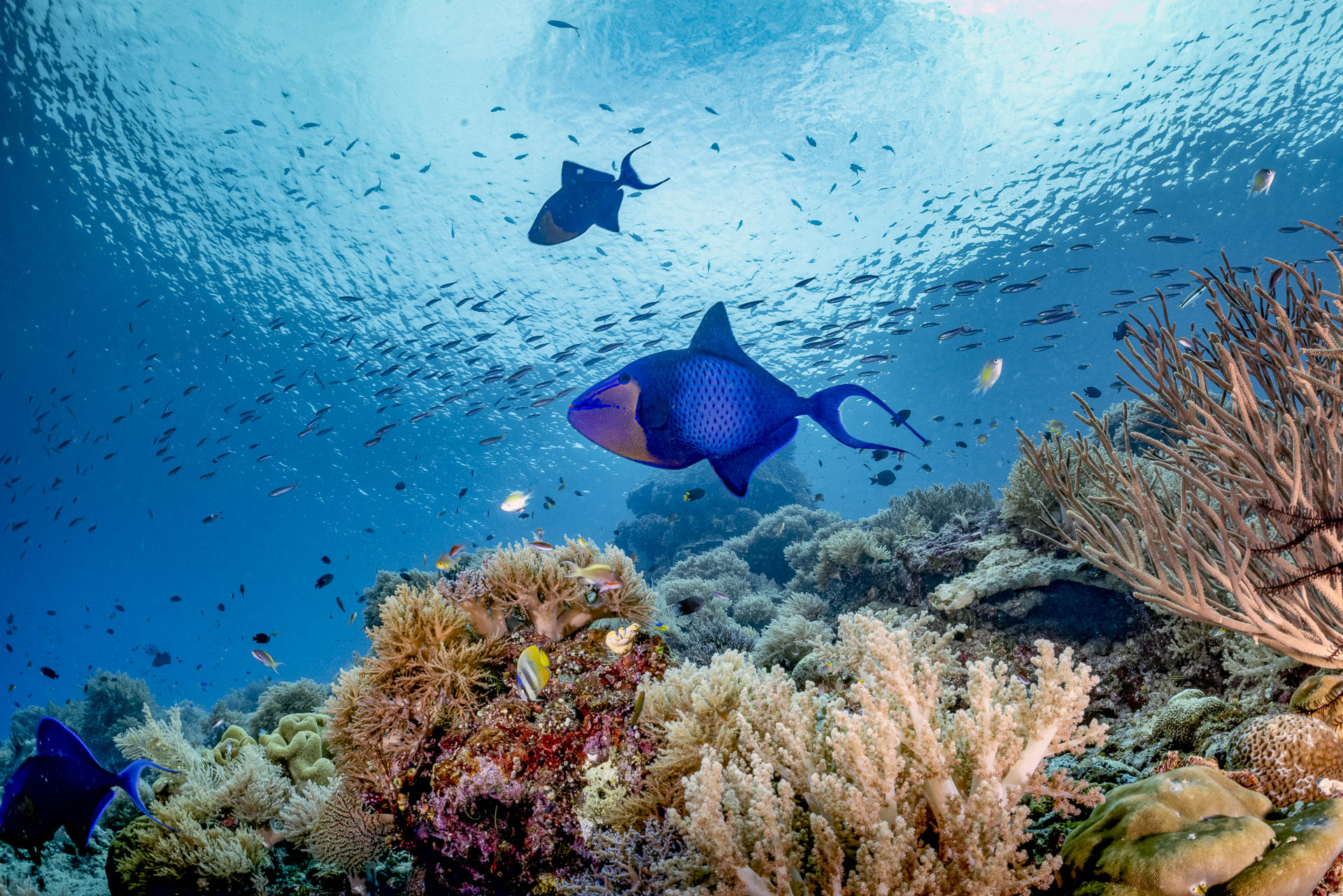
You see the weight of that protection the moment you descend. Soft corals blanket the submerged pinnacles from their shallow crowns down to the deep sand. Giant sea fans reach into the current, framed by steady schools of batfish and reef fish filling the water column. Blacktip and grey reef sharks work the reef edges.

What separates Misool from other destinations is not a single signature site or a lucky encounter. It is the consistency. Dive after dive, the standard never drops.

There are many destinations where you can see healthy reefs. Misool stands apart because you are looking at an ocean that is actively getting better—and your stay is what pays for the patrol boats that keep it that way.

Misool asks two different things of a photographer

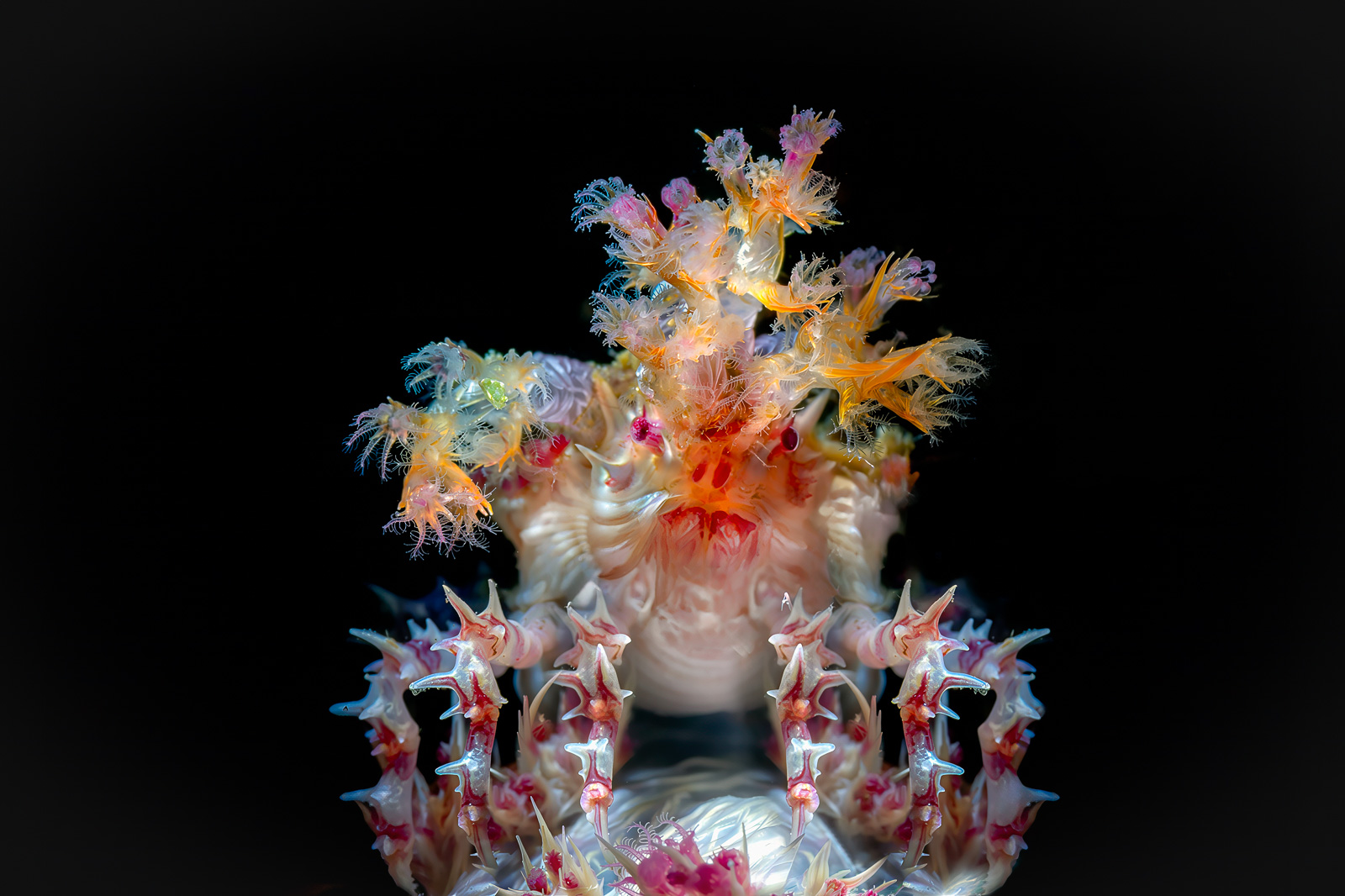
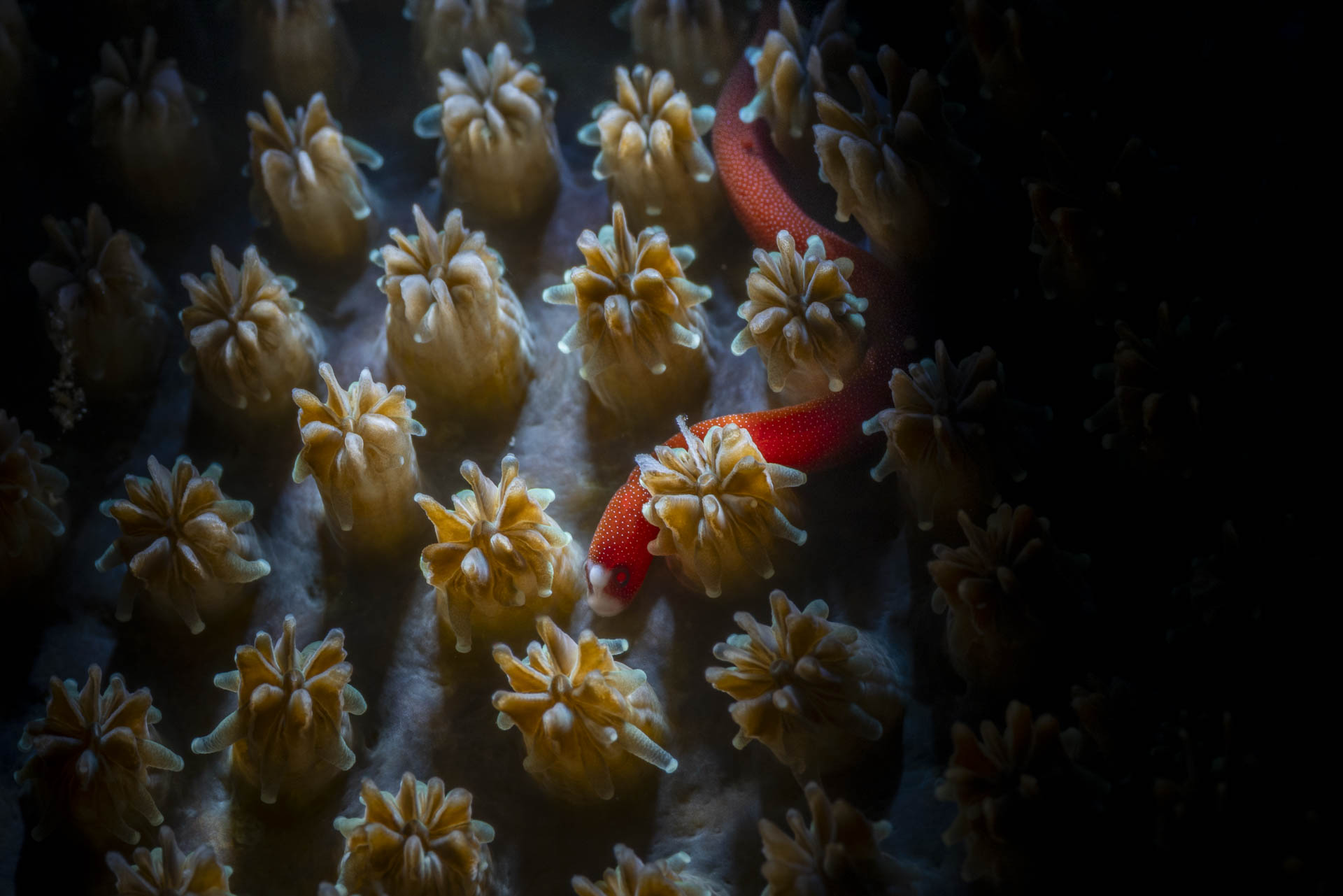
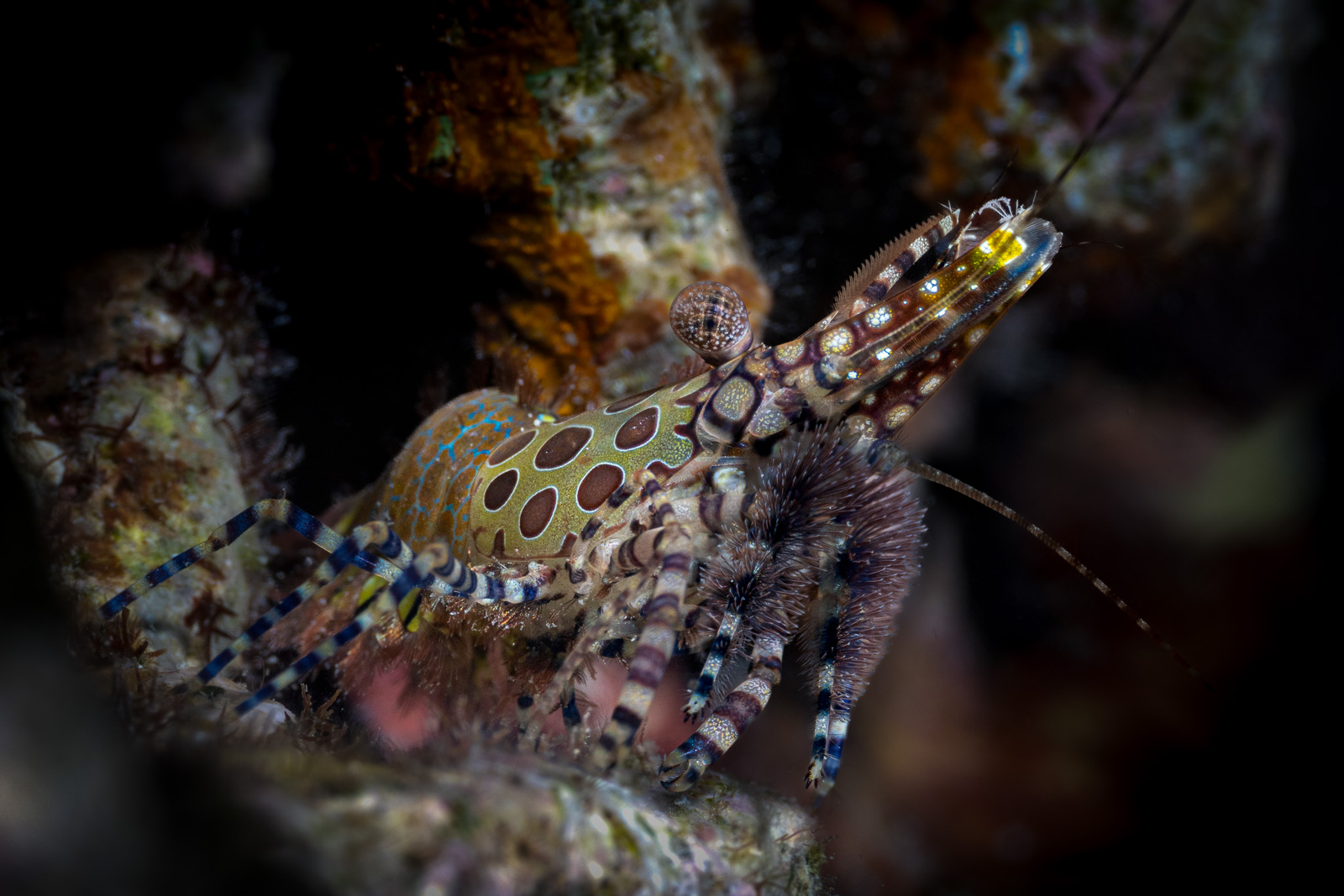
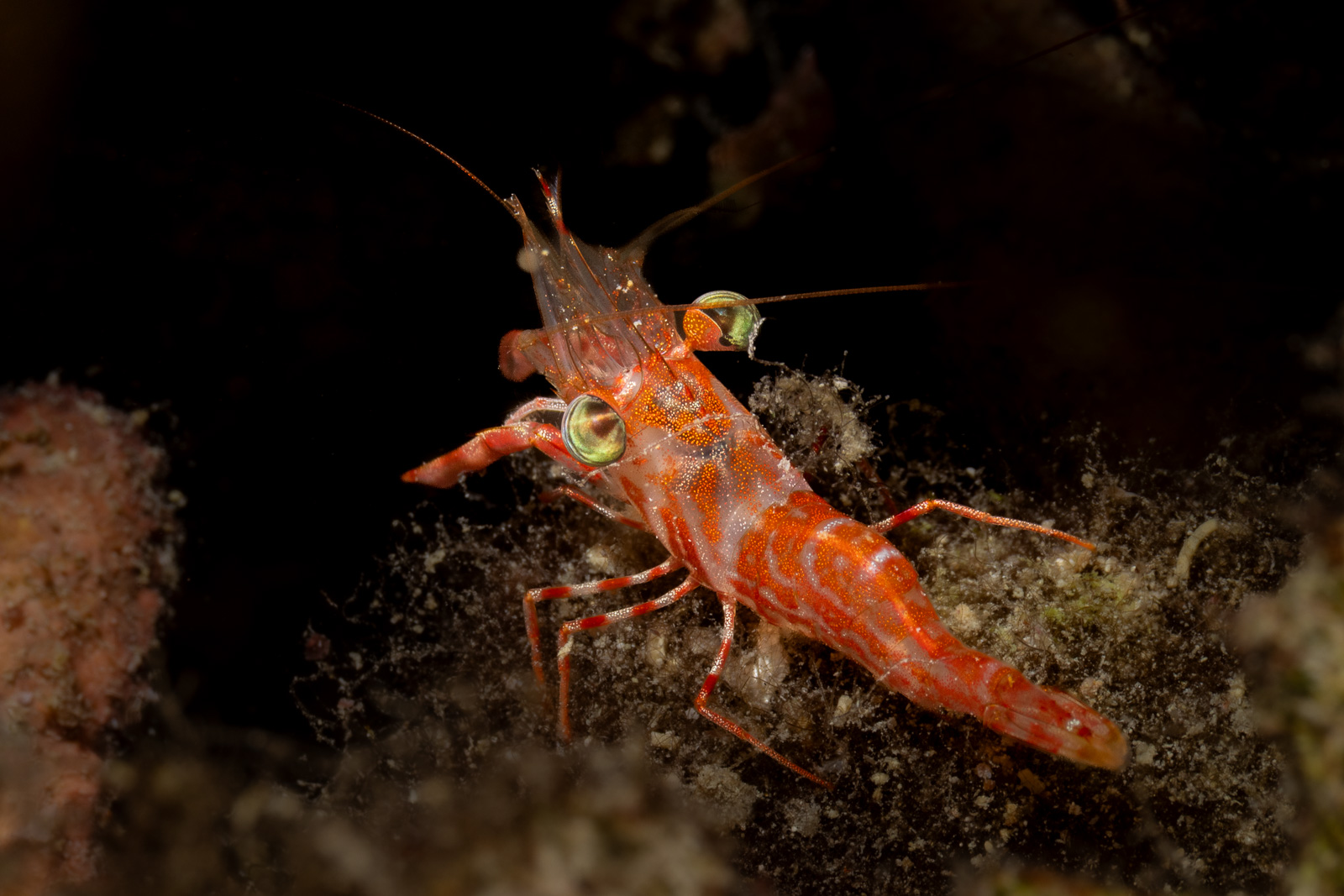
Wide-angle opportunities are constant, driven by limestone seascapes, schooling pelagics and dense coral gardens. The same reefs also reward patience: slow down, look into the fans, and the macro life appears—pygmy seahorses, ghost pipefish, ornate crustaceans tucked into the corners. Bring both lenses and decide on the boat.

04The pictures

Twelve frames from one reserve

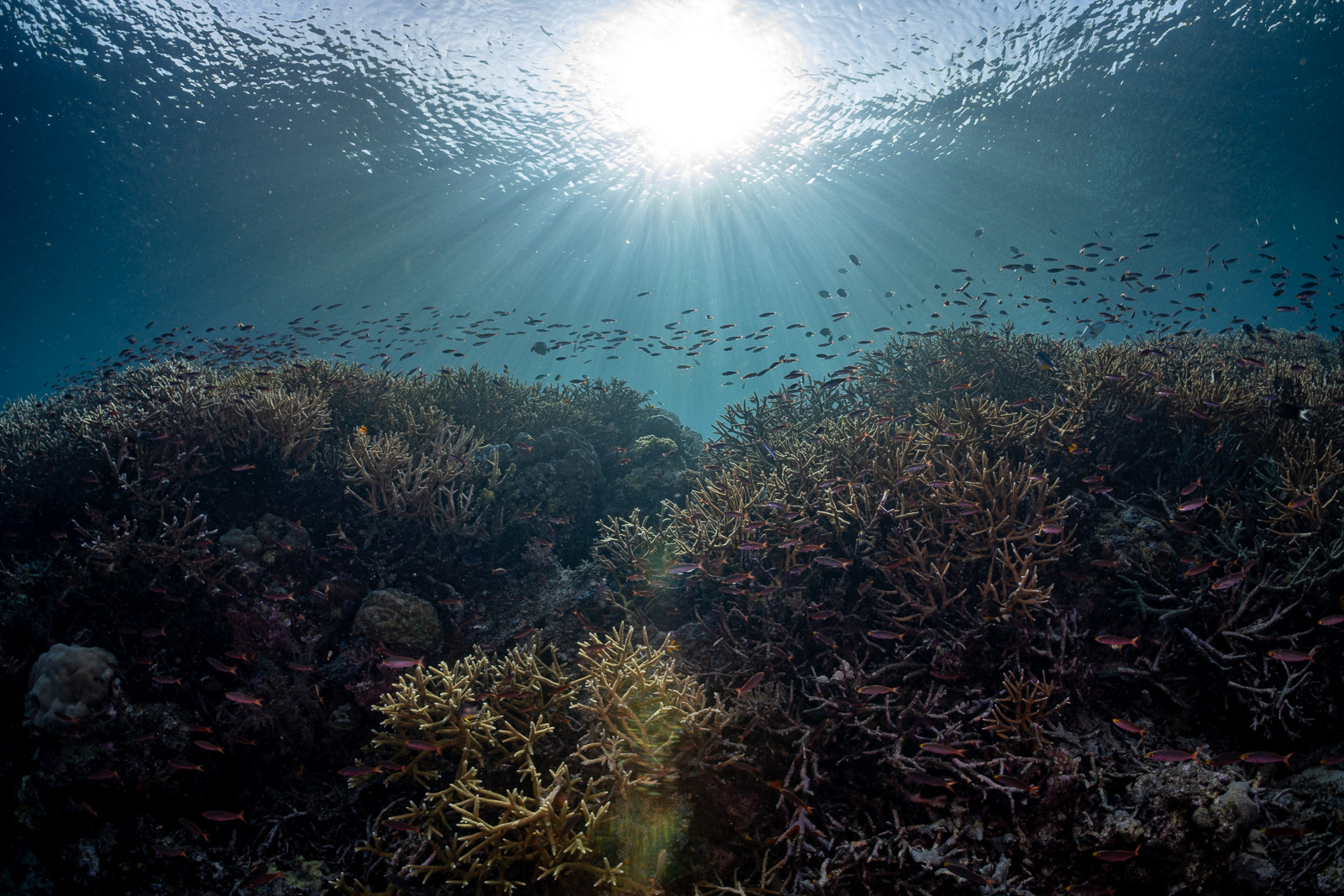
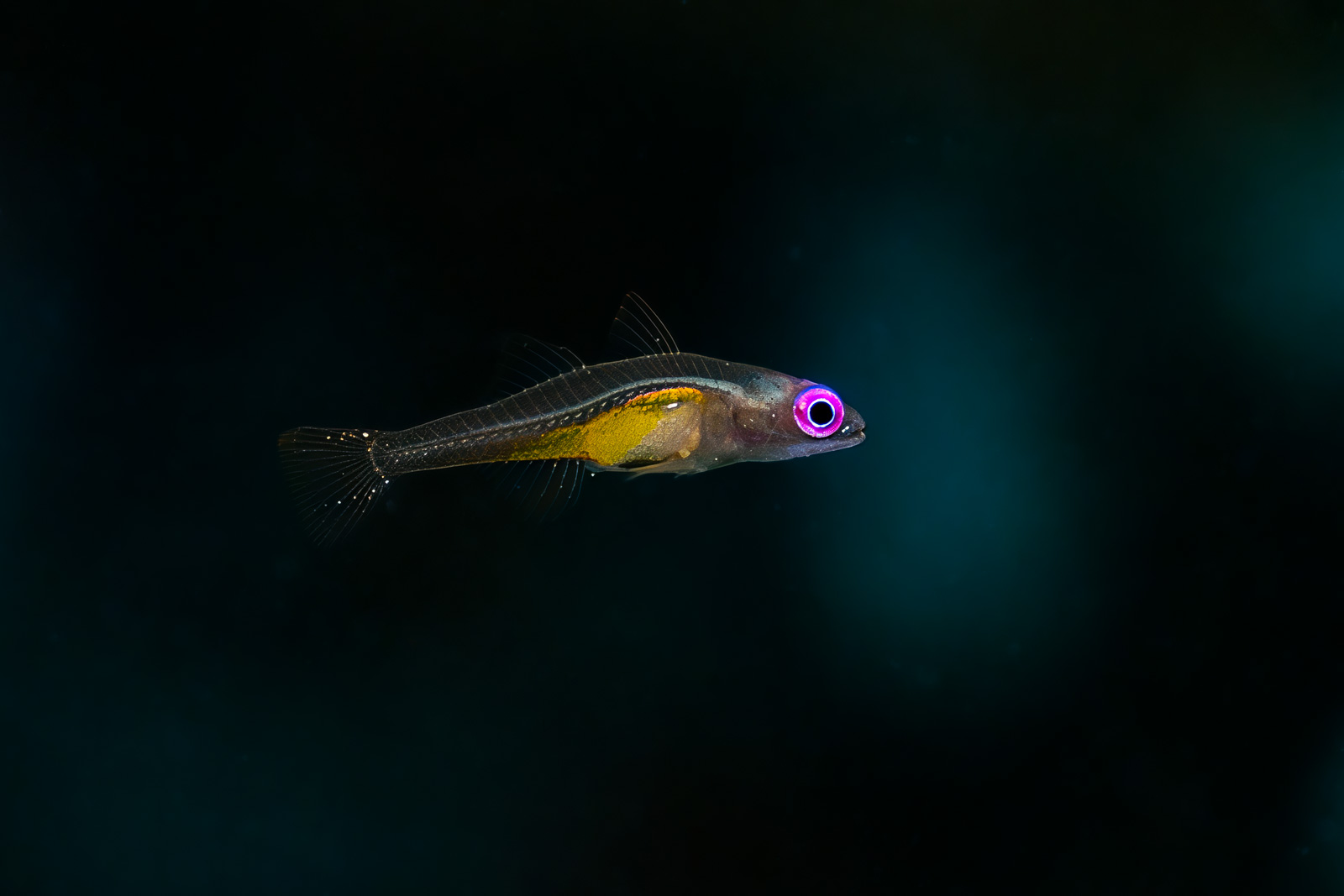
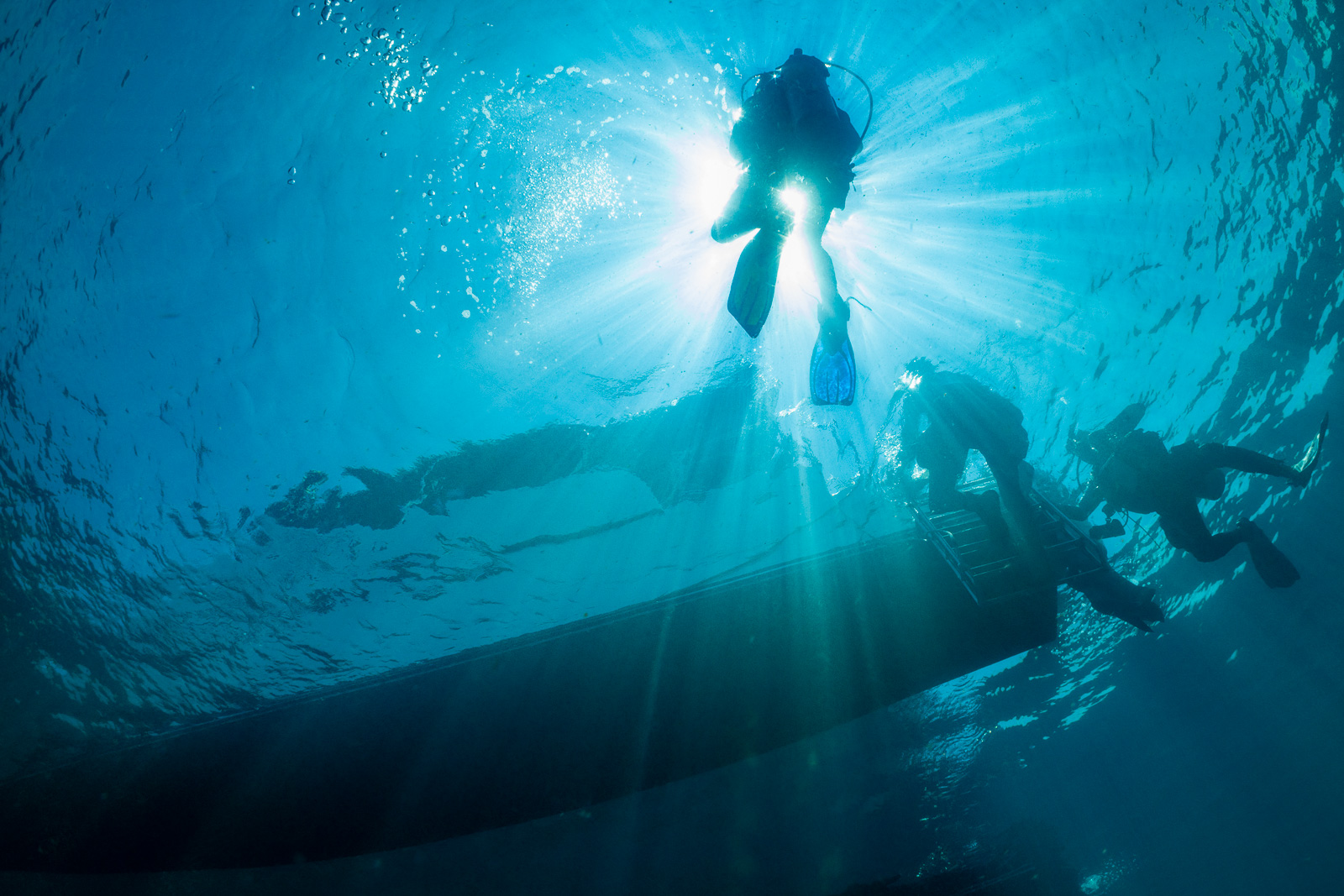
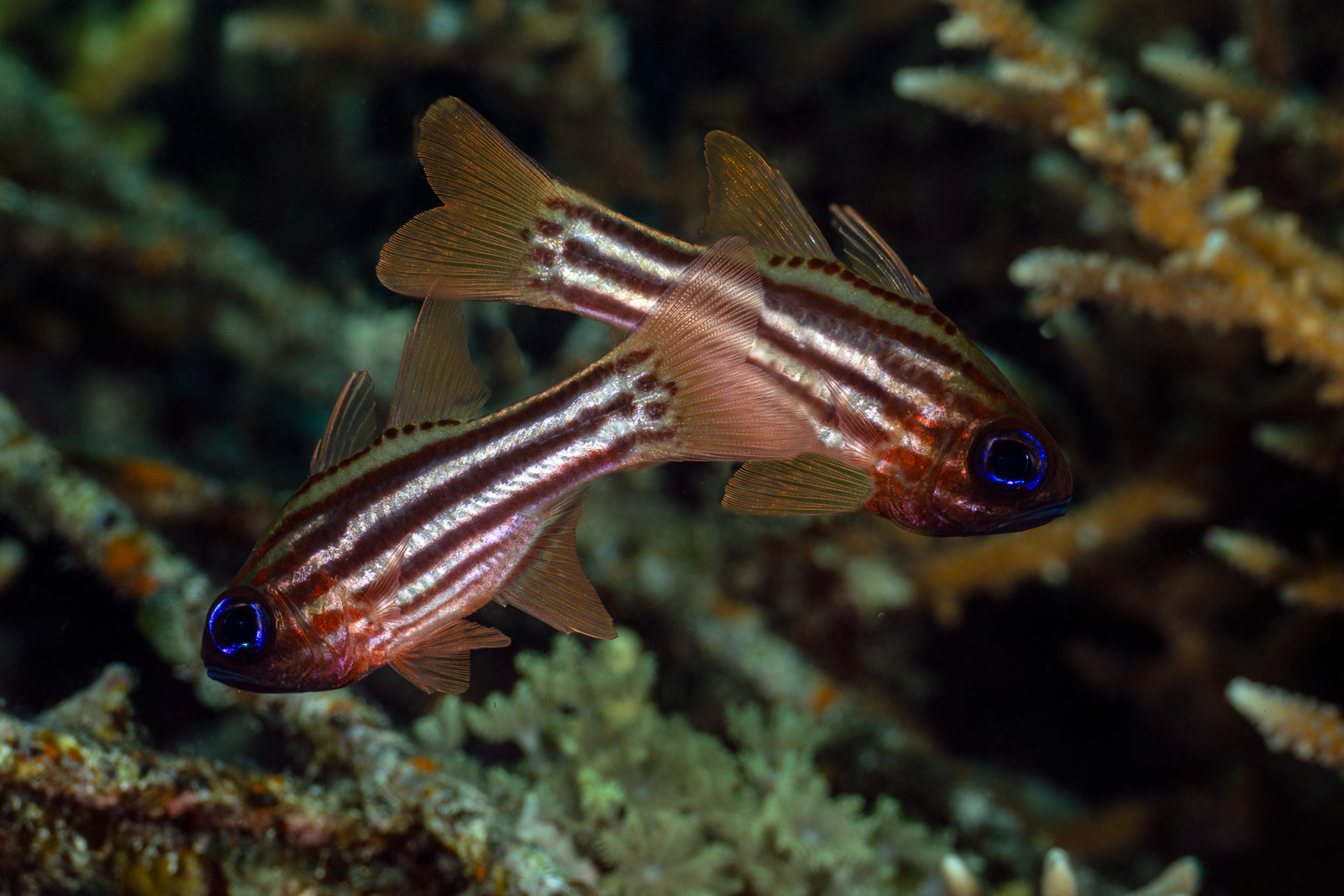
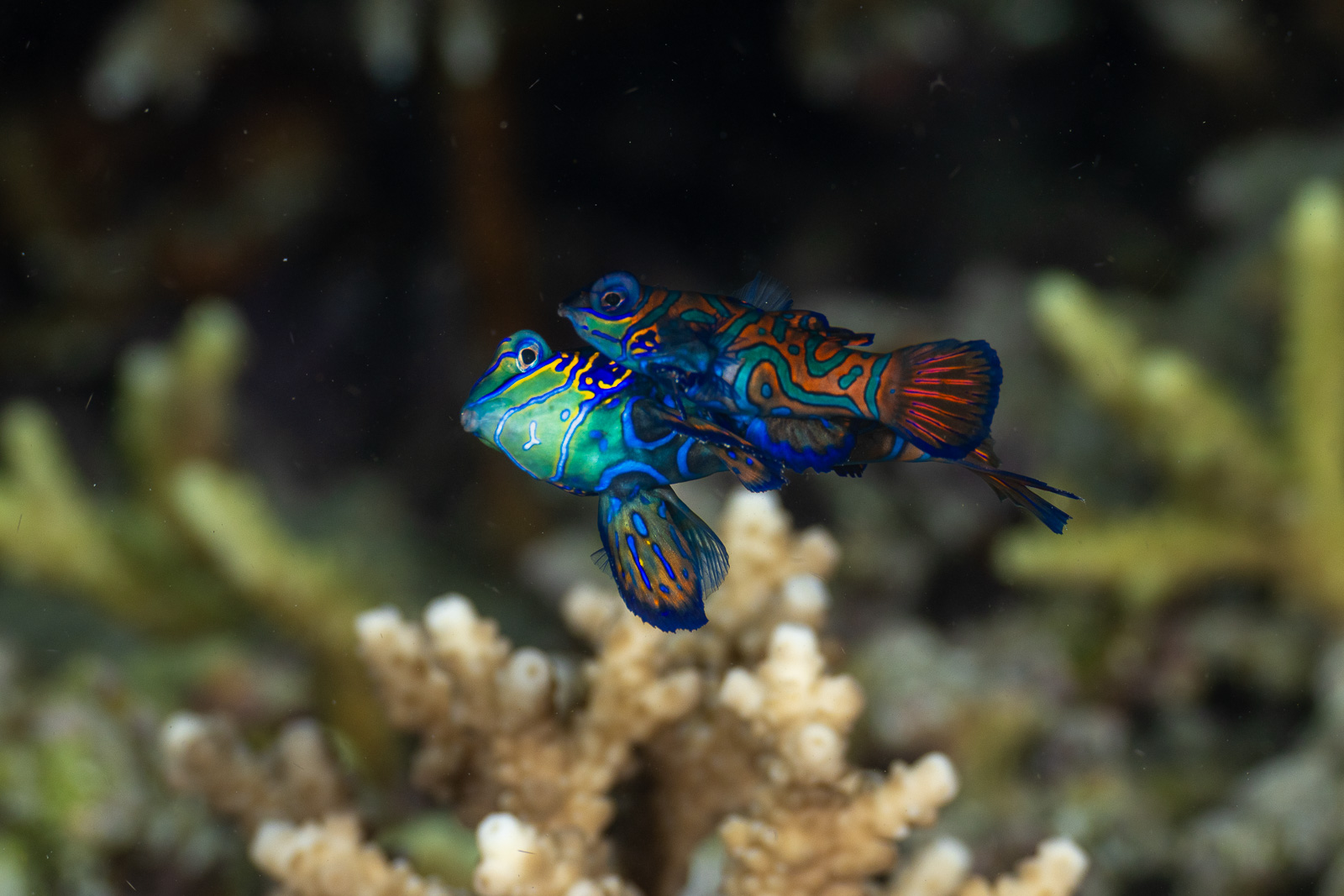
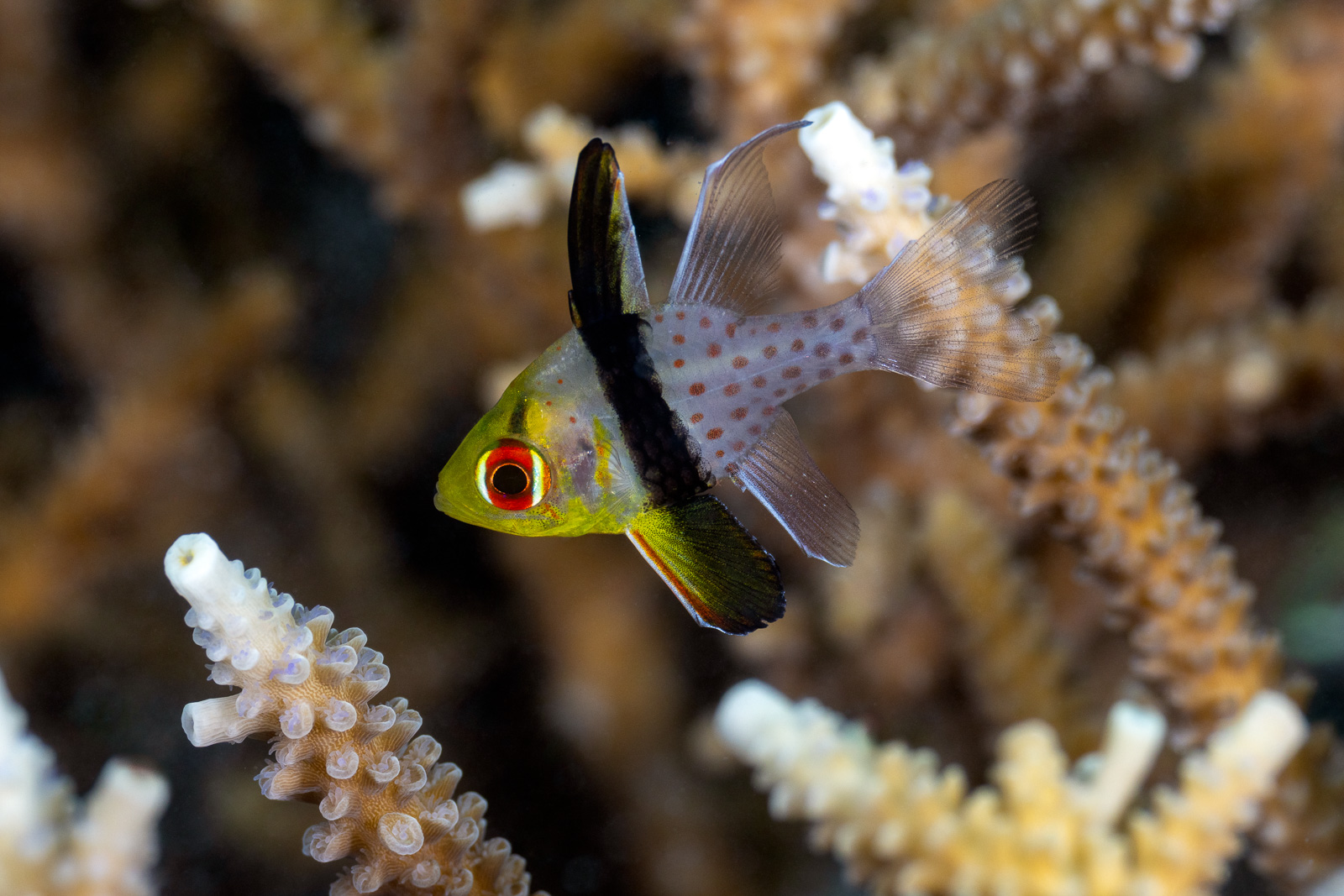
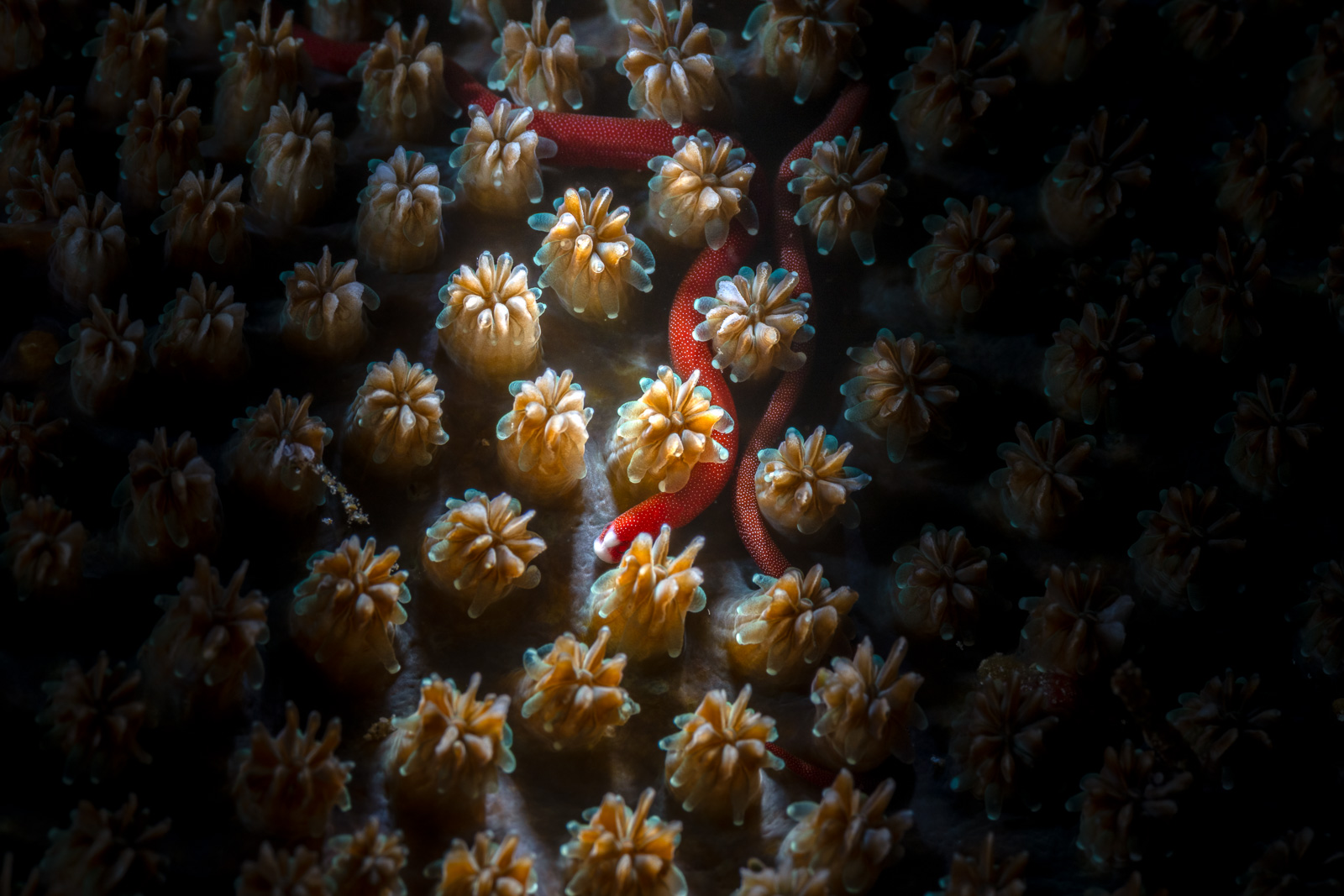
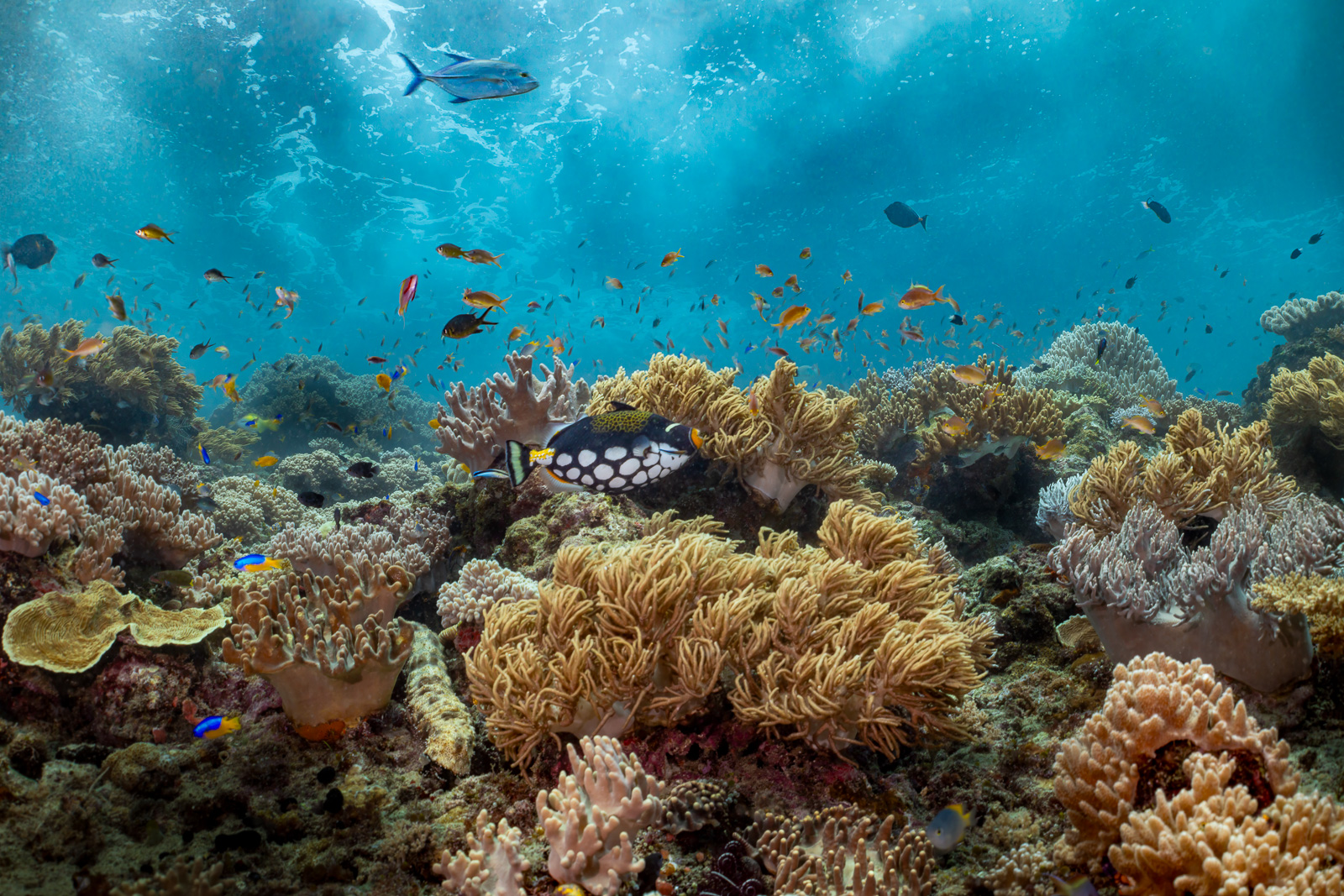
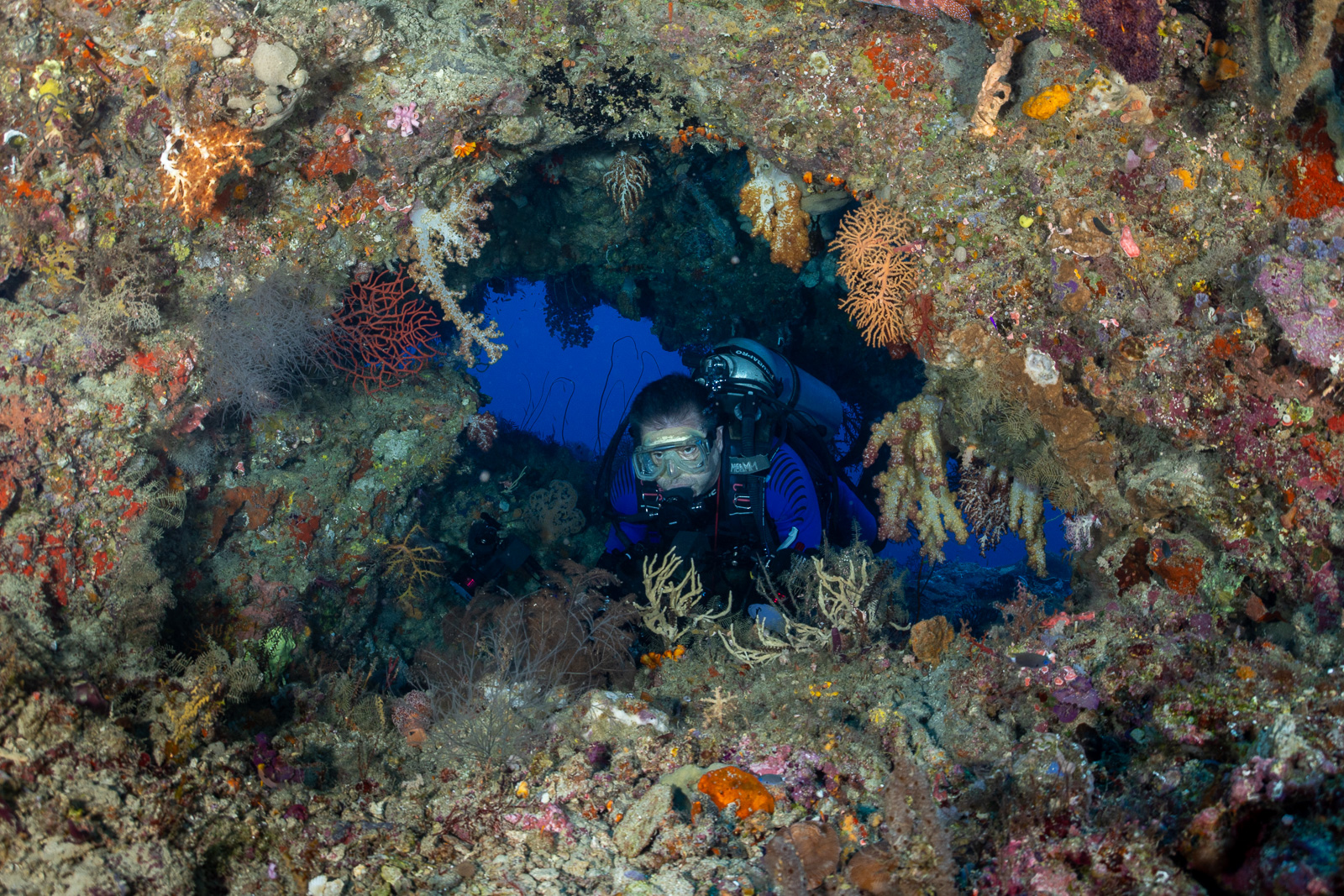
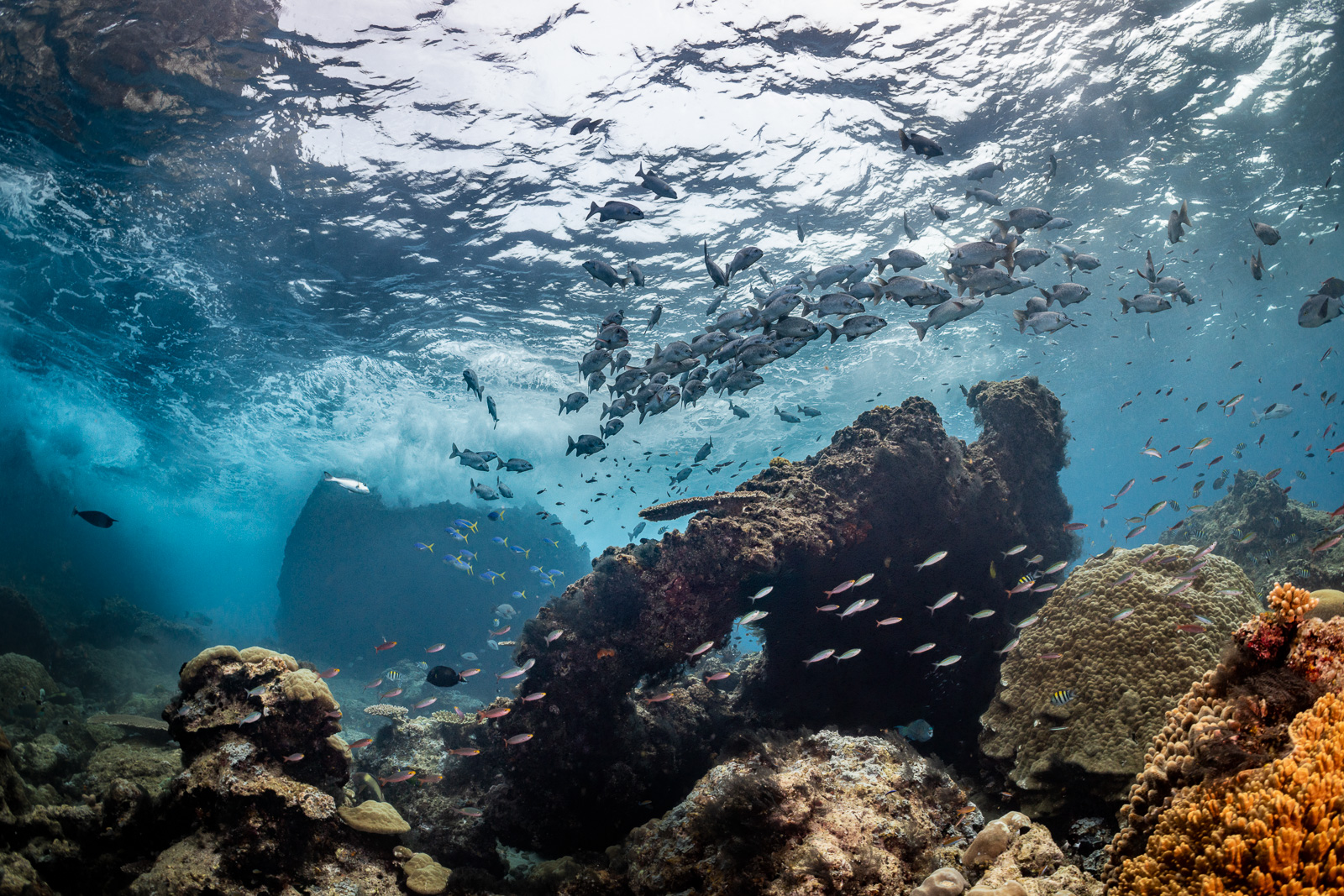
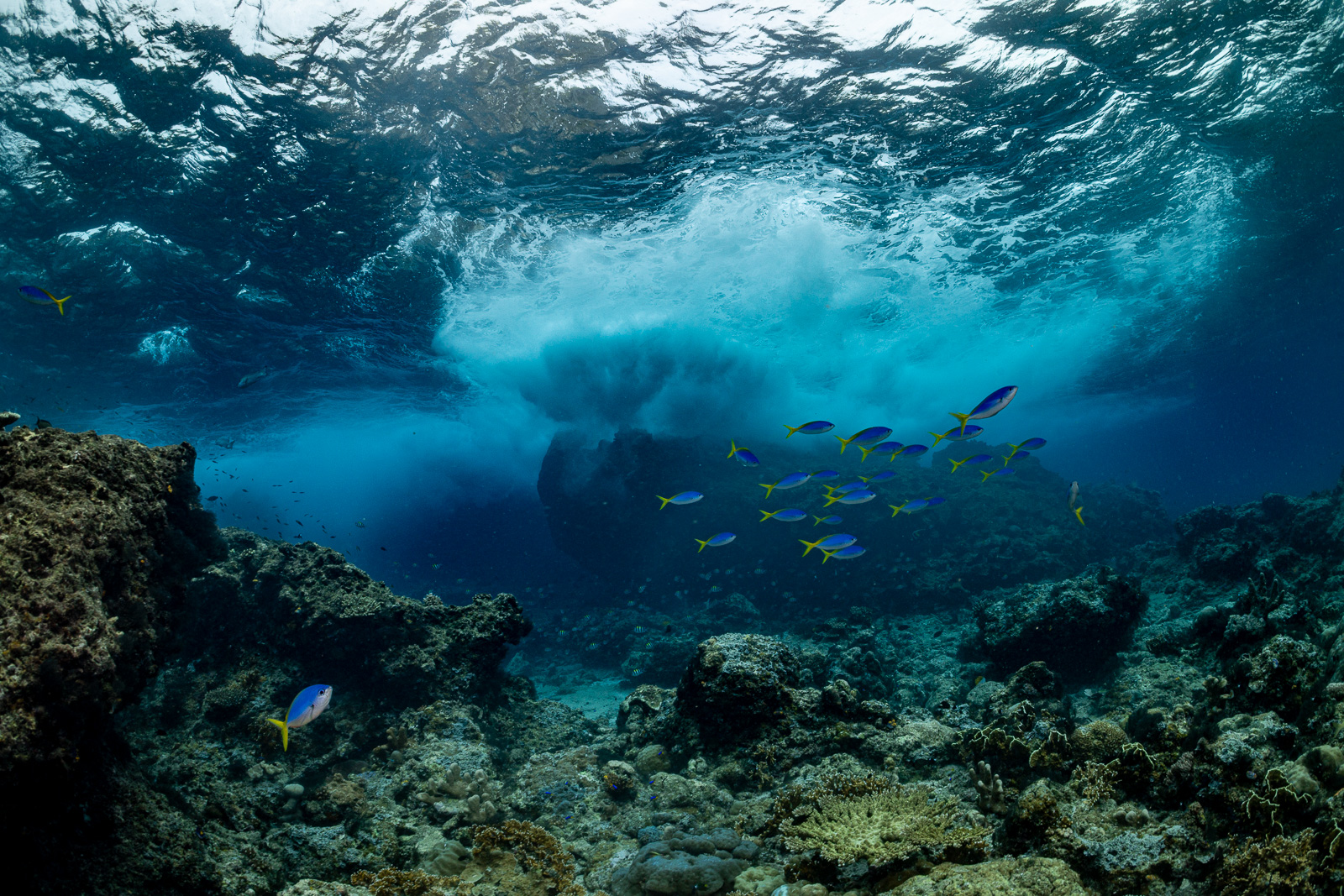
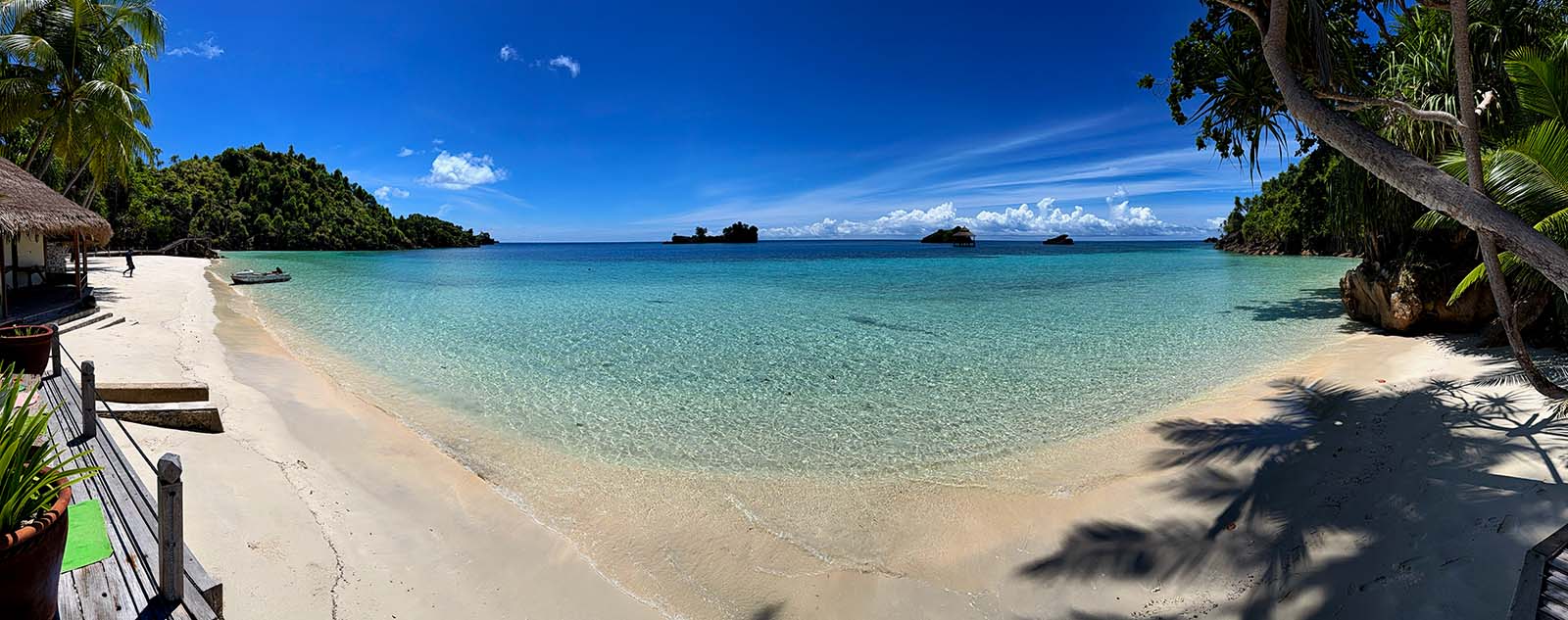
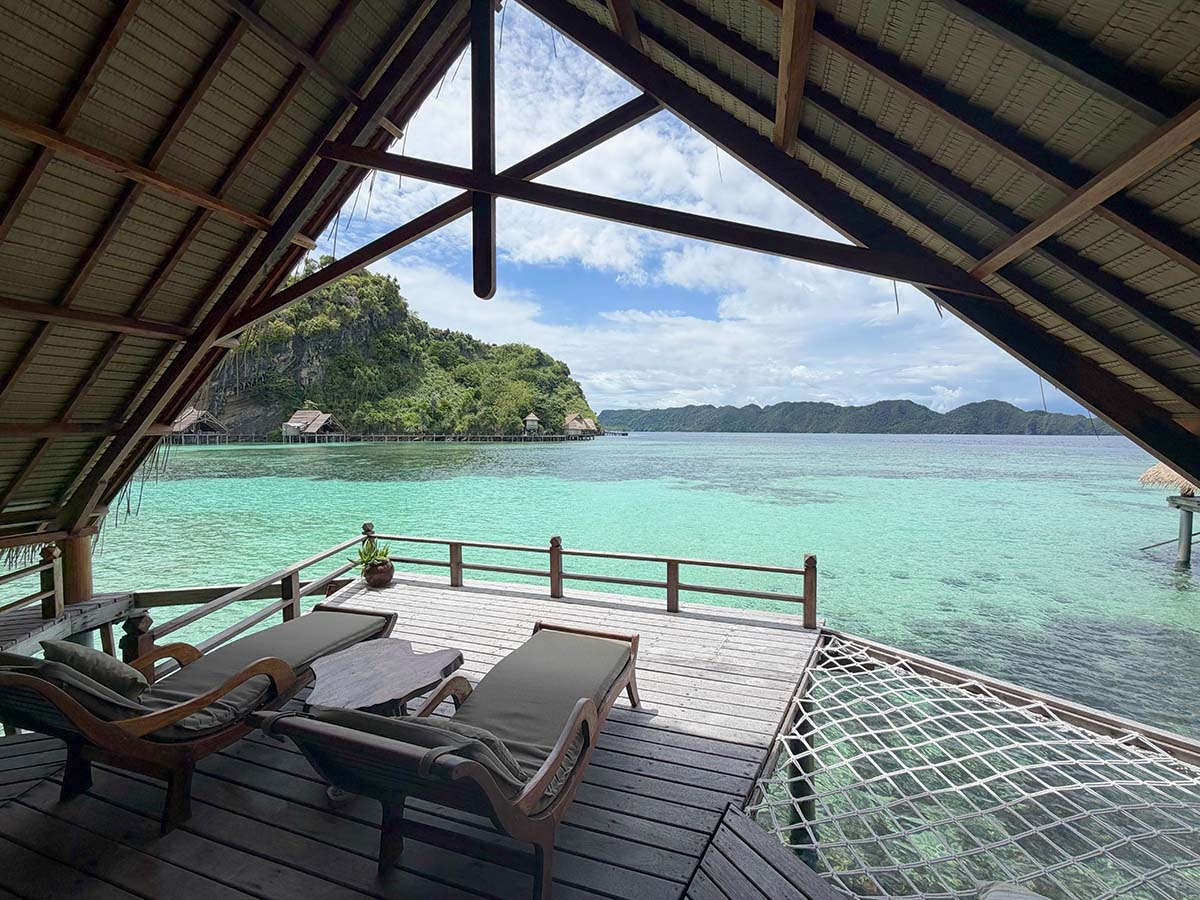
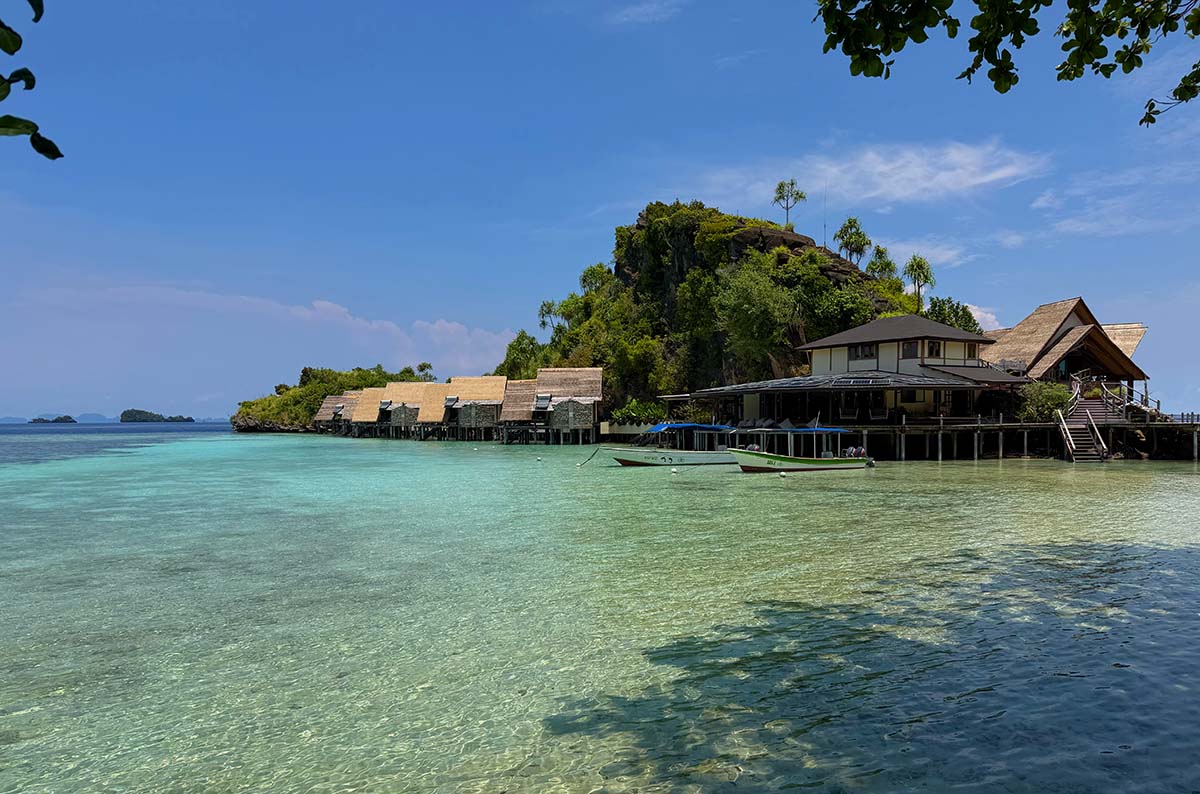
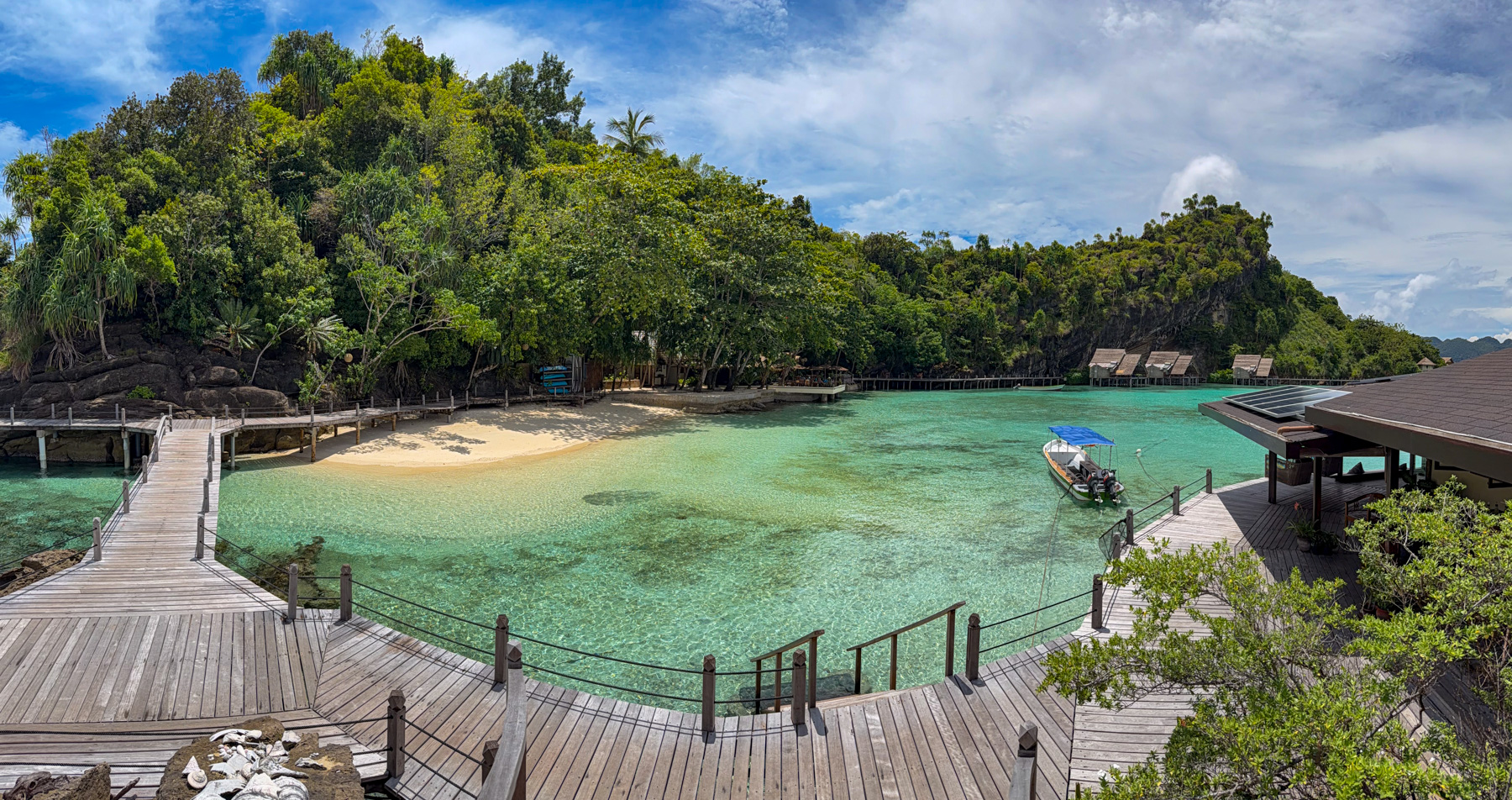
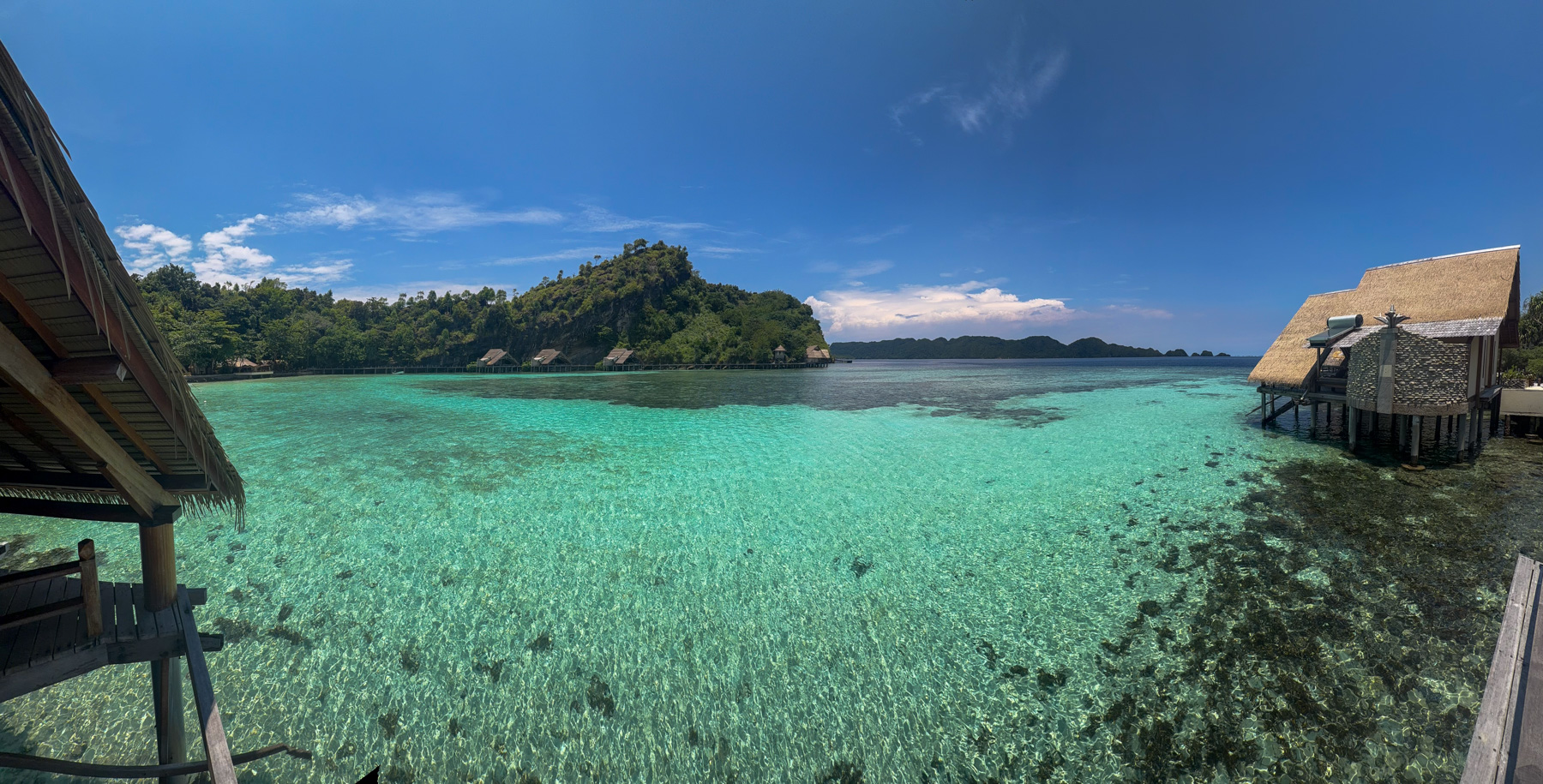
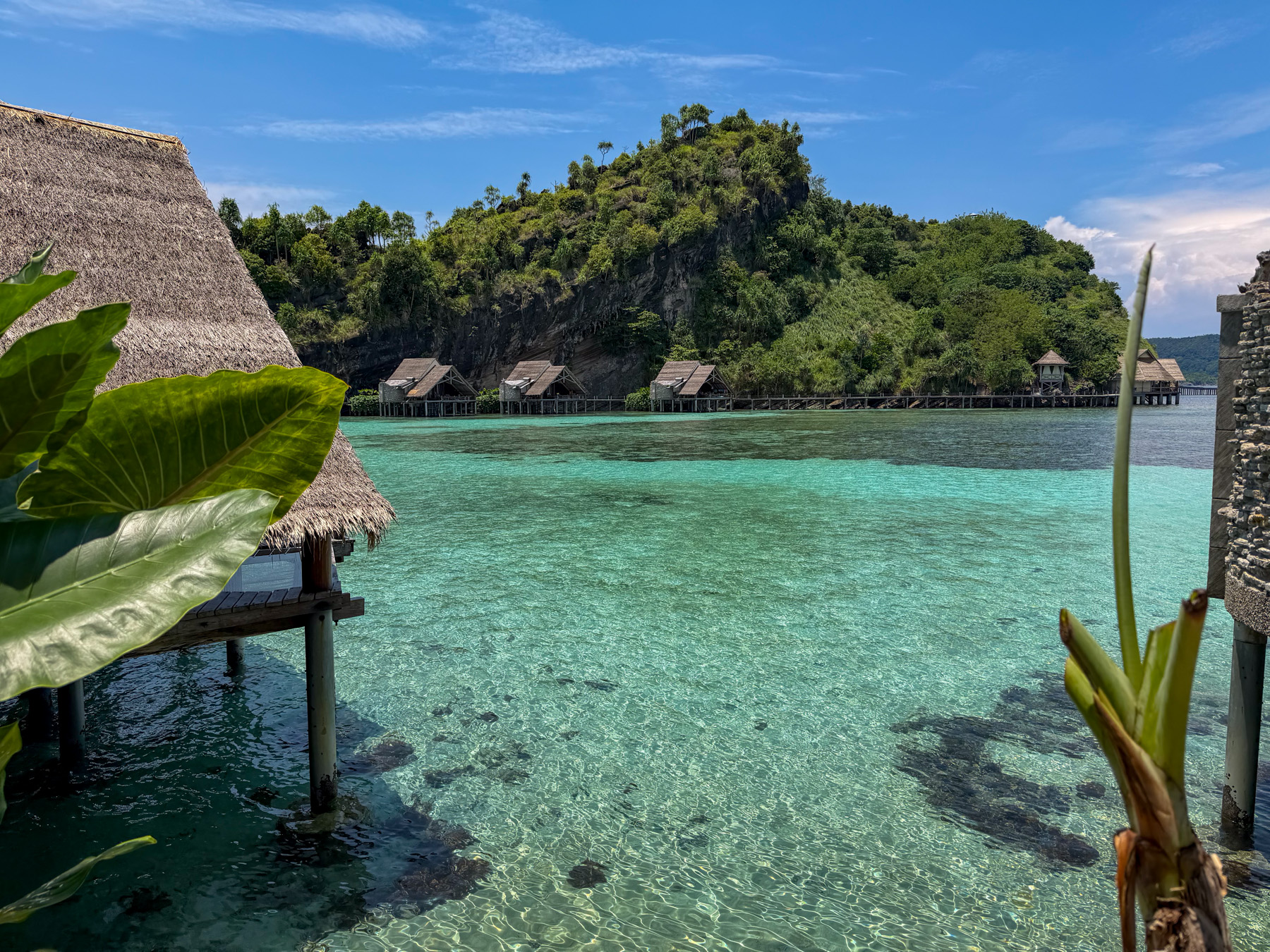
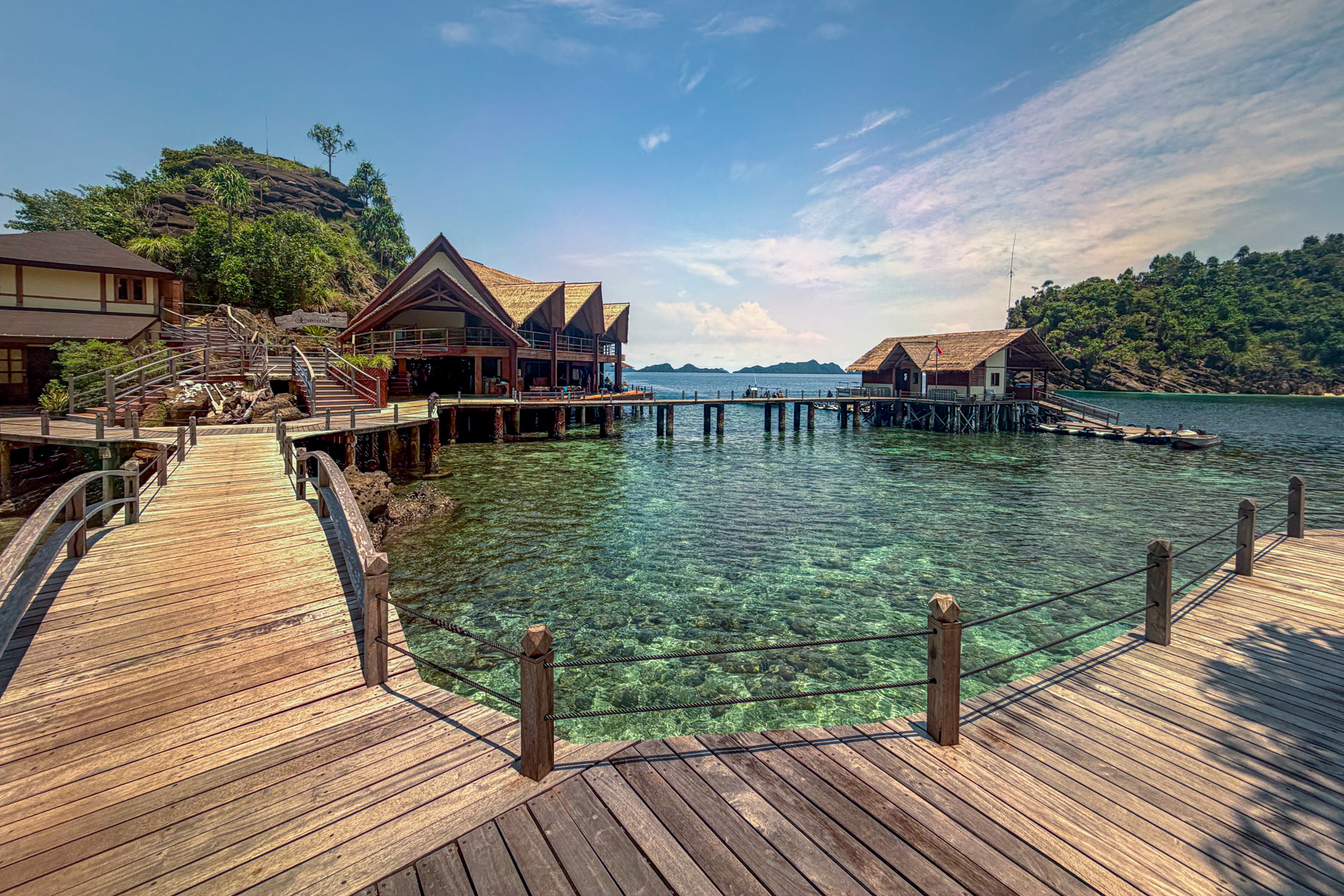
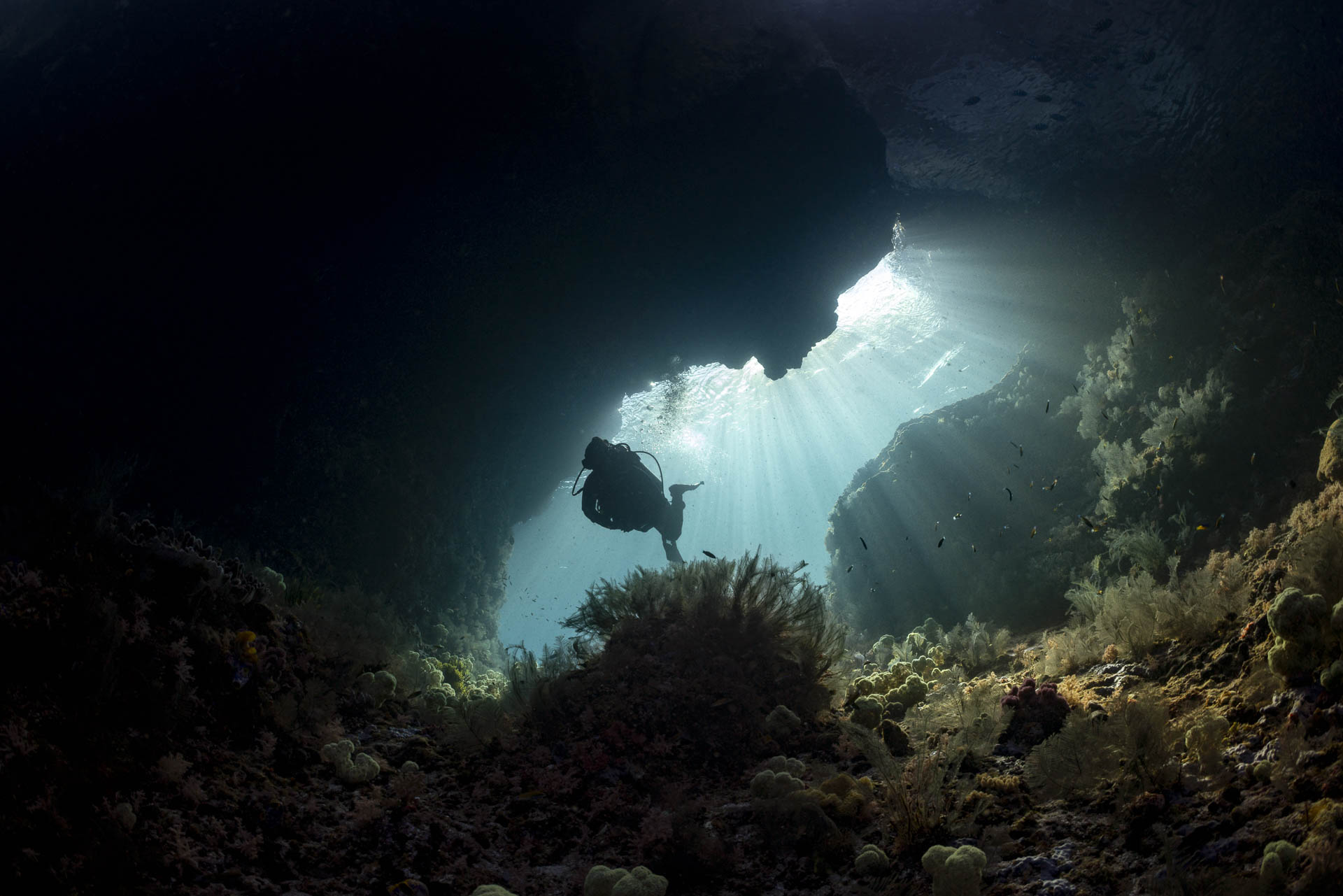
Every frame here was made at Misool in 2018 and 2026, in the conditions that turned up rather than the ones I hoped for. Click any of them to open it full size.

MisoolMisoolMisoolMisoolMisoolMisoolMisoolMisoolMisoolMisoolMisoolMisool

Any frame on this page can be licensed for editorial use. Licensing terms.

05Best time to dive

Mid-September to mid-June, and the monsoon decides the rest

October to April is when Misool is at its best, and nothing operates July to August. Tap any month for what the water is actually doing.
High seasonShoulderClosed

Visibility, sea state, what is in the water and how much of it you can count on. The season turns at October and again after April.

06Signature dives

The dives that define Misool

Six I dived more than once and would plan a week around, named as the resort names them.

01

Magic Mountain

Mantas, current, spectacle

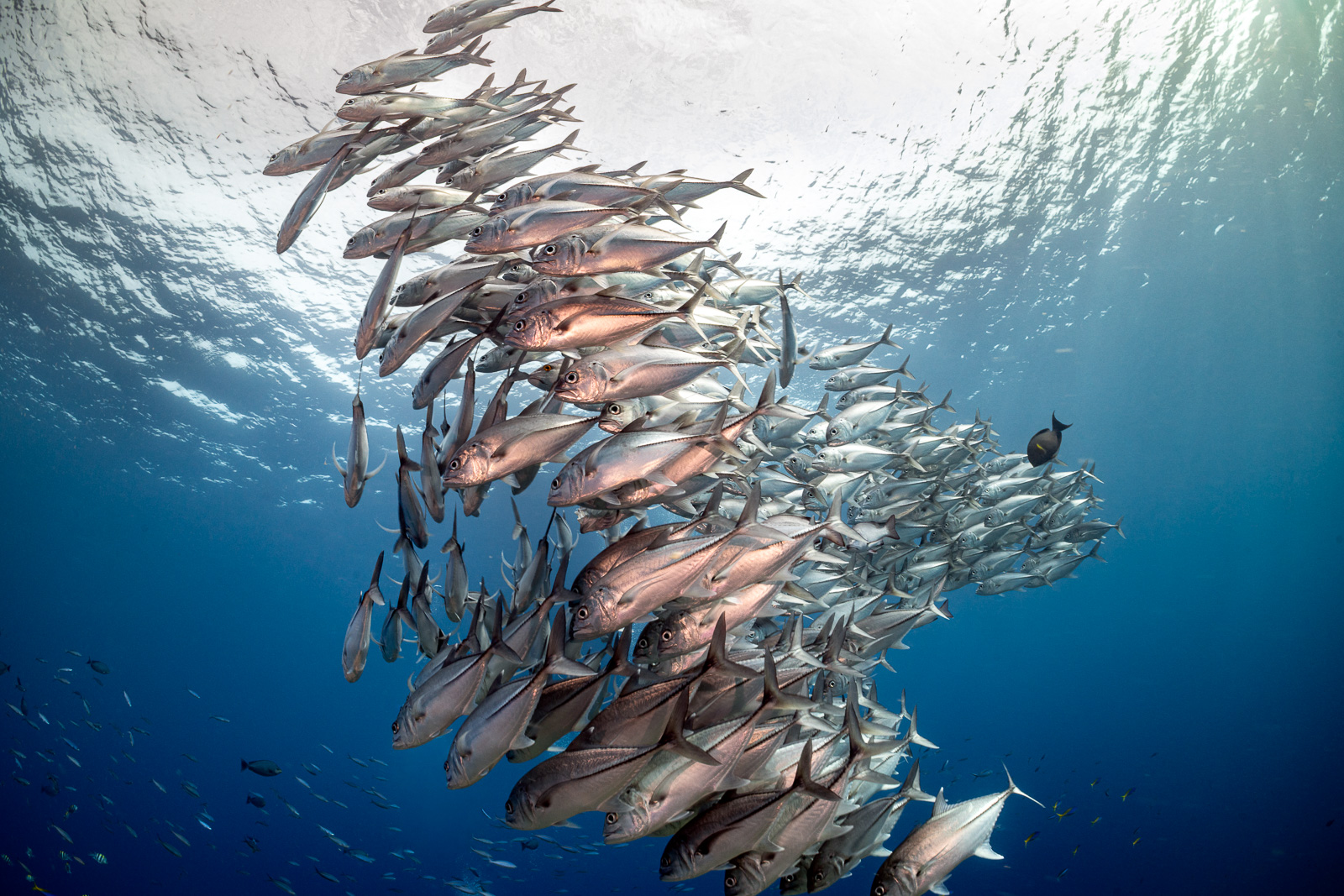
A seamount standing on its own in open water, and a cleaning station the oceanic mantas use on their own schedule. When the tide runs across the pinnacle the site turns on: mantas overhead, grey reef sharks working the edge, trevally stacked in the blue behind them. Get the hook in and set your strobes before you look up, because once it starts you will not want to be adjusting anything.

02

Boo Windows

The one on every brochure

A limestone ridge cut clean through by two holes big enough to swim, and the most photographed rock in Raja Ampat. Shoot the windows first and shoot them early, before the background fills with other divers. Then turn around: the blue behind you holds a wall of batfish that most people never photograph, because they are still queuing at the hole.
03

Four Kings

Four pinnacles, worked in one dive

Four pinnacles rising off deep sand to within a few metres of the surface, close enough together to work in a single dive. Fusiliers and anthias stack over the rock so thickly that you swim through fish to find it. This was the first dive I made in Misool, in 2018, and it is still the clearest picture I have of what a reef looks like when nothing has been taken out of it.

04

Birthday Cake

Soft coral in rows, and a cleaning station

Rows of soft coral run across the bottom one after another, and the site finishes in a small group of limestone pinnacles. One of those pinnacles is a cleaning station. A manta came in low over it on our first dive here, and the site stays quiet in a way Magic Mountain never does.

05

S.W. Batbitim

The slow one, after the current days

A reef sloping away in the lee of the island, and the first dive in days where nothing is pushing you anywhere. Work along the cuts in the slope and the small things arrive: pygmy seahorses set deep in the gorgonians, nudibranchs in clusters, ornate crustaceans out on the open sand. Put the long lens on and give it the whole tank.

06

Selat 2

A channel on the exchange

A narrow passage between two limestone islands that fills with moving water every time the tide turns. The current holds the soft corals open and feeding, so the walls run orange and pink from the top of the channel to the bottom. It is a negative entry and a hook, and you want both hands free before you start thinking about the camera.

07

Tank Rock

Everything, in one dive

A long rock joined to the pinnacles beside it by a coral ridge, which puts wall, canopy and crevice on the same tank. Pelagics sweep the vertical sections, hard coral covers the shallows, and the fissures hold the cryptic things nobody finds in a hurry. Save it for the last morning, when you cannot decide which lens to put on.

08

Nudi Rock

Macro, without having to choose

A limestone rock shaped like a nudibranch, covered in nudibranchs. The outer edges catch enough current to bring jacks and grey reef sharks past, but the dive is on the sheltered faces and it is worked slowly. Pygmy seahorses, and more nudibranch species than you will photograph on one tank.

09

Fiabacet

Fish density at full scale

Three limestone pinnacles standing close together, holding the densest water in the reserve. Batfish, surgeonfish and yellow snapper pack the column so tightly that the surface goes dark above you. There is no composing for the first few minutes; you wait for a gap and take what it gives you.

07Operators

One place to stay, and it is why the reef scores what it does

Everywhere else on this site you can swap operators and dive the same water. Here you cannot. The resort and the reserve are the same organisation—the beds pay the rangers—so the score on the left of this page is a direct consequence of the one below. The five trip axes still belong to the operation alone, and the final rating is the reef score plus the operator's.

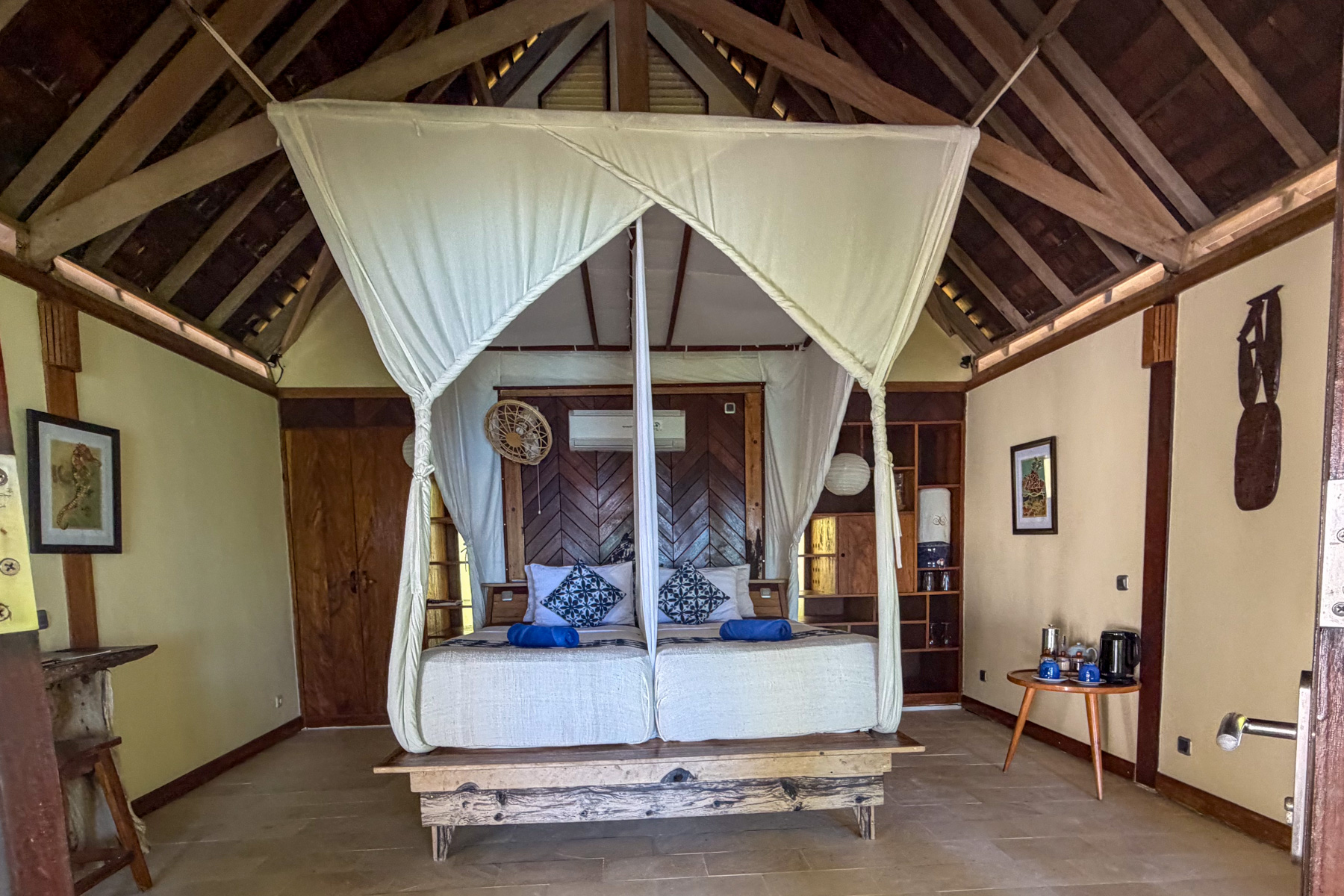
Availability, checked with the resort on 5 August 2026: Misool is full through 2029. The earliest group trip I can run there is 2030. If you want to go, the only route is the waitlist — theirs and mine — and it is worth joining now rather than deciding next spring. Four years of lead time is not a marketing device; it is what one resort with fifty-odd beds and no neighbours actually looks like.
08Before you go

The questions that decide whether a week works

Asked in the order they actually matter, answered with specifics.

01

How far are the dive sites?

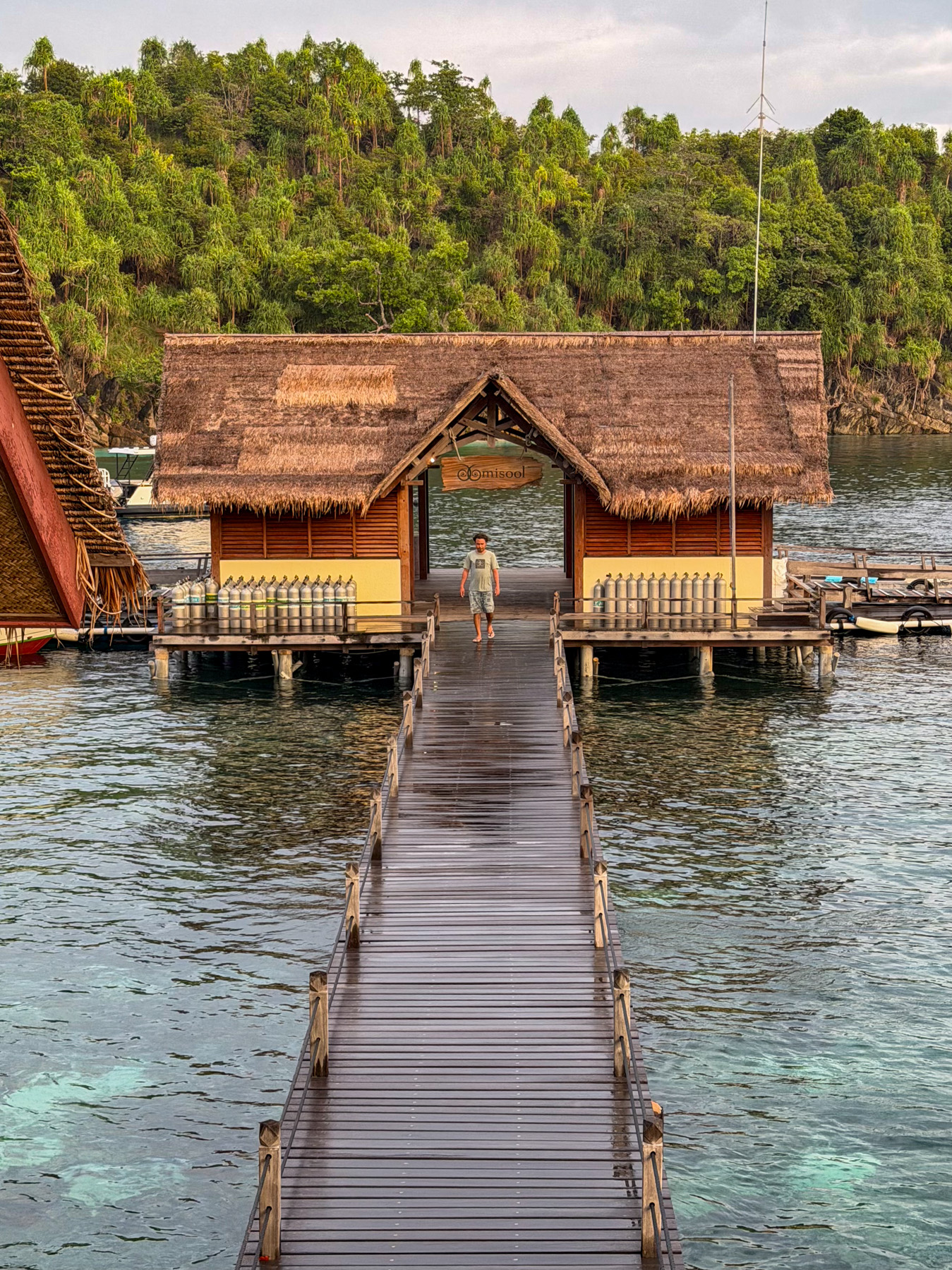
More than sixty sites lie within an hour of the jetty, and over twenty-five are inside fifteen minutes — Fiabacet, Boo, Yilliet, Wobbegong City and Magic Mountain among them. Three boat dives a day plus a dusk or night dive, with the boat back at the resort between most of them rather than sitting out through a surface interval.

That short-transit pattern is the most underrated thing about the place. You are not doing ninety minutes each way in an open boat, twice a day, for a week.

How the sites are actually shared, which nobody publishes. The resort coordinates the daily dive schedule with the visiting liveaboard fleet so that only one boat is on a site at any given time — across 64 sites inside the reserve and 12 just outside it. In 2024 they logged 9,464 individual activities to keep track of it. So this is not a queue you win by paying more; it is a rota somebody is actively running. What it means in practice is that when you arrive at Magic Mountain, you have Magic Mountain.
02

Does the price I have been quoted include diving?

Almost certainly not, and this catches more people than anything else on this page. At Misool — and at Wakatobi, and at most resorts at this end of the market — the headline rate is accommodation. Diving is a separate purchase, added on top. So is snorkelling. So is the marine park permit.

Which is not a criticism, because it is the reason the place works for couples who are not both divers. One of you can dive four times a day while the other snorkels the house reef, reads on the deck and does not pay for tanks they were never going to use. Plenty of guests here never put on a scuba unit and have an excellent fortnight.

What it does mean is that you should get the dive rates in writing before you commit, and add them up yourself. A resort quote and a dive-trip budget are not the same number, and the gap is large enough to matter.

One piece of advice worth the price of the page. Do not prepay a complete dive package unless you genuinely intend to dive four times a day, every day. Most photographers do not — they shoot two or three long dives and then work on the images. Misool bills at the end of your stay and charges the cheapest valid combination, so à la carte is usually the better deal and they will apply it for you without being asked. Not every operator does that. Ask.
03

What is on the tank, and does it cost extra?

Twelve-litre aluminium tanks, and nitrox is free to certified divers, subject to availability. Free nitrox is rarer than it should be, and it materially changes what you can do with four dives a day on a shallow reef — which is exactly the profile Misool gives you.

04

Will they have gear that fits me?

Pre-requesting a size is not the same as the size existing. Sizing is not standardised across markets — a women's US 3XL is close to a men's 3XL in most Asian rental stock, and remote resorts carry one or two of anything at the ends of the range.

If you are outside a standard size range, bring your own suit, and confirm BCD and fin sizes in writing before you pay the balance. That holds for every destination on this site and applies double to the remote ones, because there is no shop within a thousand kilometres to fix it.

05

Is there a camera room, and can it take my rig?

Yes, and a proper one — wet and dry areas, dedicated work stations, and a veranda. It takes large rigs; you are not balancing a housing on a shelf beside someone's regulator. Power is 220 V, with roughly five outlets per station. If you charge more than that — two strobes, two video lights, a laptop — bring a strip.

Compared to what, and nobody publishes this. How your gear reaches the water matters more than people expect. At Misool your rig is carried in padded neoprene bags and handed down into the boat. In much of northeast Bali the sites are short drives, so you ride in the back of an open truck holding your own housing, in the sun, over rough road. Bonaire is shore entries from a pickup, carrying a rig across coral rubble in surge. None of those are bad operations. They are different risk profiles for a camera, and they change how carefully you check an o-ring.
06

Where is the nearest chamber, and what insurance do I need?

There is no chamber in Papua you should count on. A facility exists in Waisai, but operators working this region plan around evacuation to Manado, Makassar or Bali — a boat transfer followed by a low-altitude medevac flight. From southern Misool that is not a short chain.

Dive accident and evacuation cover is mandatory here, and DAN is the standard. It is also the one line item on a trip of this cost where saving fifty dollars is a bad decision. Check the policy covers evacuation from a remote location rather than only chamber treatment once you have somehow arrived at one, and check the annual cap — a medevac out of Raja Ampat can exhaust a low limit on its own.

Compared to what. Bonaire has a chamber on the island, minutes away. Cozumel has one in town. That difference does not make Misool worse, but it should change what you buy before you go, and it is a reason to be conservative with your profiles even though the reef tops are shallow.
07

Is there anything here I cannot get elsewhere?

Two things. Reef in a condition most divers have never seen — twenty years of enforced no-take protection, and the boundary is visible in the water. And the fact that you can shoot a manta cleaning station at Magic Mountain in the morning and a candy crab on a soft coral at Nudi Rock the same afternoon. Most destinations make you choose between wide and macro. Misool does not.

What it is not: a shark destination on the scale of the Galápagos, a wreck destination, or a big-pelagic destination. If a hammerhead school is the bucket-list item, this is the wrong week.

09Who it suits

And who should cheerfully book elsewhere

The right-hand column is the useful one. Misool is expensive enough that going for the wrong reason is an expensive way to find out.

Book it if

  • You want the best reef in Indonesia and you have ten days to two weeks to give it — seven nights on the reef, plus Sorong and the transfer either end
  • You shoot wide-angle and you are tired of hunting for a composition
  • You want to see what a reef looks like when somebody actually protects it — and has for twenty years
  • You can hold position in current, with a camera in your hands, without putting a fin anywhere it shouldn't be

Book elsewhere if

  • This is your first tropical dive trip. Go somewhere else, get good, come back — it will mean more and cost less
  • Macro is the whole reason you travel. Lembeh Strait is a fraction of the price, holds the only ten for Macro on this site, and will not make you choose
  • You like the telly on in the background and a fortnight off-grid sounds like a stretch. There is wifi in The Hive. You will feel a bit daft using it
  • The budget is the constraint. This is the top of the market and it is entirely unapologetic about that
10Getting there

Flights, transfers and what to sort first

Most trips route through Sorong before a boat transfer out to the resort. That distance from the outside world is part of why the experience feels so intact once you arrive.

Flights
Sorong (SOQ) is the gateway. Book this before anything else — limited daily arrivals, and transfers run to meet specific flights.
Transfer
Roughly four hours by boat from Sorong. Not a taxi ride — it is part of the trip and worth being rested for.
Marine park fee
Payable on arrival in Raja Ampat and separate from your resort bill. Budget for it.
Camera
There is a proper camera room. Bring the wide lens and a spare o-ring kit; there is no shop for a thousand kilometres.
Non-divers
Snorkelling, kayaking and island walks. Snorkelling, kayaking and island walks, and the limestone above the water is worth a morning of its own.