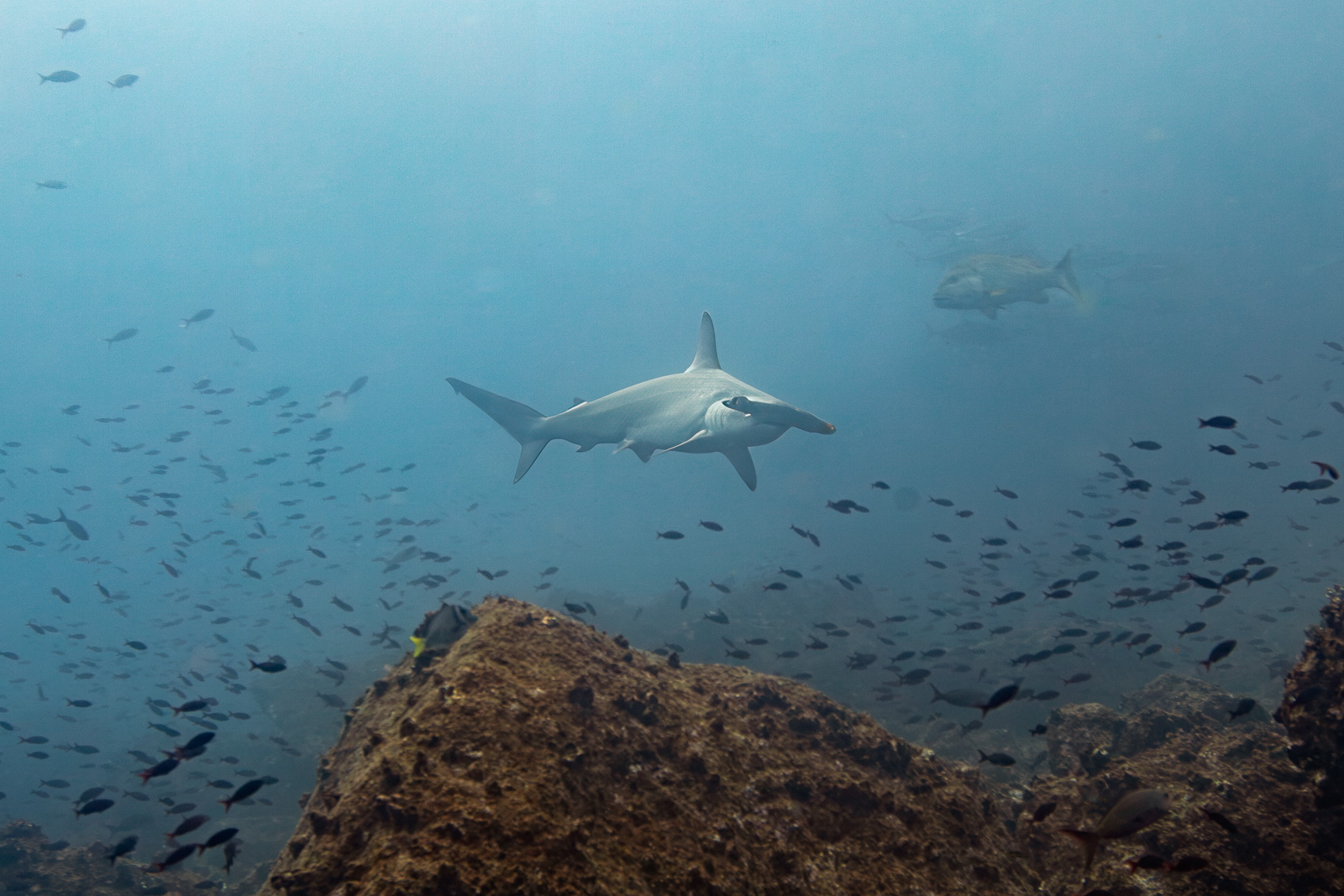
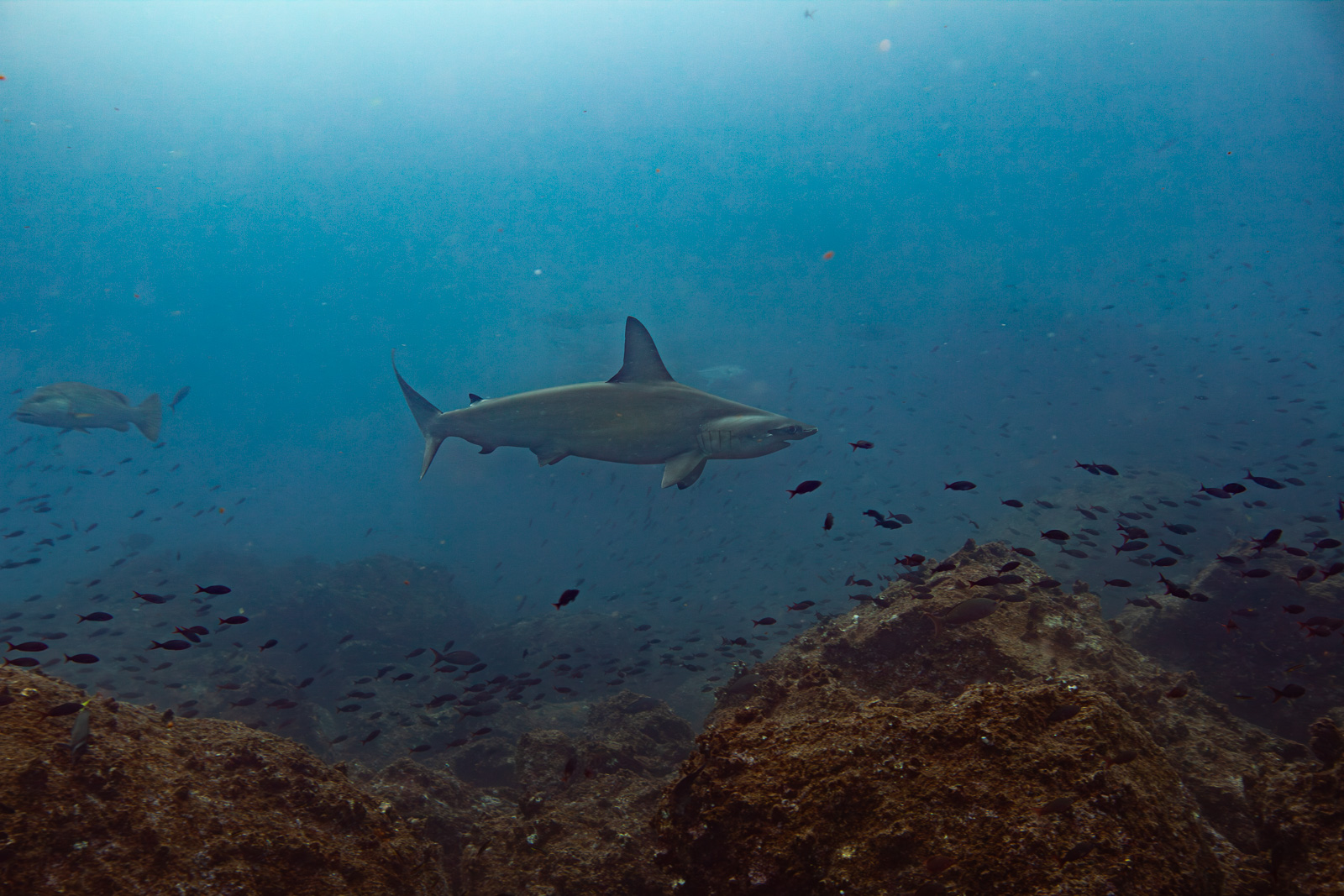
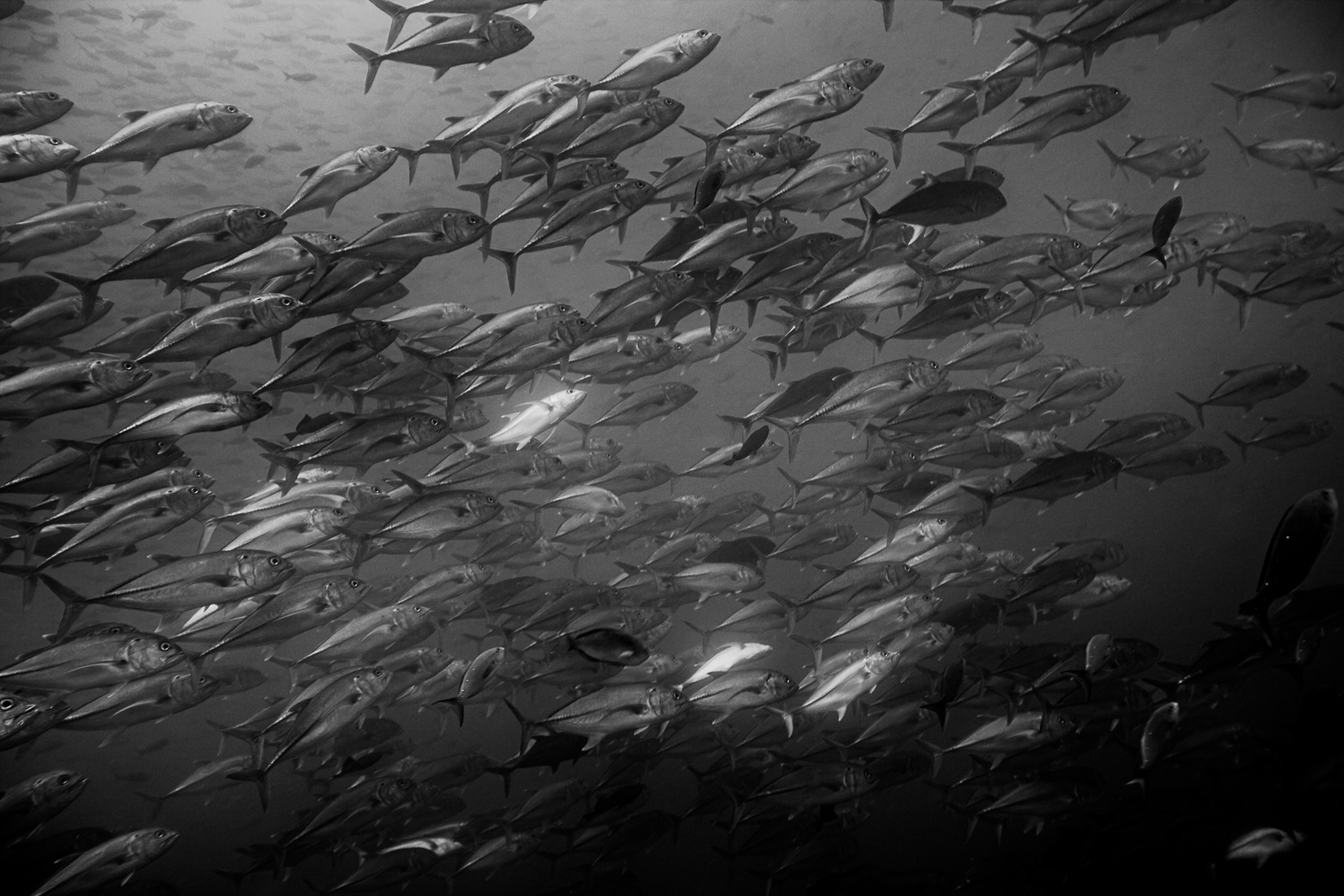
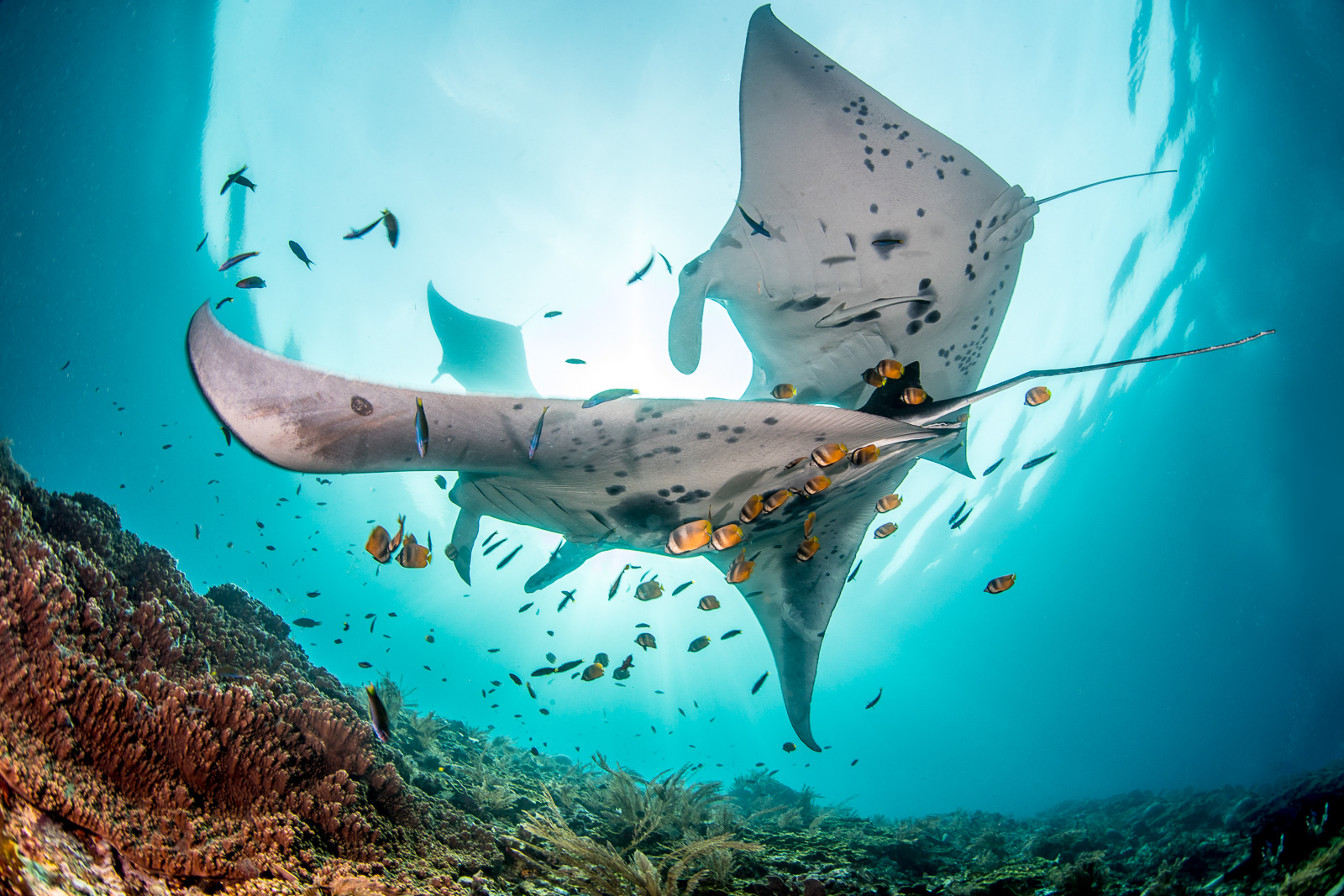
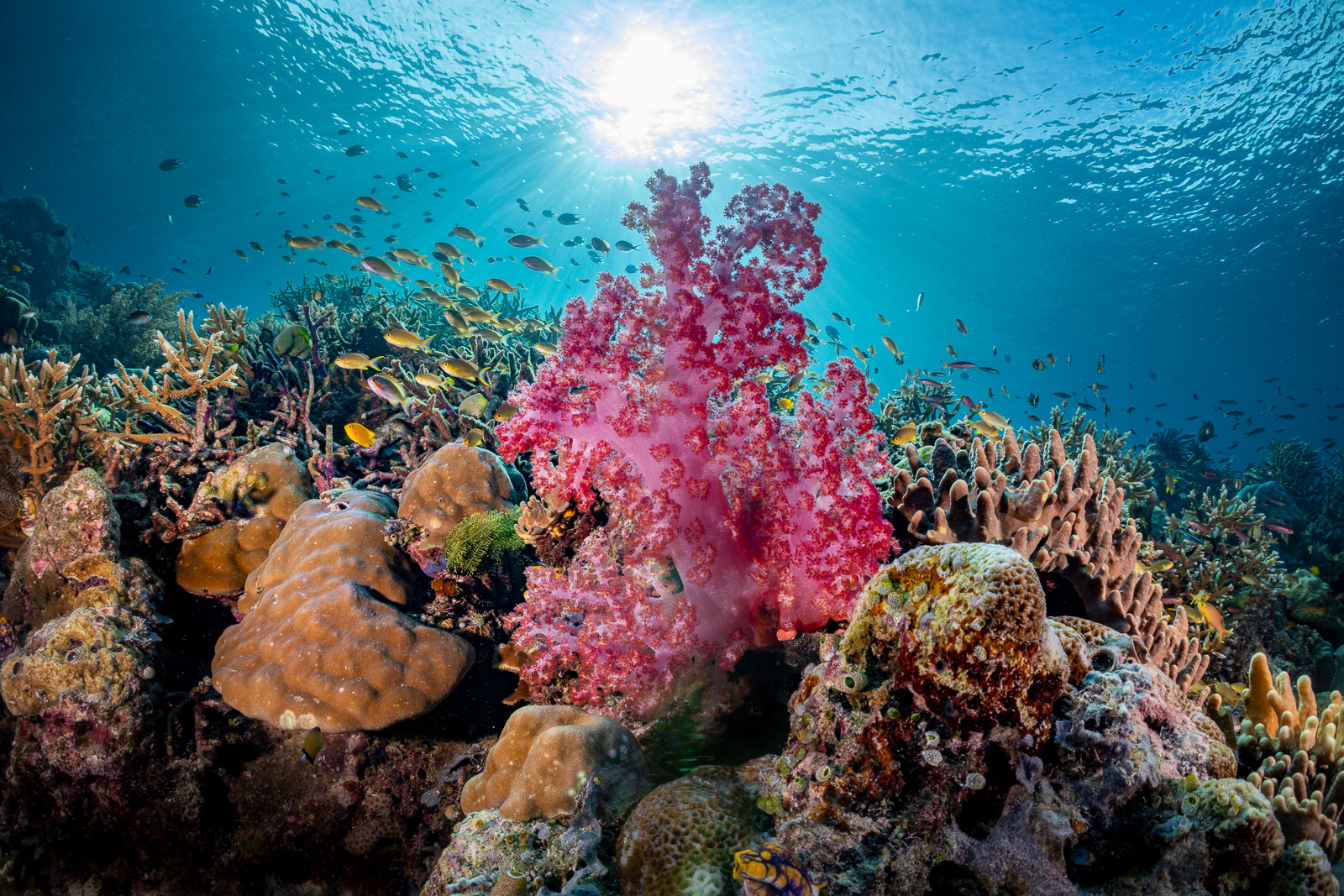
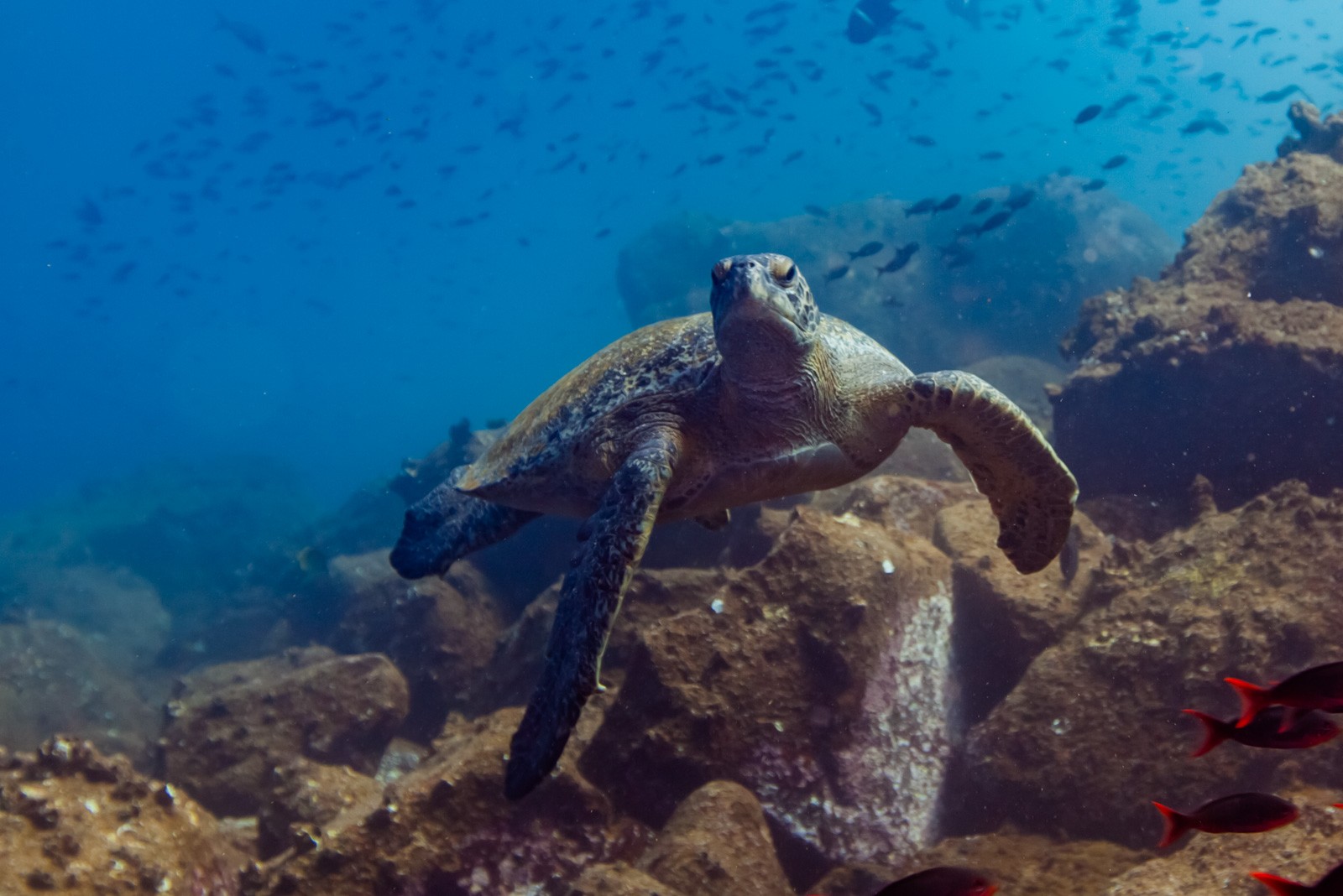
Settle onto the rock at forty metres, get your breathing under control, and look up. Hundreds of scalloped hammerheads are passing between you and the surface, and they keep passing.
I wanted to swim in these waters since I was a boy — to see a marine iguana feeding underwater in the place that gave us the theory of everything alive. It delivered more than the daydream did. Three ocean currents meet here and they bring the biggest animals in the Pacific with them.
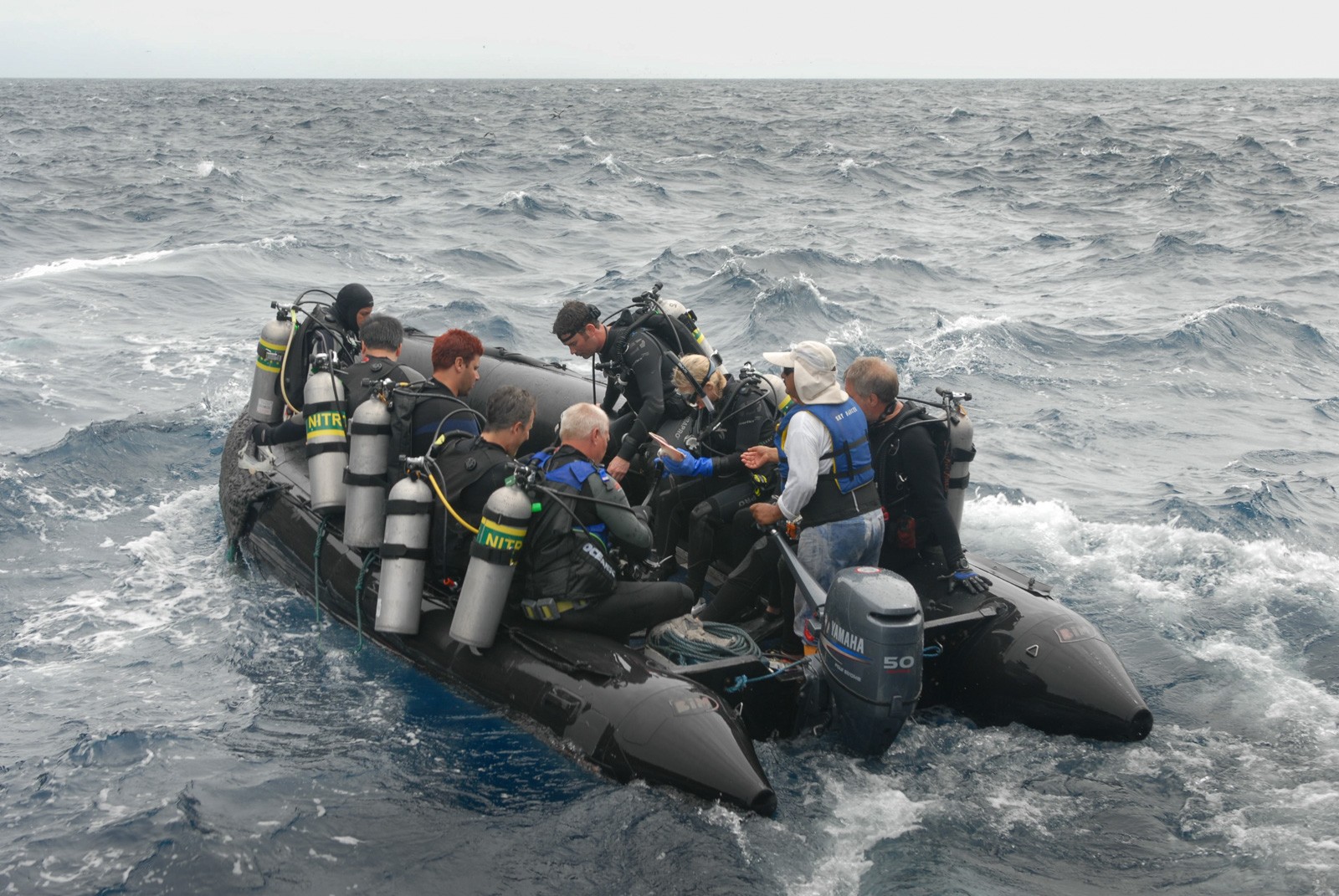
The most demanding destination on this site. Negative entries into blue water, currents that run vertically as well as sideways, surge, and cold thermoclines. A hundred logged dives is a floor rather than a target, and recent water time matters more than any card in your wallet. If a site feels beyond you on the day, sit it out — nobody keeps score.
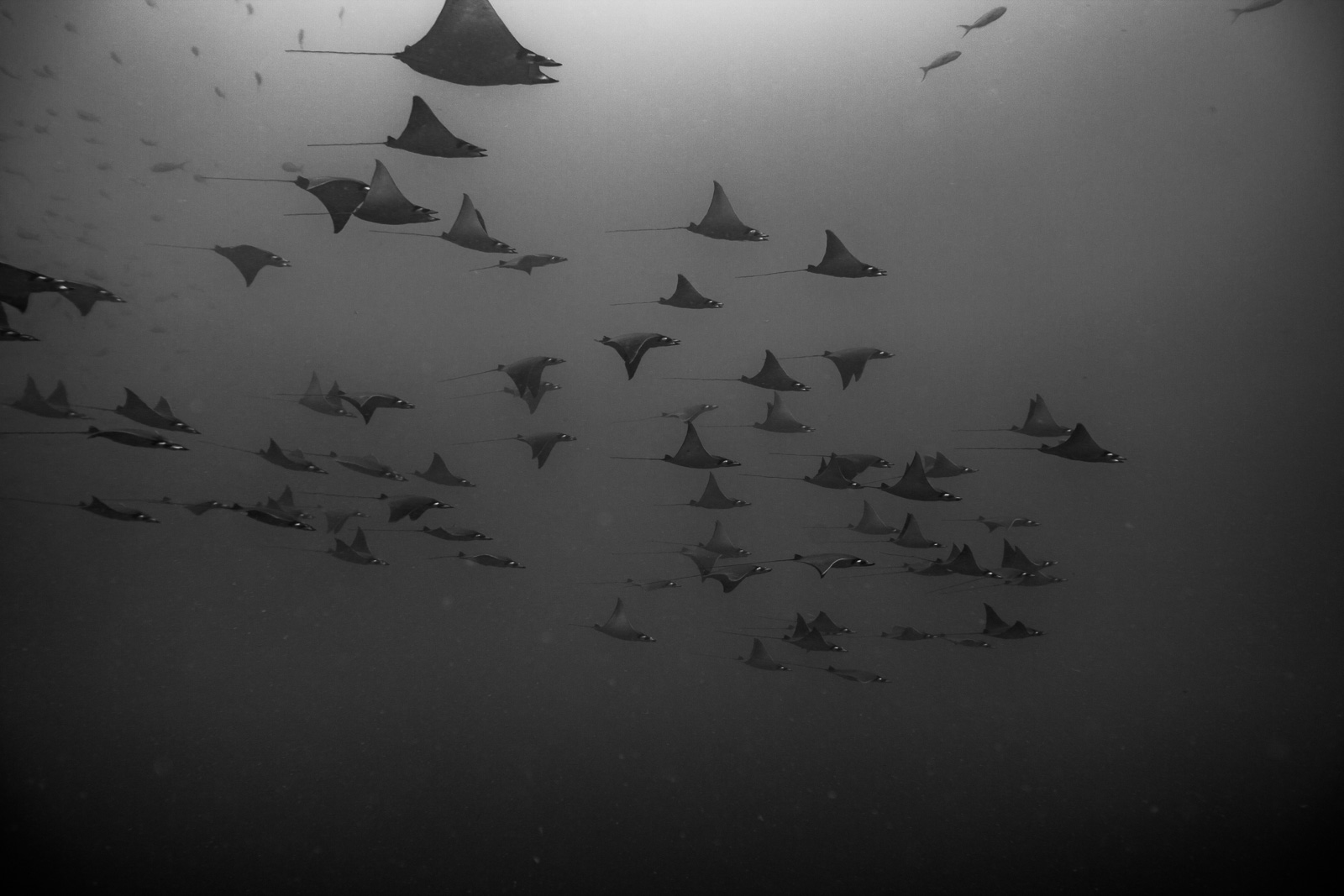
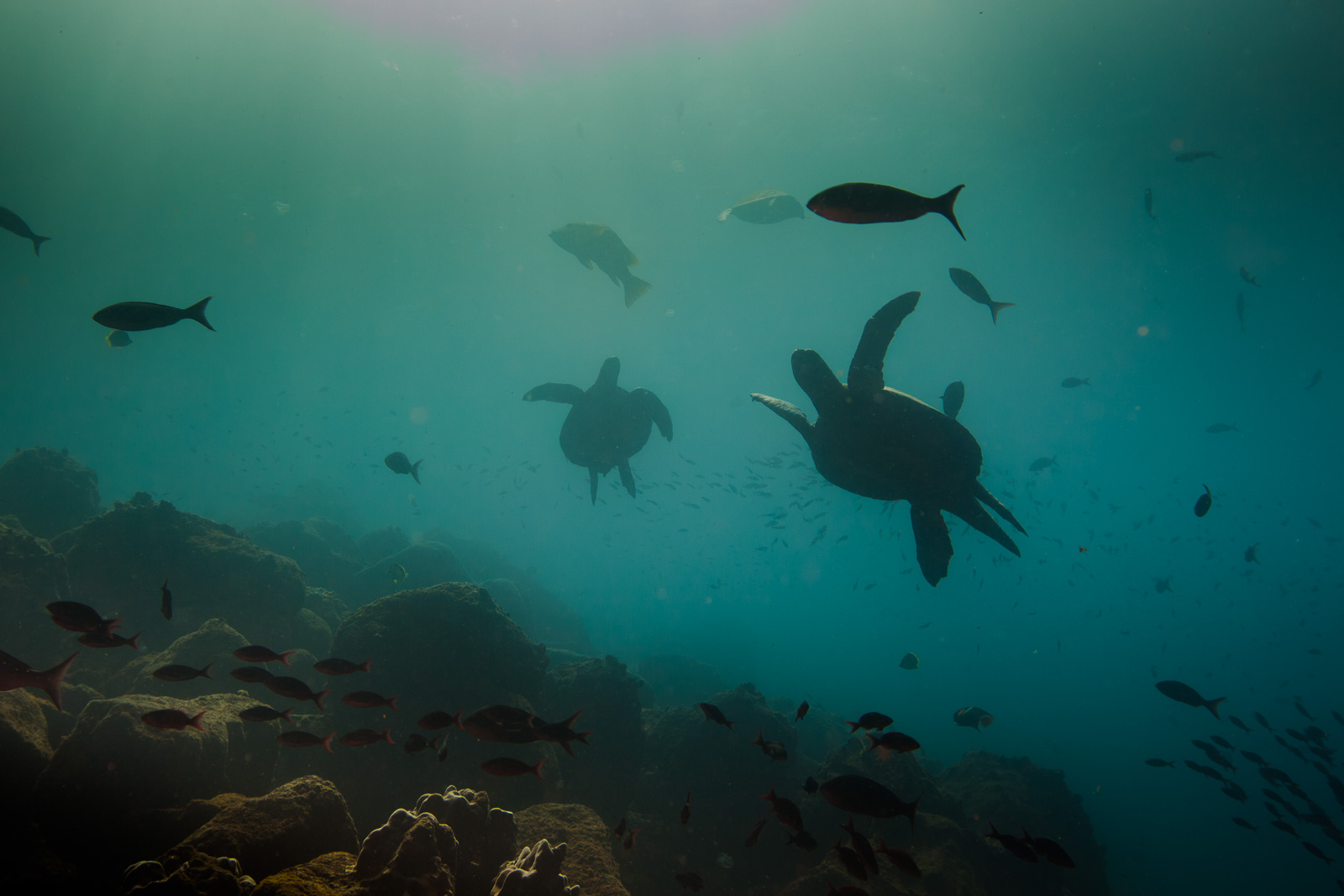
Everything here is sharpened by pressure. Three ocean currents converge — Humboldt, Cromwell, Panama — and they bring cold water, nutrients, and the animals that follow both. Hammerheads in schools that block the light. Whale sharks in season at Darwin. Galápagos sharks, eagle rays, mobulas, sea lions that arrive at speed and leave before you have focused.
Three ocean currents converge on the archipelago — Humboldt, Cromwell and Panama. Cold water arrives from the south, an undersea river pushes up from the west, and between them they feed the whole system. That convergence is the reason everything here is bigger, denser and stranger than it has any right to be on the equator.
Above the surface it does not let up either. This is the archipelago that gave Darwin the idea, and the reason is visible from the tender: every island has produced something slightly different from its neighbour. You spend the surface intervals watching it happen, which very few dive trips can offer.
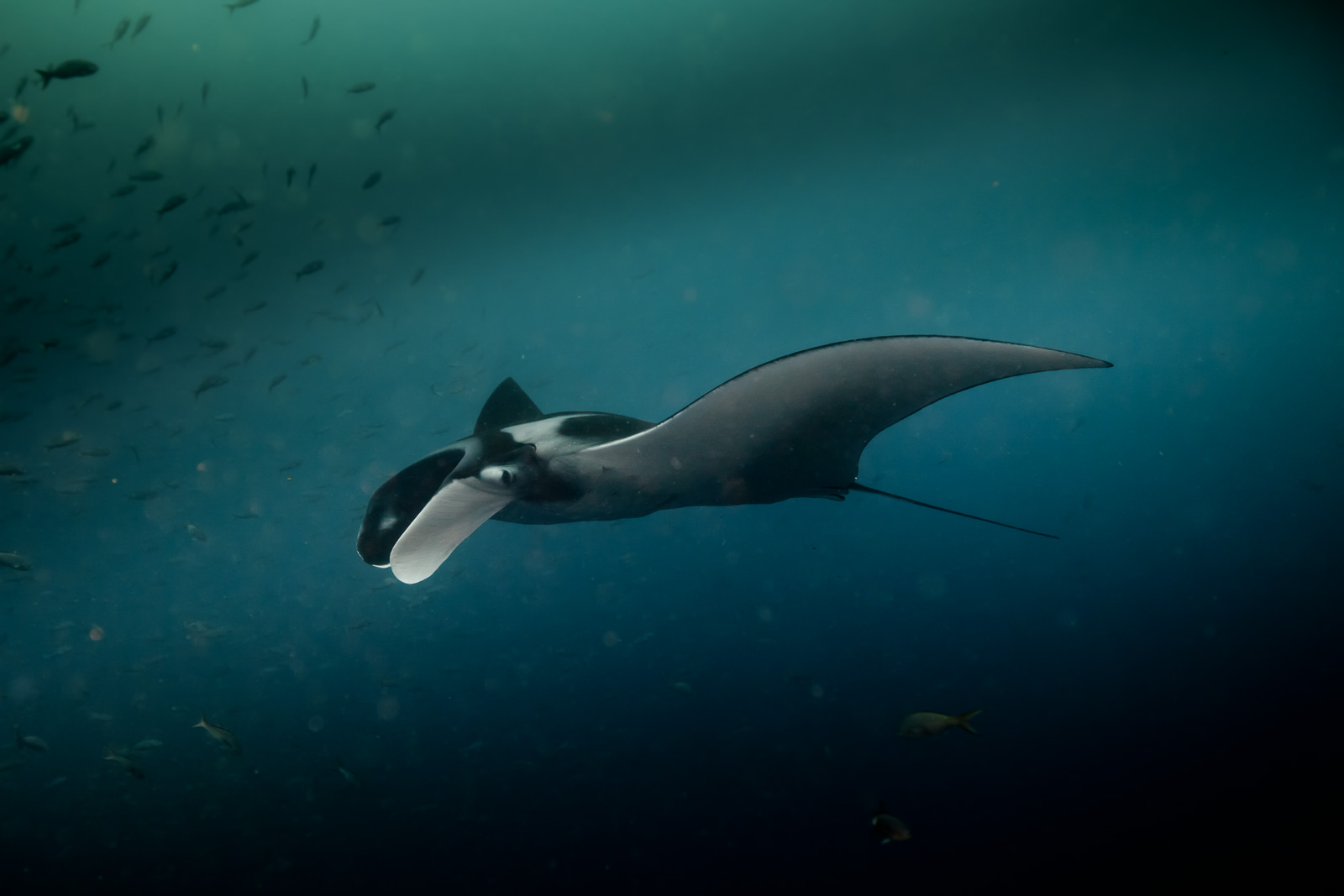
This is wide-angle diving in cold, moving, often green water, and it produces pictures you cannot take anywhere else. Scale is the currency here: a hammerhead school with no visible end, a whale shark that fills the dome, sea lions arriving at the port faster than autofocus.
Shoot for the moment rather than the set. The current decides where you are, so the good frames come to you rather than being arranged, and the photographers who do best here are the ones who stay ready and stop planning.
Simplicity wins. A reliable autofocus rig, clipped off and streamlined, beats a specialised manual setup every time — and on the biggest days, some of the strongest photographers on the boat leave the camera on deck and dive with both hands free. They come back grinning.
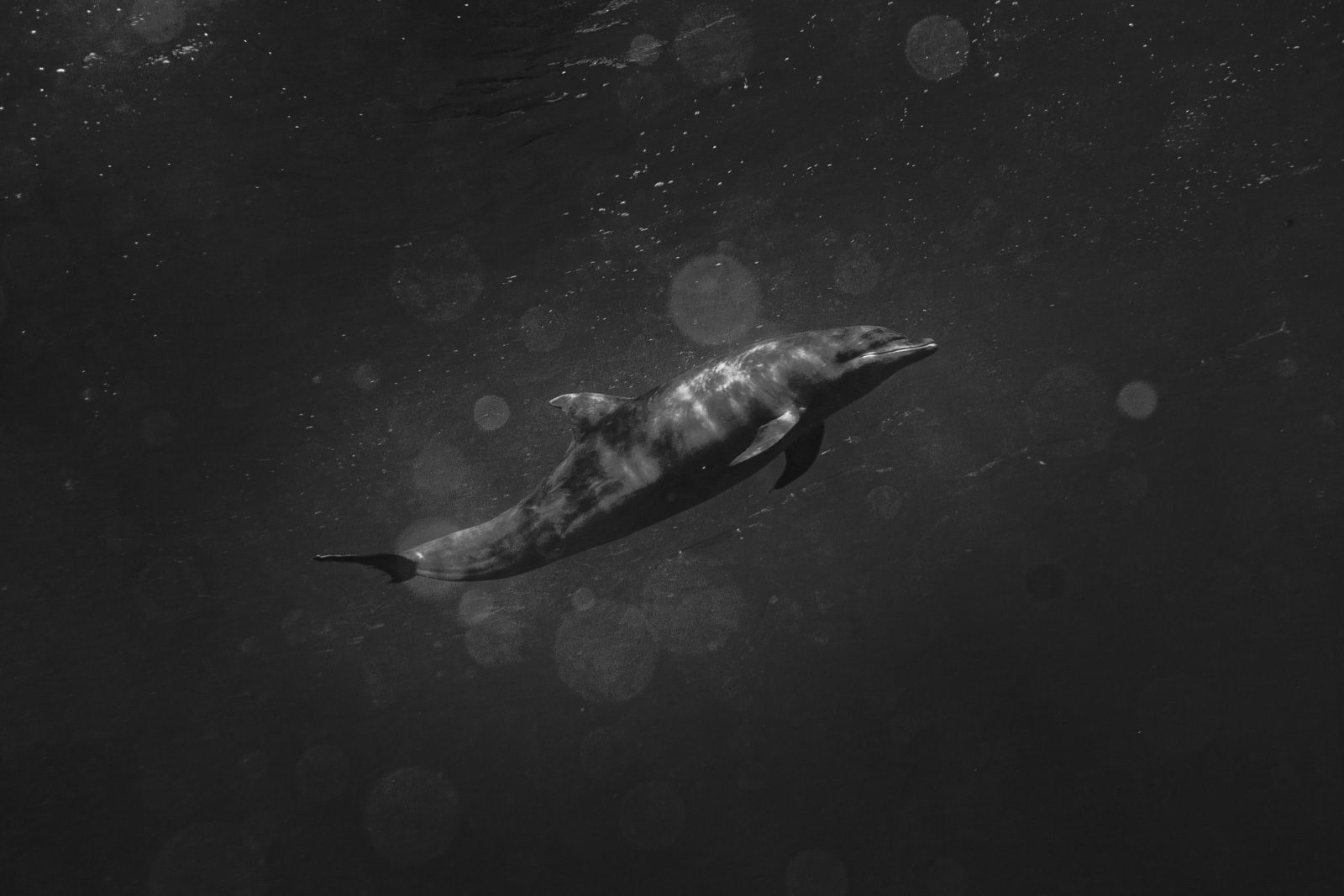
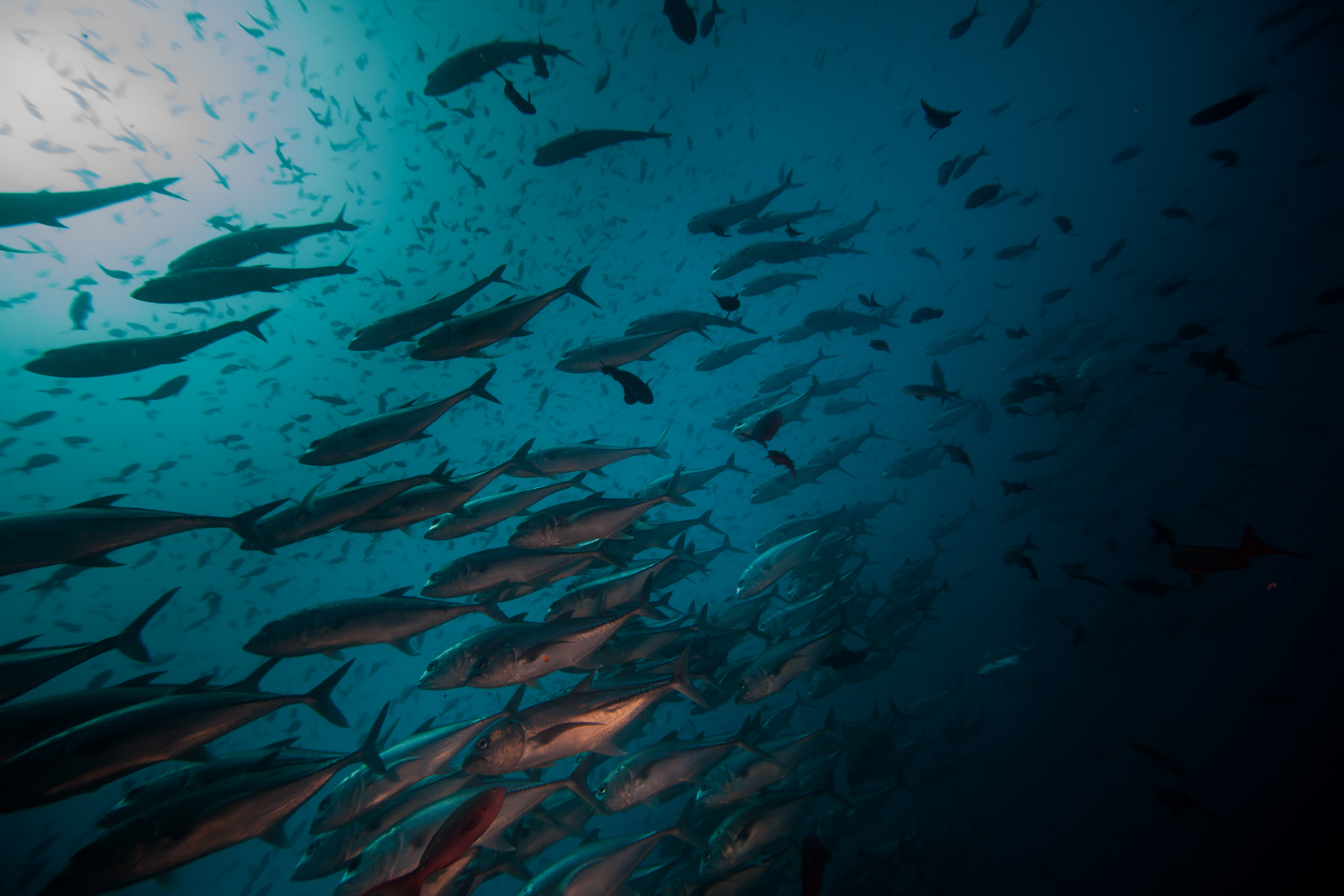
Every frame here was made at Galápagos in 2010, in the conditions that turned up rather than the ones I hoped for. Click any of them to open it full size.
Any frame on this page can be licensed for editorial use. Licensing terms.
June to October is when Galápagos is at its best. Tap any month for what the water is actually doing.
Visibility, sea state, what is in the water and how much of it you can count on. The season turns at January and again after March.
Six I dived more than once and would plan a week around, named as the resort names them.
The whole reason the itinerary exists
Seasonal, physically demanding, and where the whale sharks are. Only reachable by liveaboard, and the entire northern route is built around getting you here on a good day.
The shark wall
Schooling hammerheads in numbers that stop making sense. Settle onto the rock, get your breathing under control, and look up — they keep passing.
The gentler one, and the most photographable
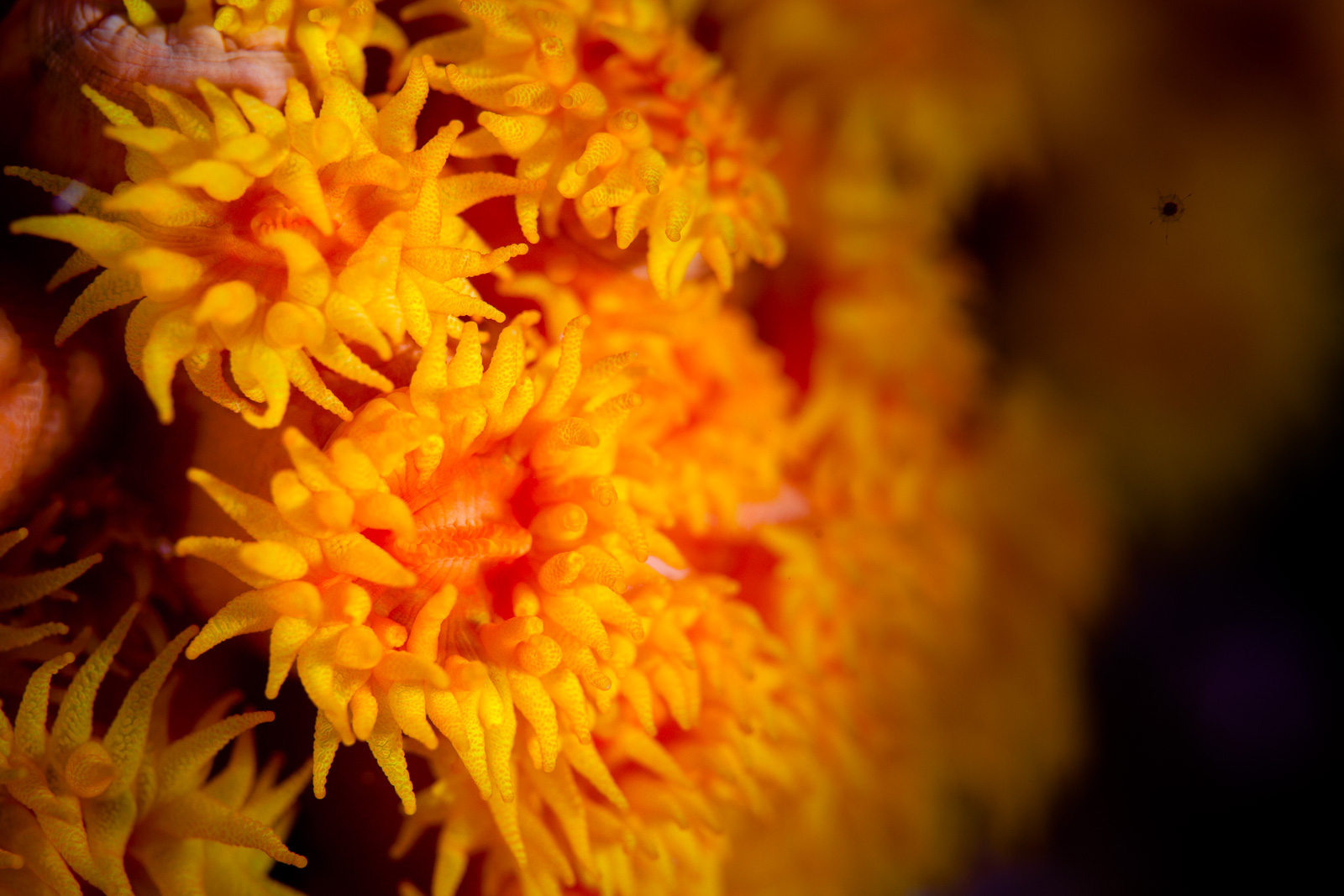
Macro, black coral and sea lions that treat a diver as entertainment. Lower velocity than the north, and the site where most people get their best frames.
Cold, green, and worth it
Mola mola territory. The water is genuinely uncomfortable here and the animals are the reason you put up with it.
The manta wall
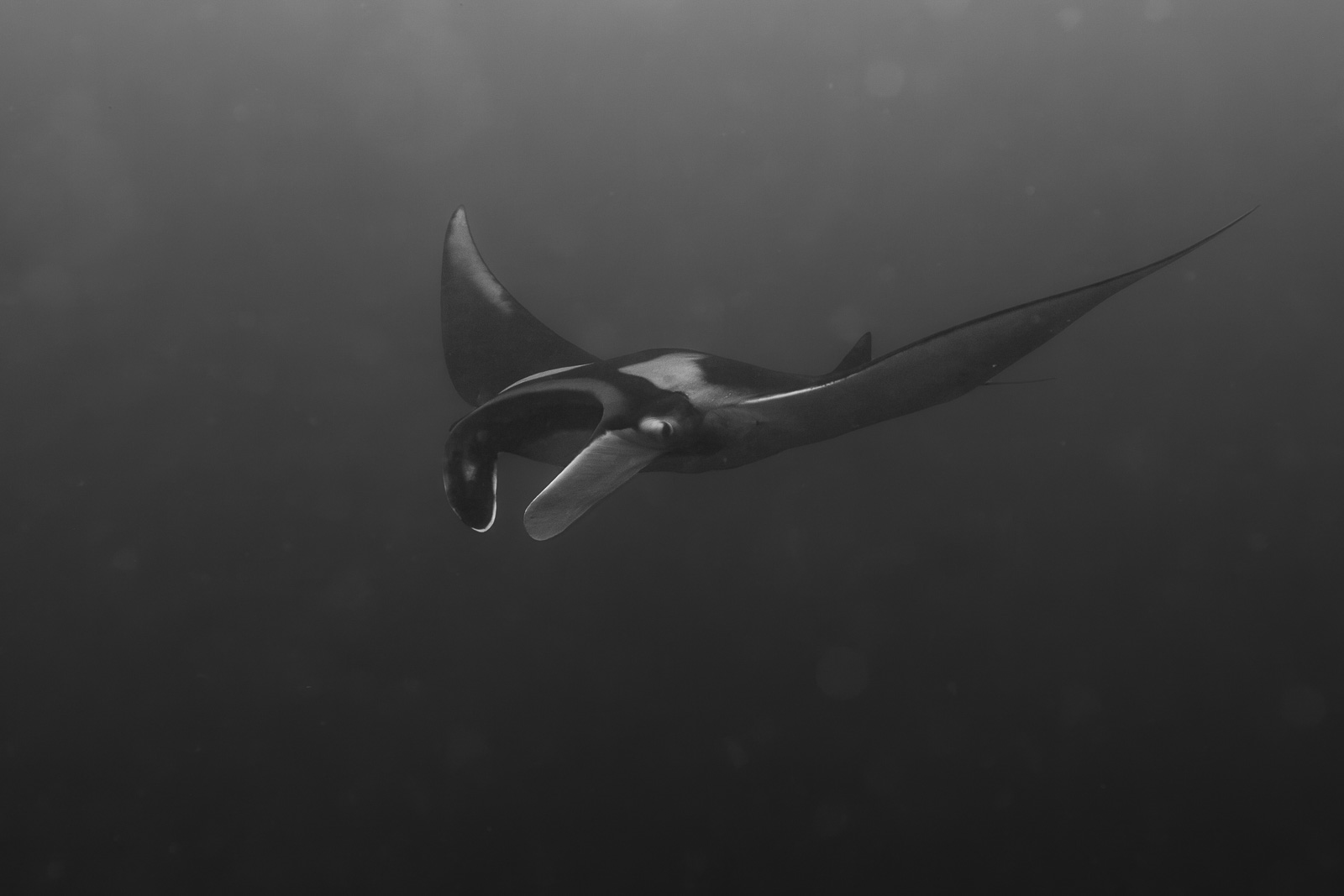
Oceanic mantas along a sheer volcanic drop-off when the current lines up. Nothing about it is guaranteed and everything about it is worth waiting for.
The washing machine
An exposed crater profile reachable from the central islands, and the one that gets talked about in bars. Currents run vertically as well as sideways. Not a casual dive.
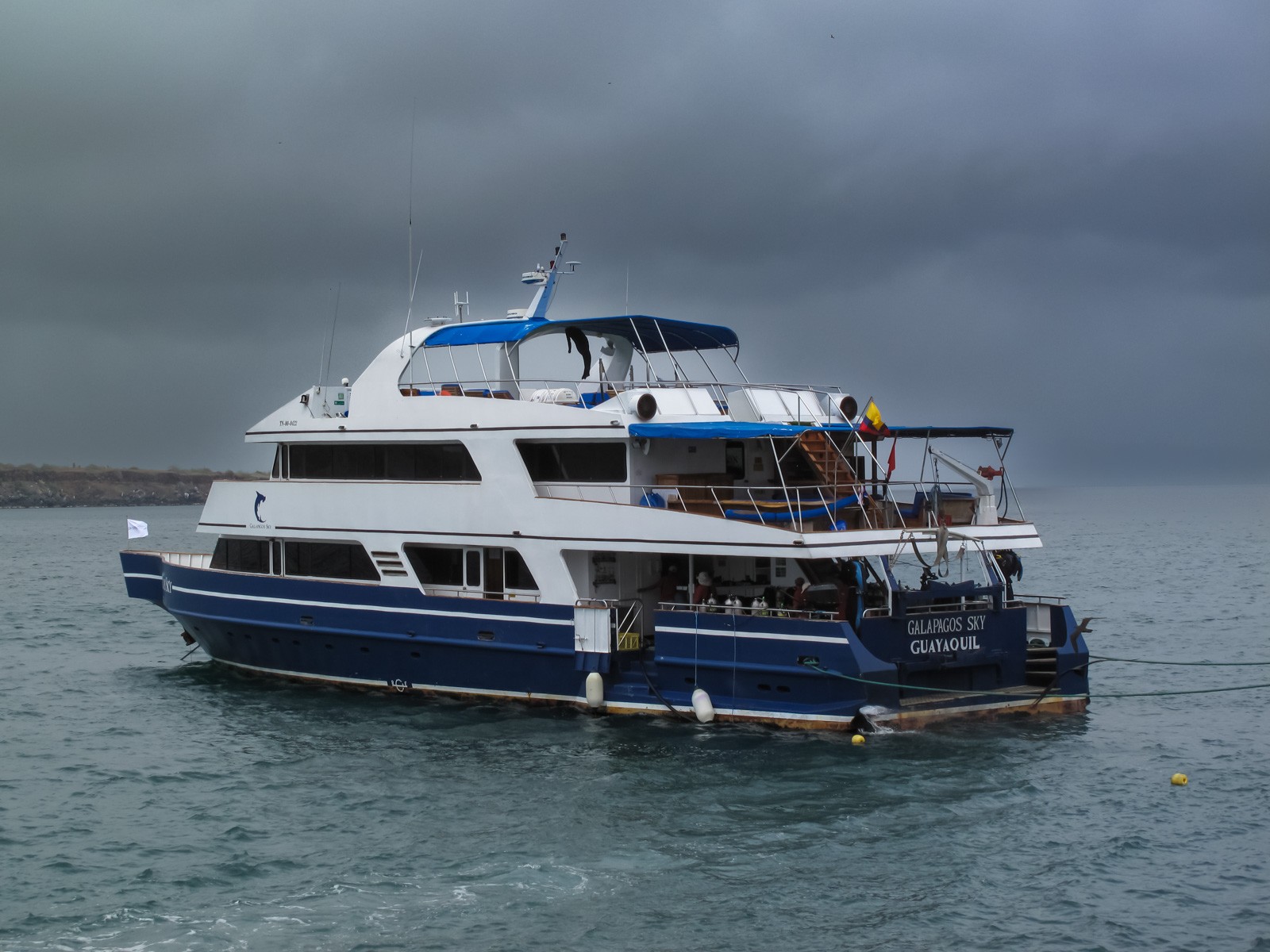
One operator scored here. The number worth knowing before you book is not the price — it is the dive count. The northern islands are only reachable by liveaboard, so the boat is the trip, and the itinerary includes land as well as water.
Asked in the order they actually matter, answered with specifics.
Fewer than the brochure implies, and this is the number worth checking. On my twelve-day trip, two afternoons went to land tours and a further full day to an island visit — so twelve days bought nine days of diving.
The land days are genuinely worth having. Just count the tanks before you pay.
Darwin and Wolf, which are the reason most people come, are only reachable by liveaboard. Land-based diving around the central islands is rewarding and is a different trip.
Fitter than you think. Repetitive current diving is genuinely tiring by day five, and tiredness is what turns a demanding dive into a bad one. Recent water time matters more than any certification card.
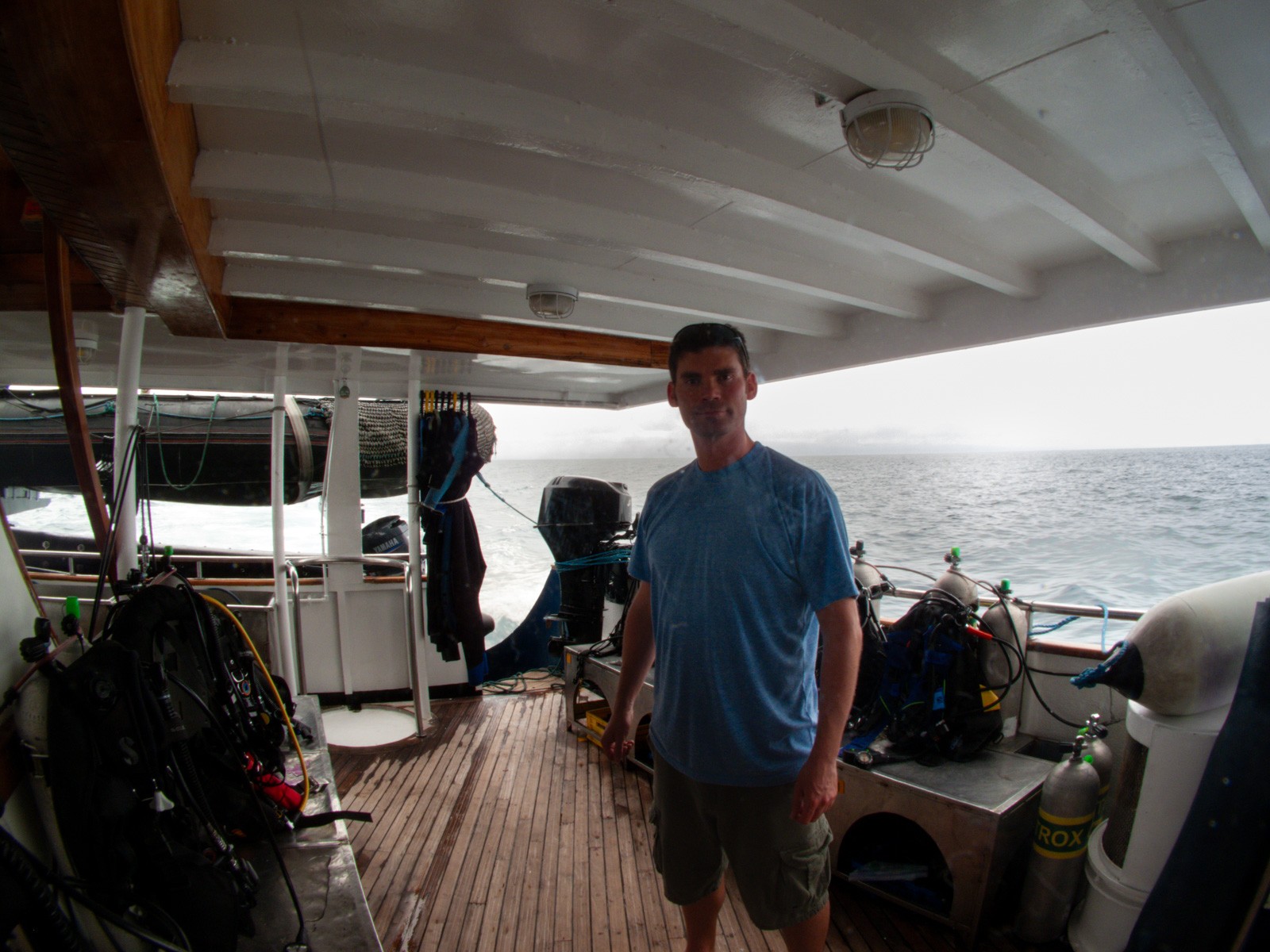
A streamlined, reliable autofocus rig, clipped off properly. Exposure protection for water that changes temperature quickly. An SMB, a cutting tool and an audible signalling device, all of which are practical rather than box-ticking here.
December to May is warmer with calmer surfaces and often better visibility. June to November is cooler, richer and the classic window for whale sharks at Darwin. Neither is an easy-mode version.
The right-hand column is the useful one. Misool is expensive enough that going for the wrong reason is an expensive way to find out.
Liveaboard is the only way to reach Darwin and Wolf. Day-boat diving from the inhabited islands is a different and much lesser trip.