The story
Soft coral on volcanic pinnacles in numbers that look adjusted. Less famous than its neighbours and, in the right light, no less remarkable.
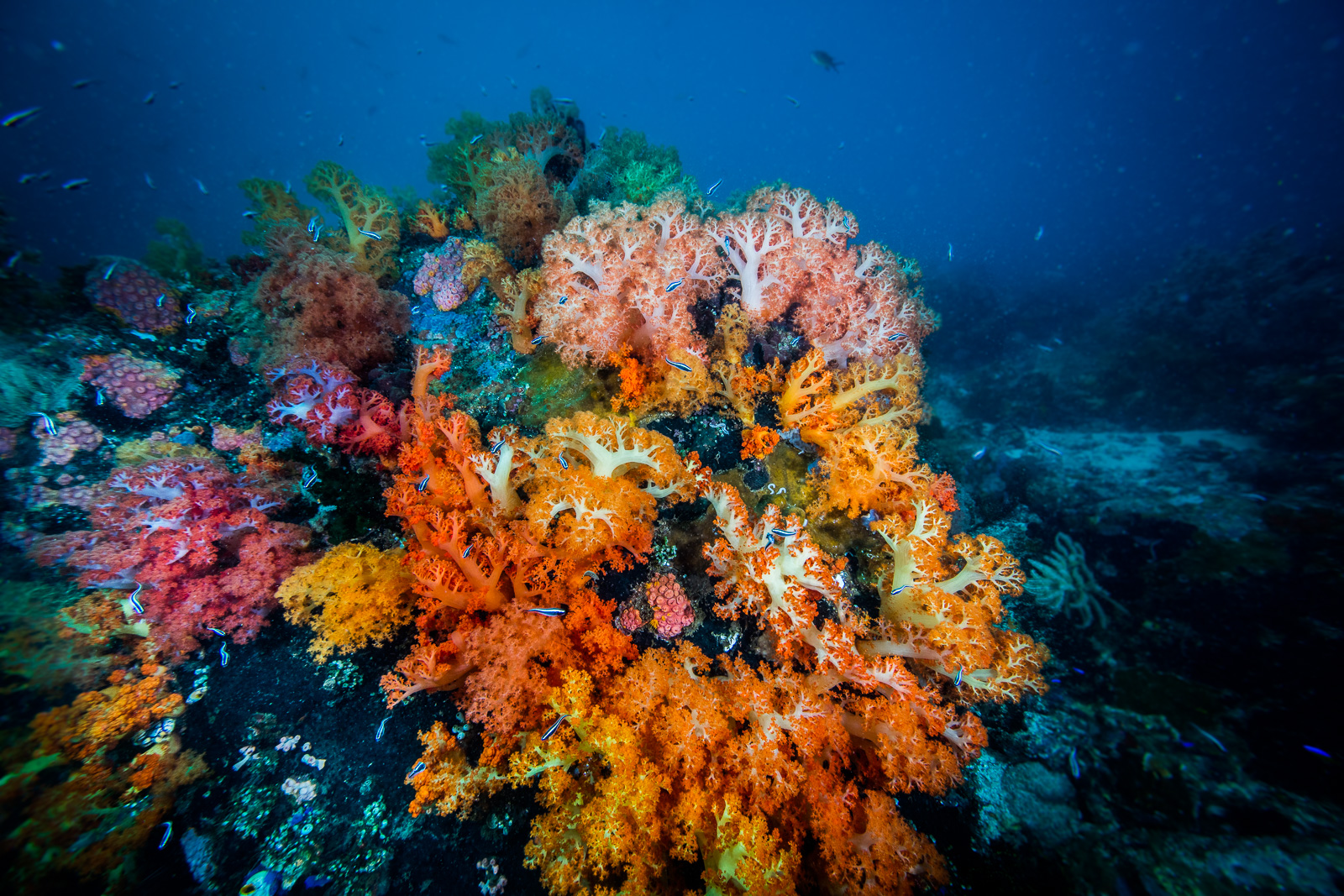
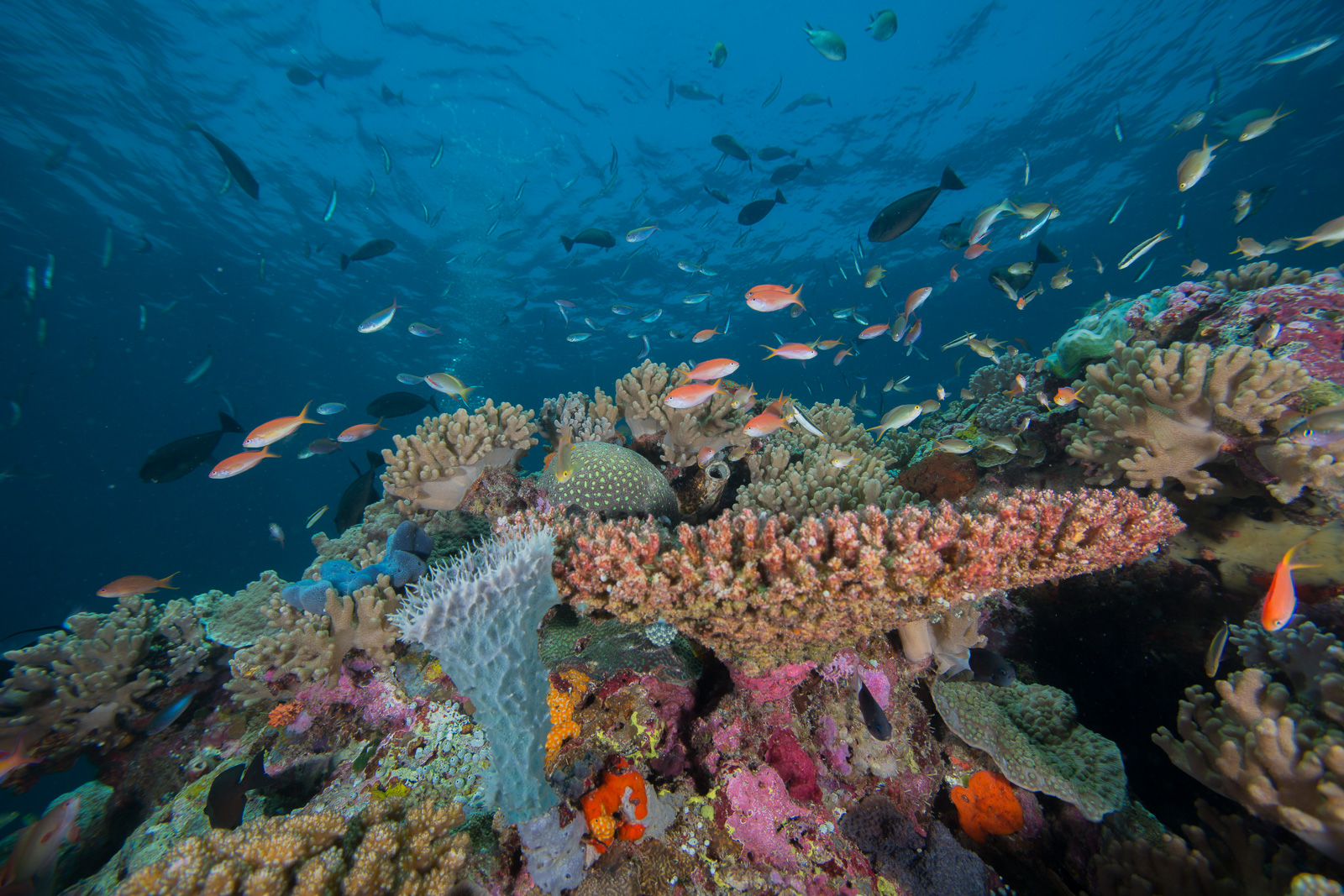
Two pinnacles rise almost to the surface at Sahaung, and the soft coral on them stays shut until the current runs. Then the whole rock opens at once.
Scored below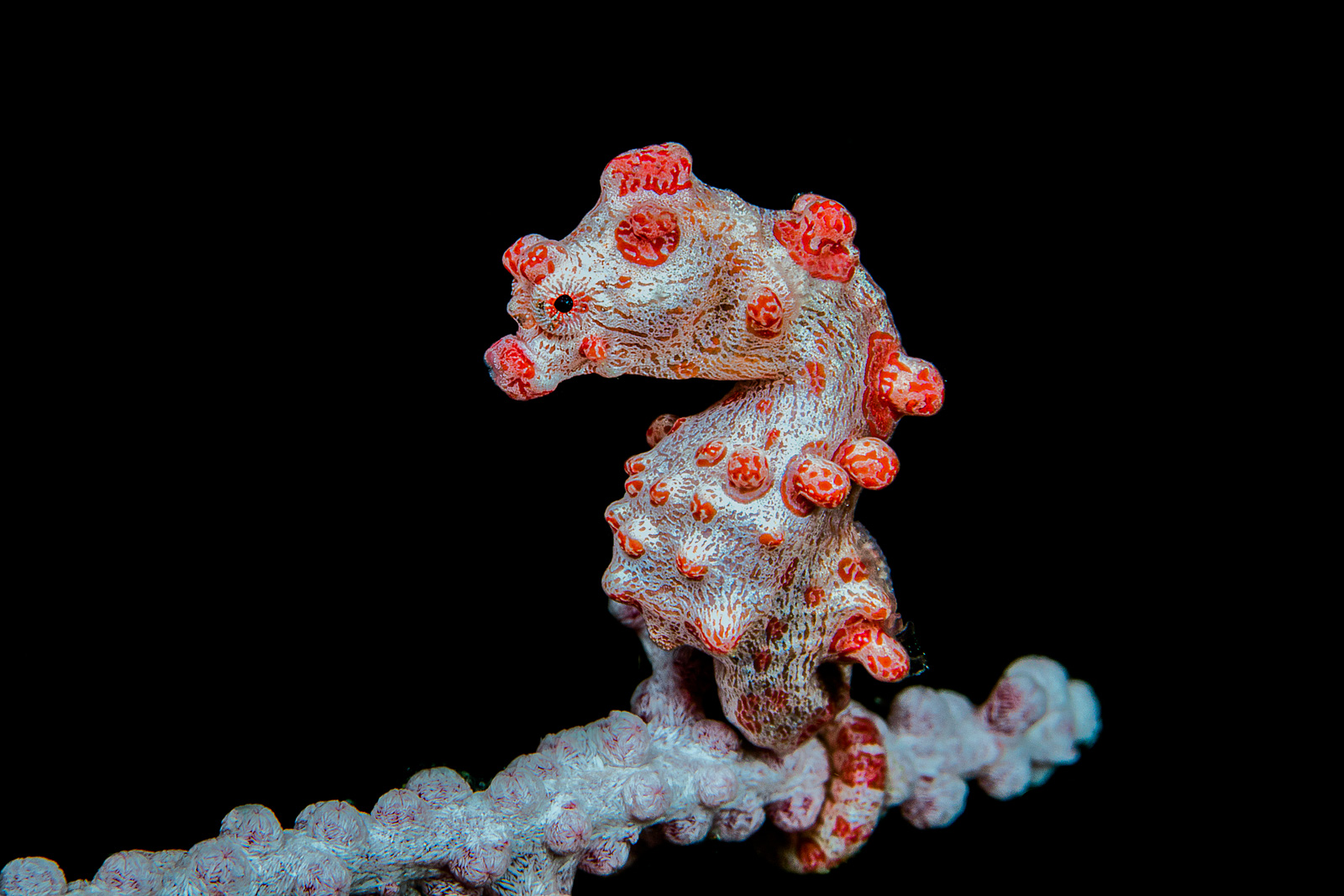
Bangka started with a few small budget operators and the Coral Eye marine research station. Siladen bought Coral Eye a couple of years ago and expanded the research side, and the result is a single property with two completely different price points: humble rooms in the old station, or self-contained cottages with private pools, and about a fourfold difference in what you pay. Same reef, same boat. Very few destinations let you pick your budget without changing your reef.
Coral Eye is the most striking building on this site architecturally, and it is run to a standard that has a lineage. Ana and Miguel came from Portugal, ran Lembeh Resort on my first trip there, moved to Siladen in 2014, and spent a decade building the way that place works. Coral Eye is where that standard now gets a brand new building to live in.
Food is à la carte and ordered ahead: lunch in the morning, dinner at lunchtime. It is the Wakatobi format and it means nothing arrives from a buffet tray.
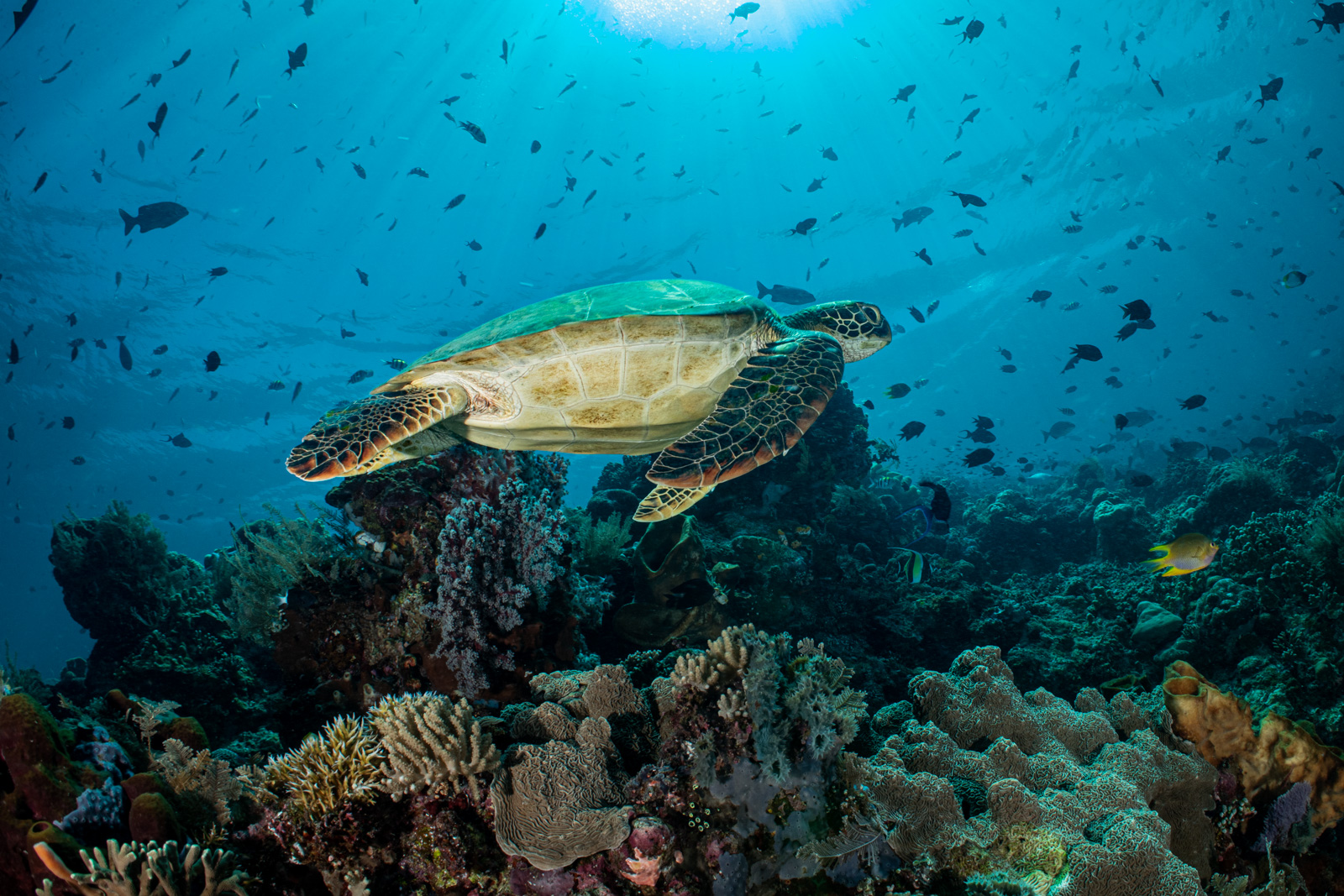
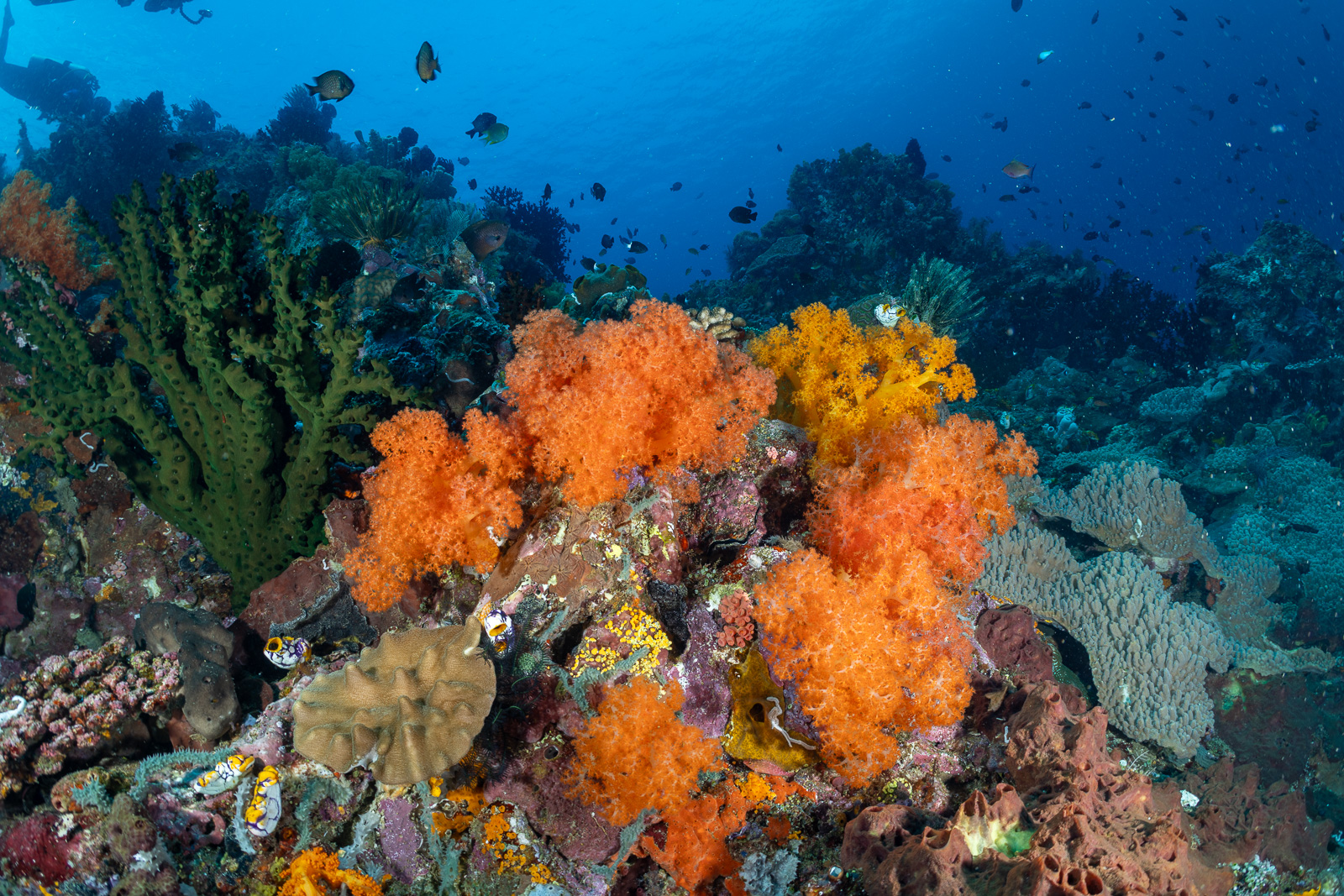
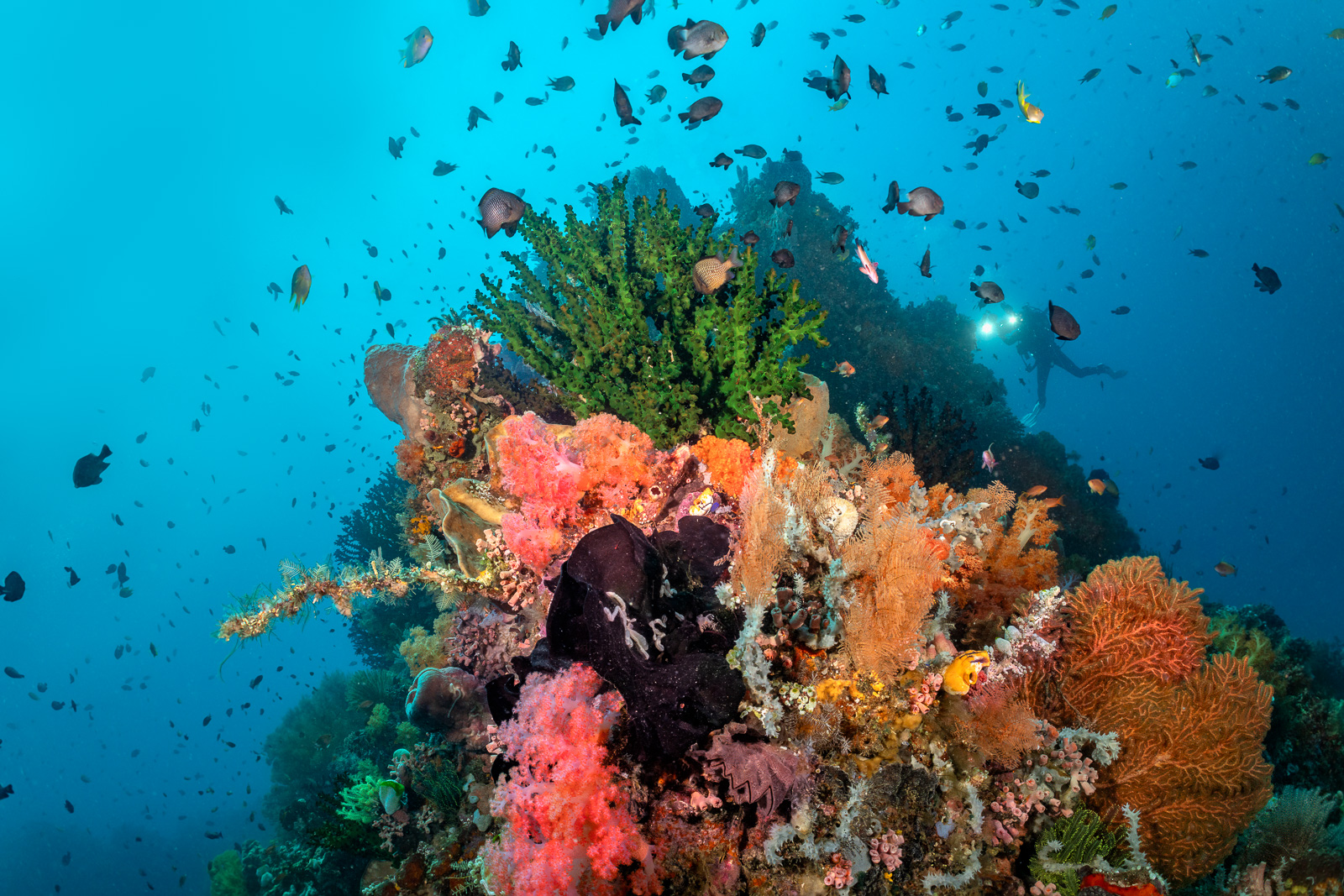
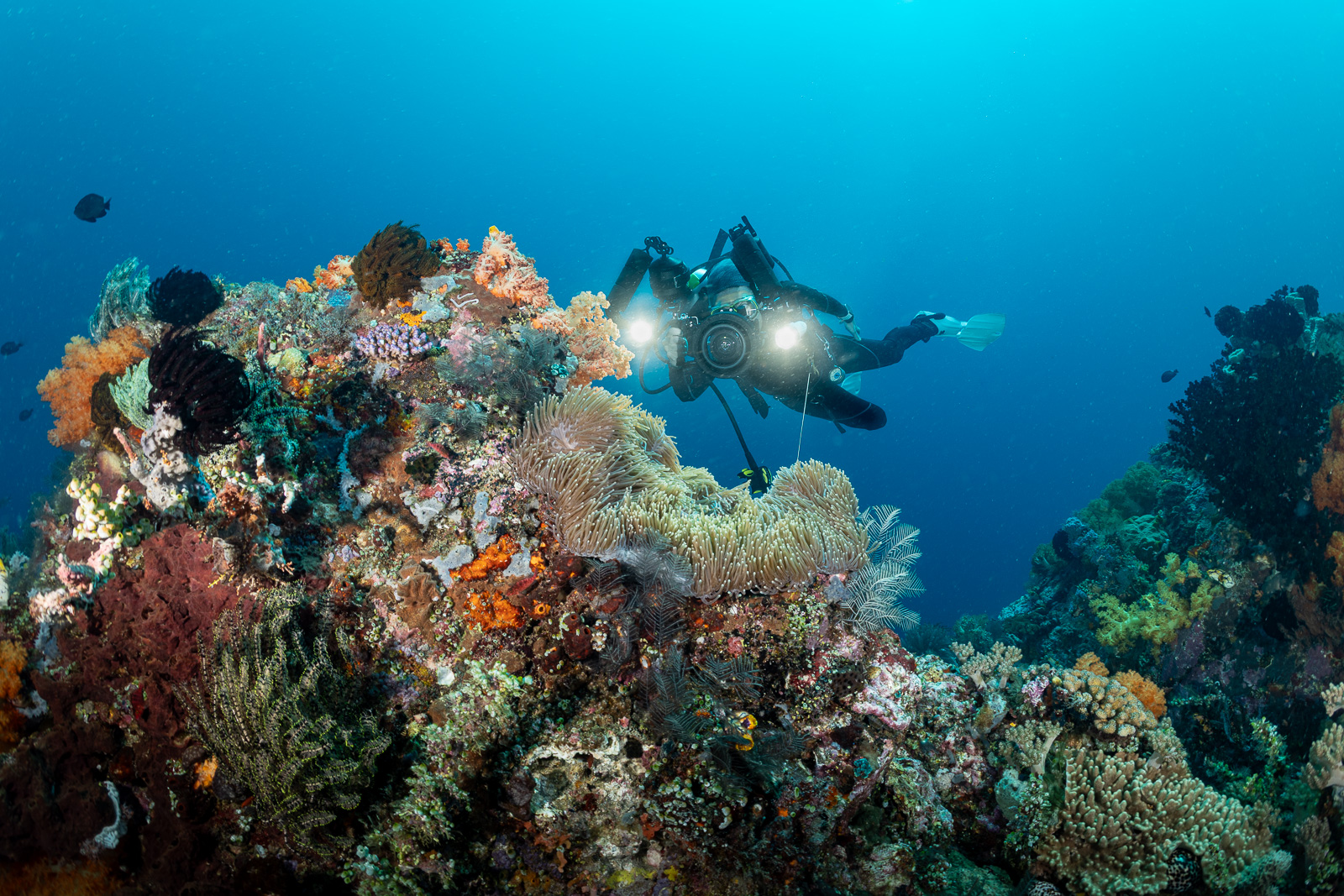
The diving is soft coral bommies, sloping reef, and small subjects that turn up without being hunted for. It is the least famous reef in this library and the fourth best scored, and those two facts have simply never met.
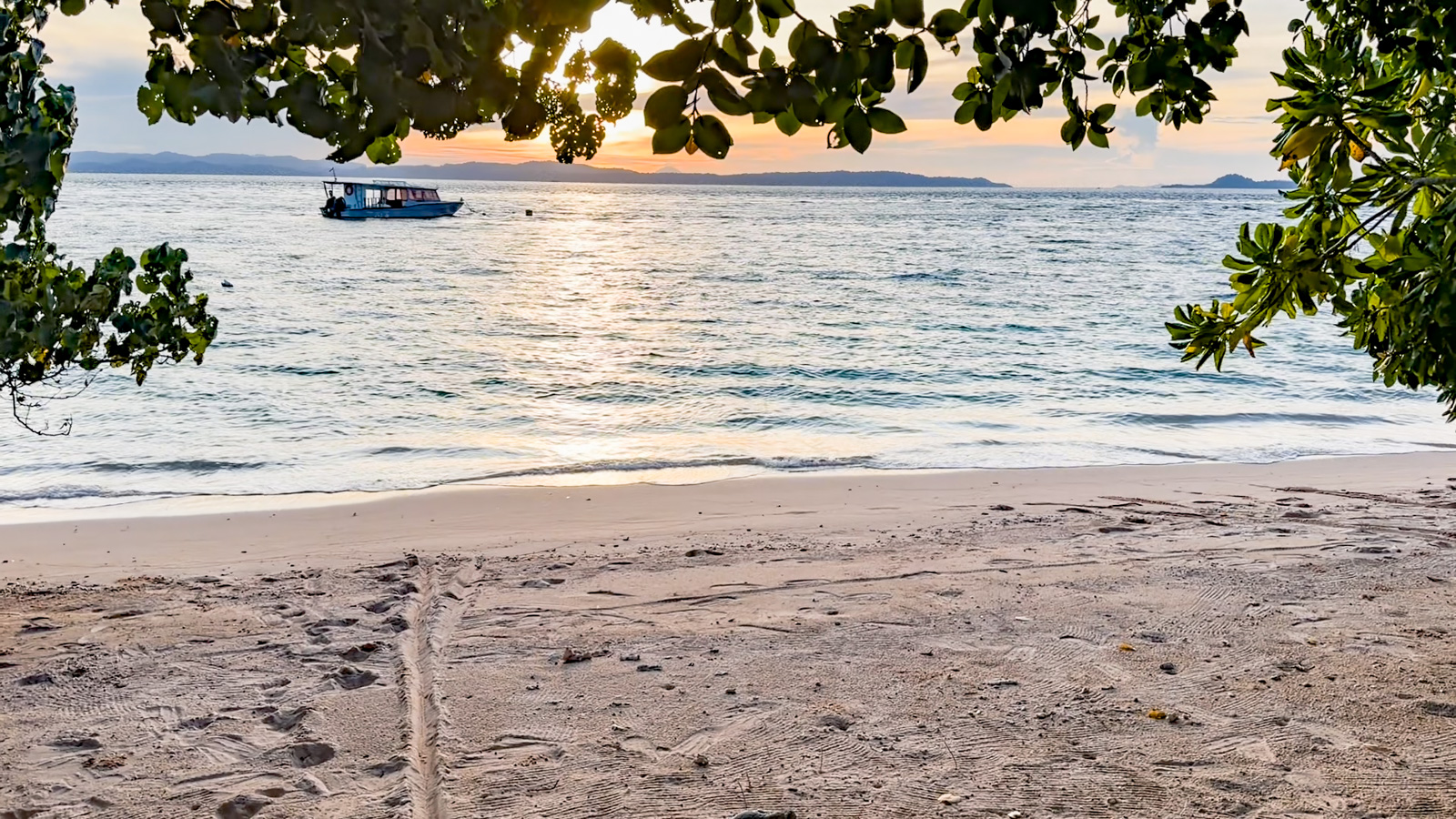
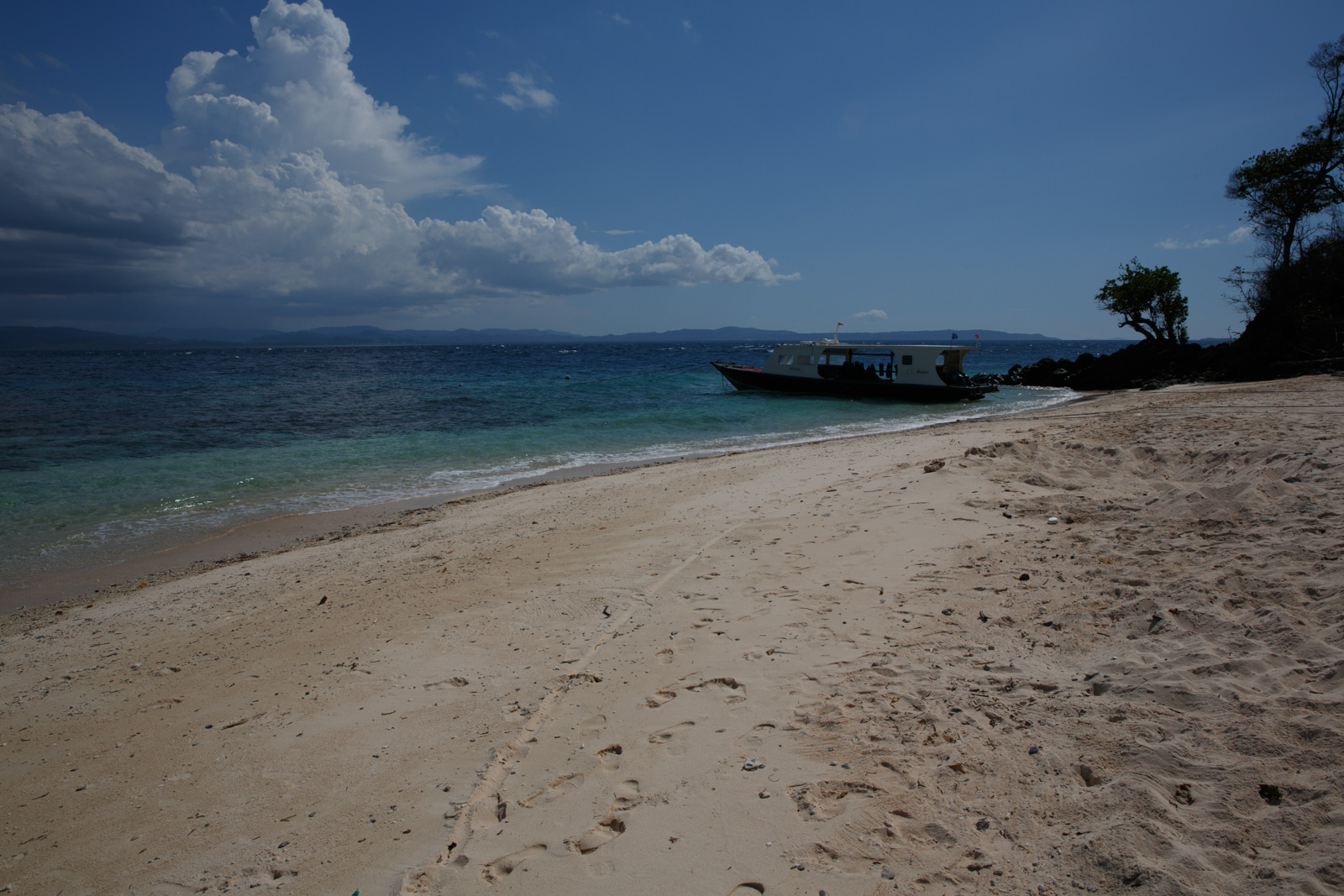
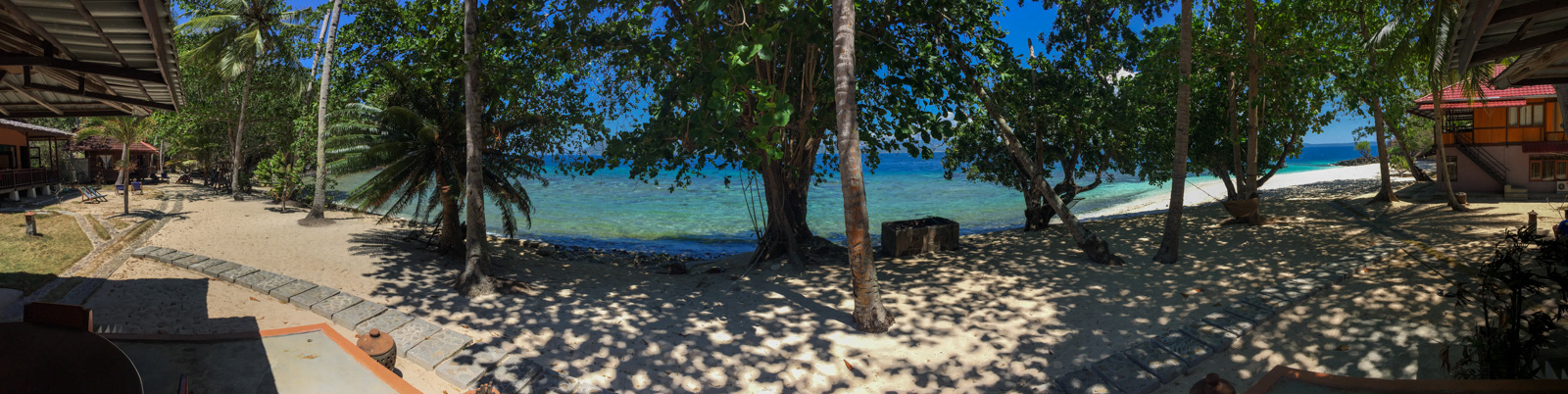
Bangka sits an hour north of Manado with white sand, healthy reef and soft coral bommies that would carry a page on their own anywhere else. It has no reputation, which is the only thing wrong with it, and the reason is that the people who know it have not needed to tell anyone.
Scored on the same rubric as every other place here, and published whether or not the number flatters. Seven of the seventeen came in under seventy; the lowest is forty-five.
The dot is Bangka Archipelago; the pale band is where the other sixteen places on this site fall on that axis. How the scoring works
Straightforward. Sheltered bommies, moderate current on the exposed sites, and boat dives that rarely go deep. If you have fifty dives and reasonable buoyancy you will be fine here, and it is a good place to build both.
April to October is when Bangka Archipelago is at its best, and nothing operates December to February. Tap any month for what the water is actually doing.
Visibility, sea state, what is in the water and how much of it you can count on. The season turns at April and again after October.
Manado is the gateway, and Bangka combines naturally with Lembeh and Bunaken into one North Sulawesi trip with a single set of flights.
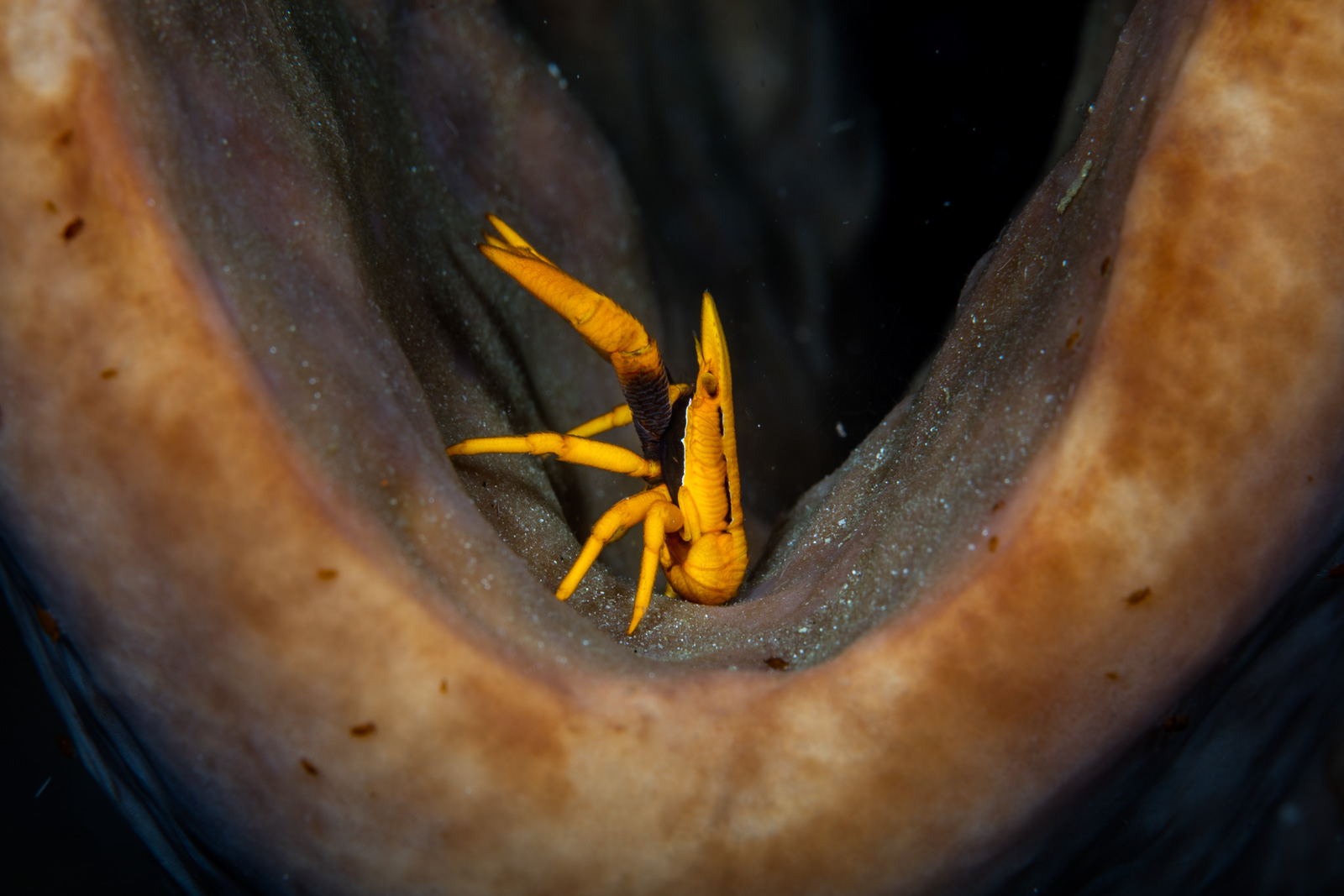
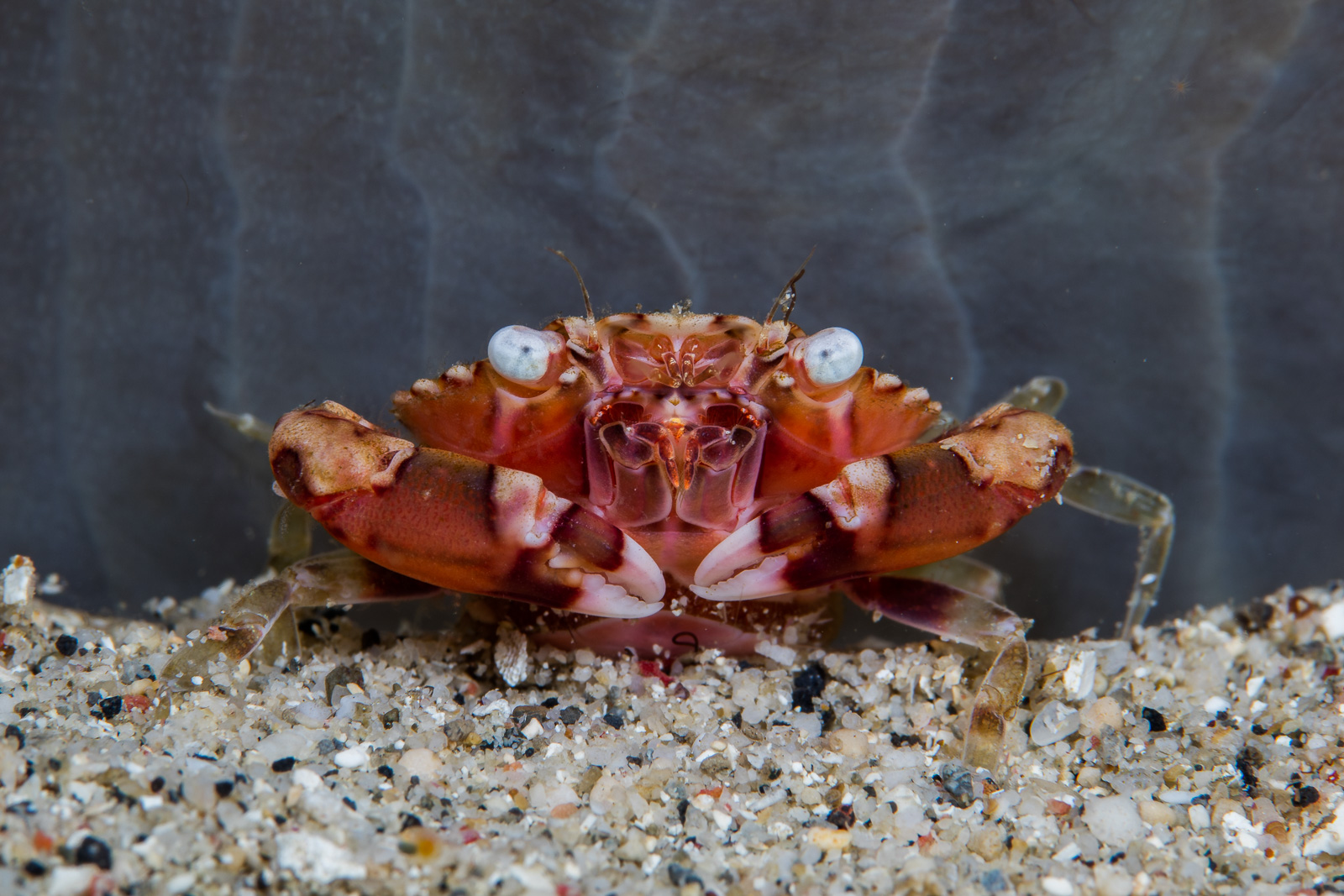
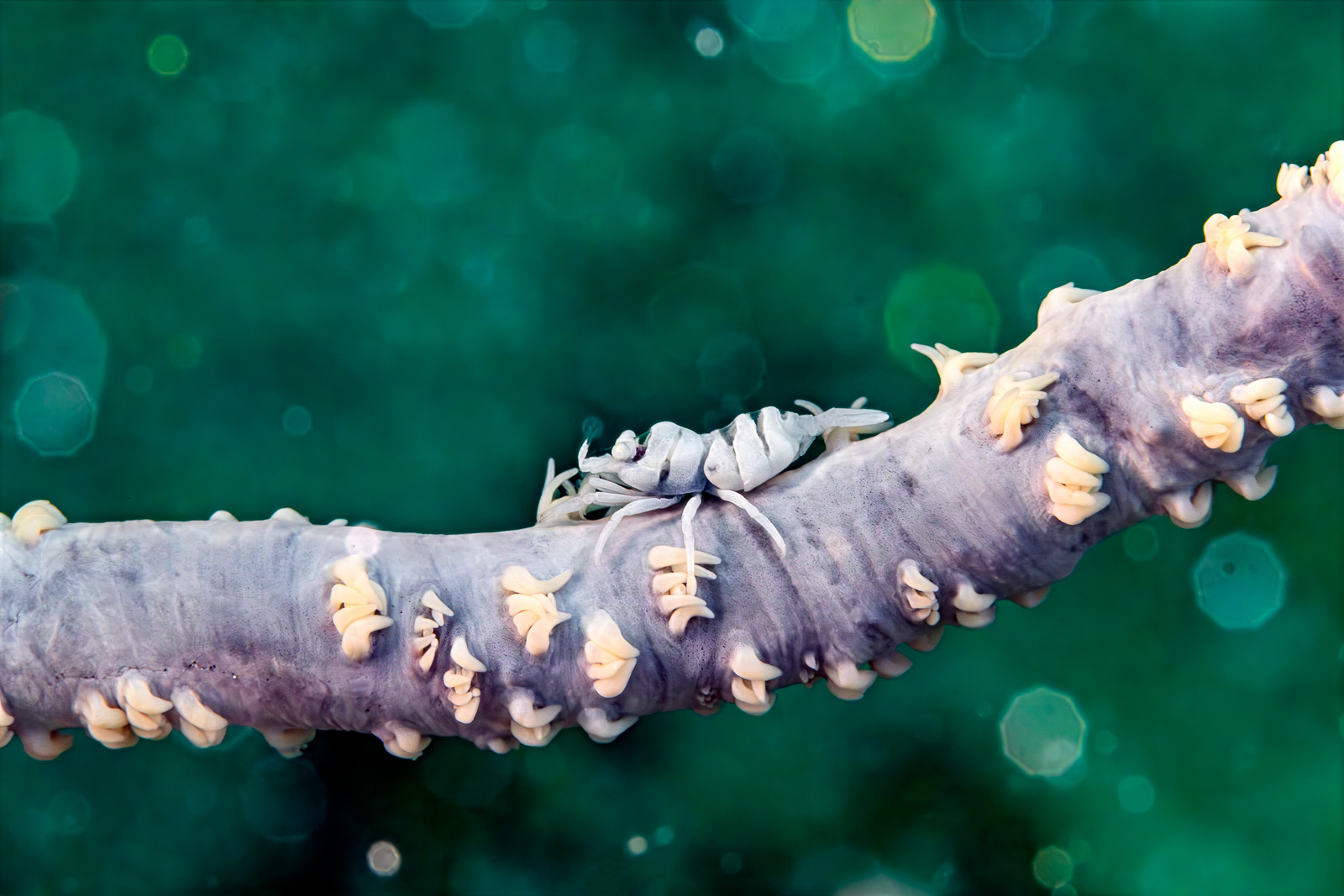
Twelve of the nineteen photographs from Bangka Archipelago, the prints among them marked.
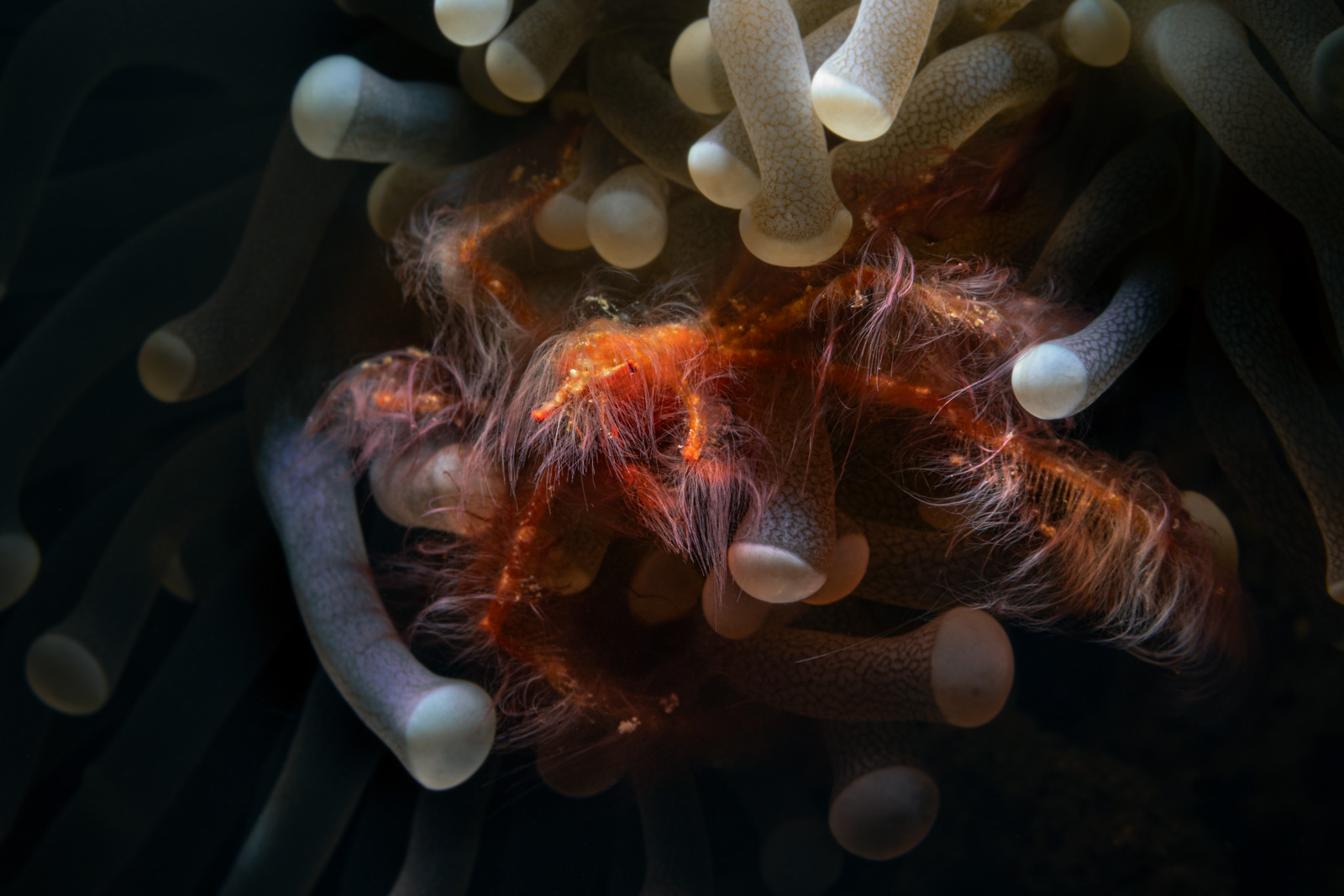
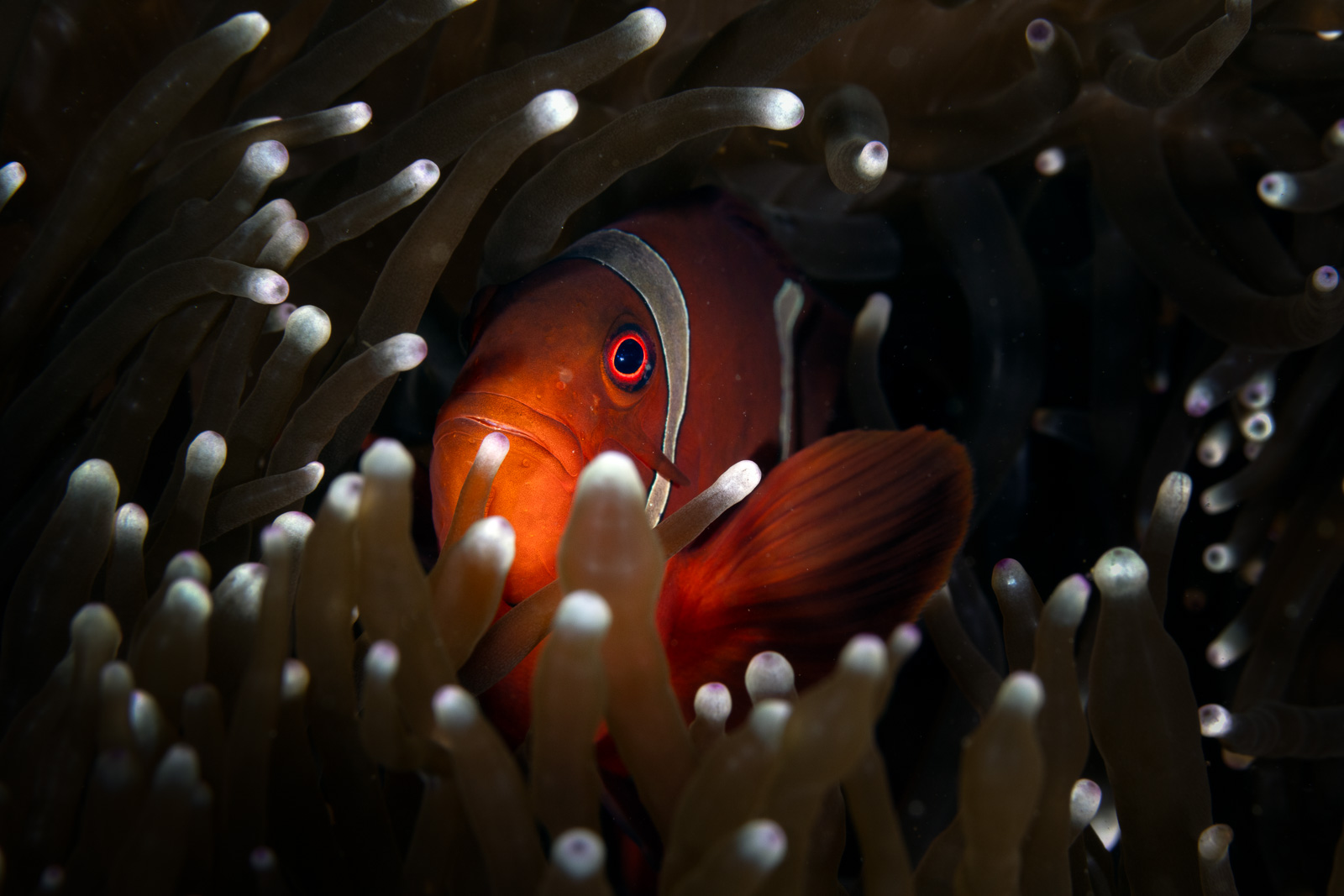
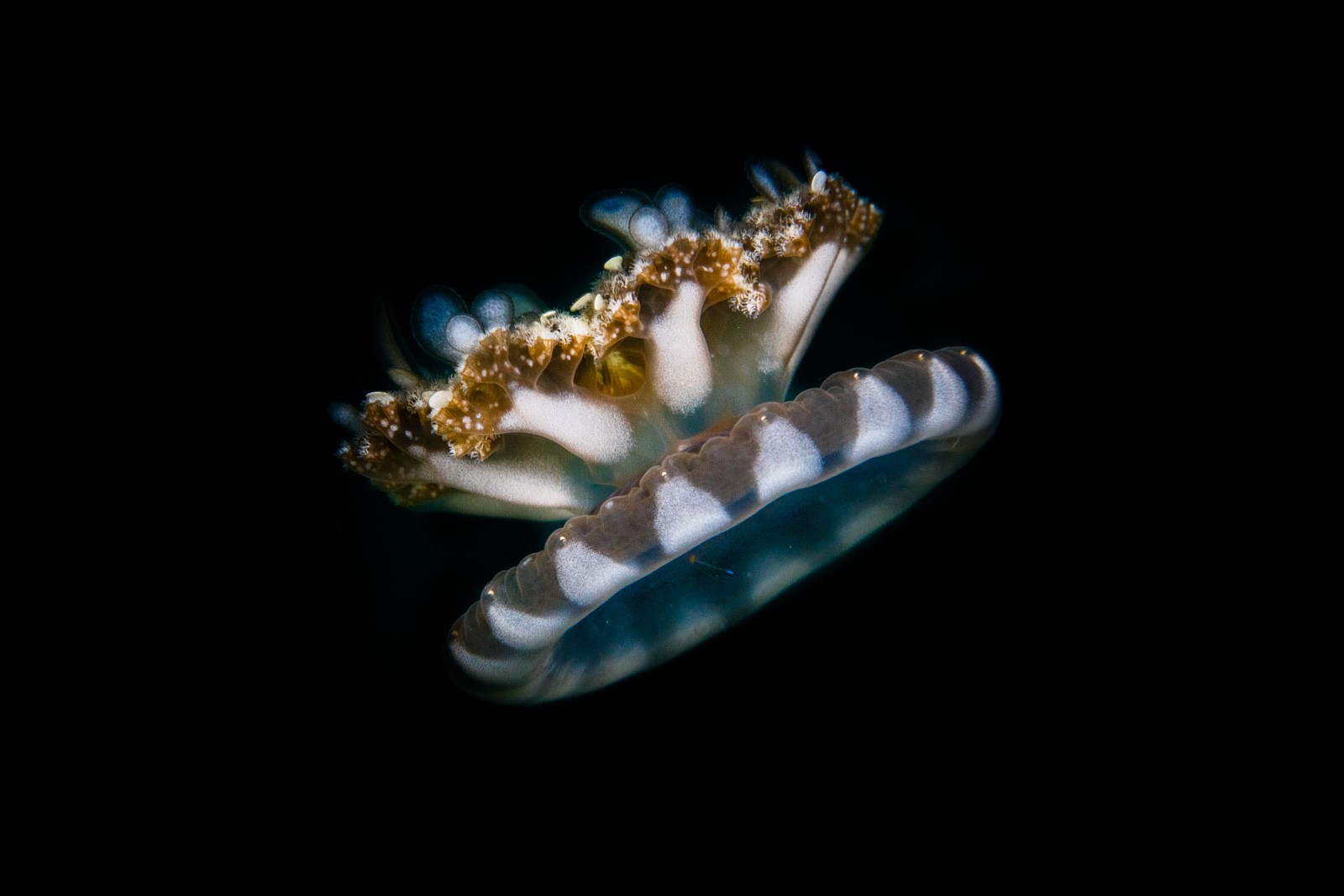
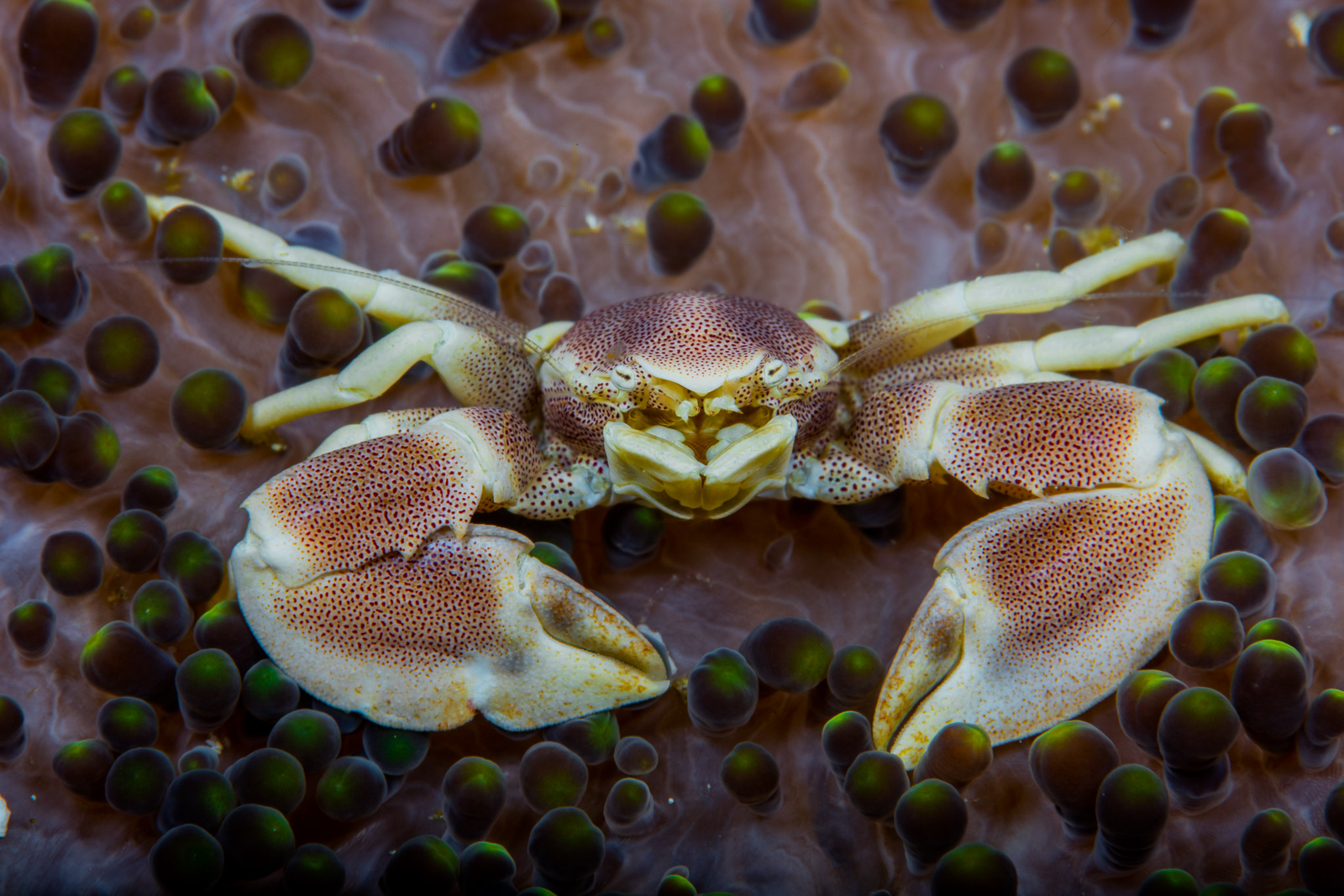
Any frame on this page can be licensed for editorial use. Licensing terms.
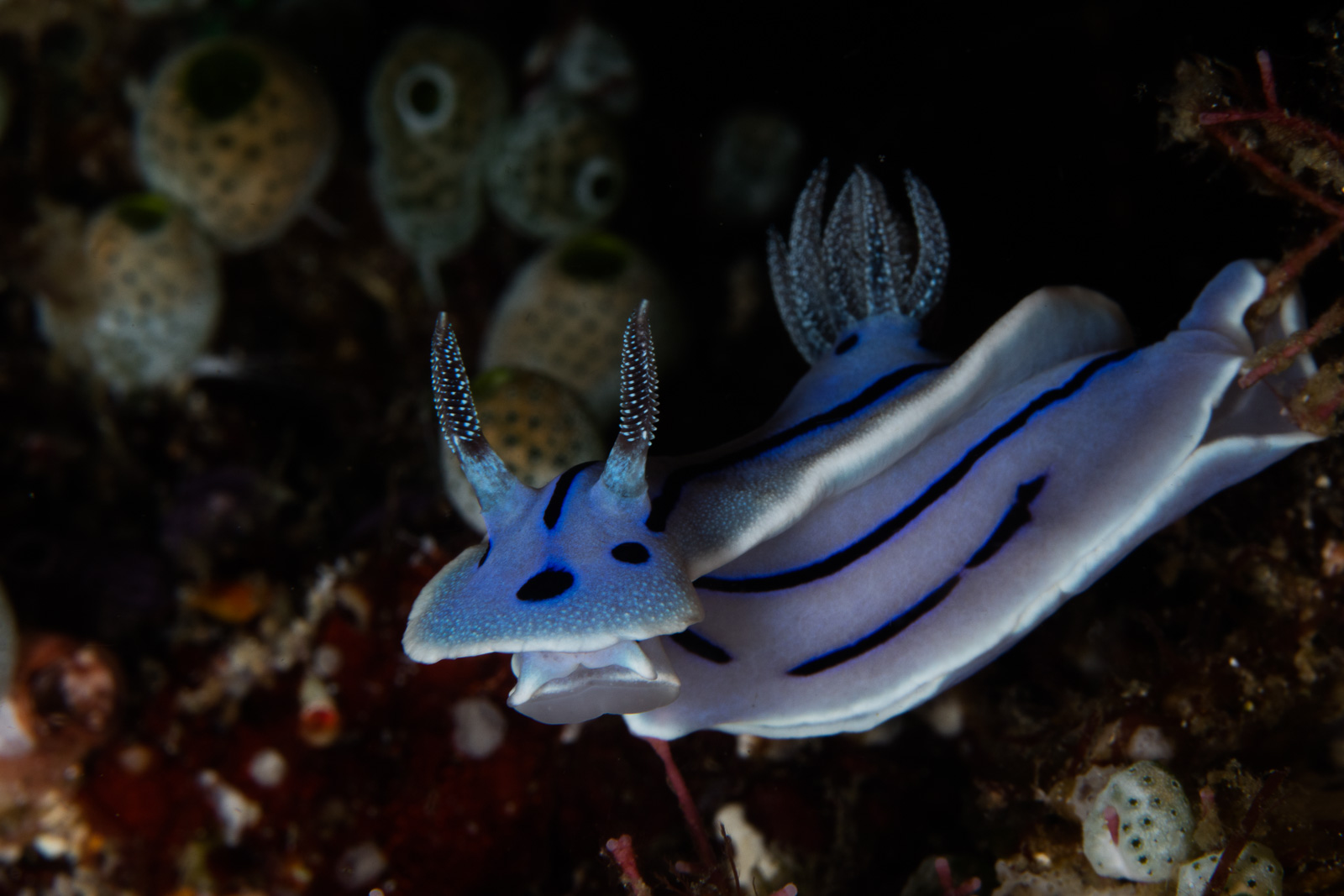
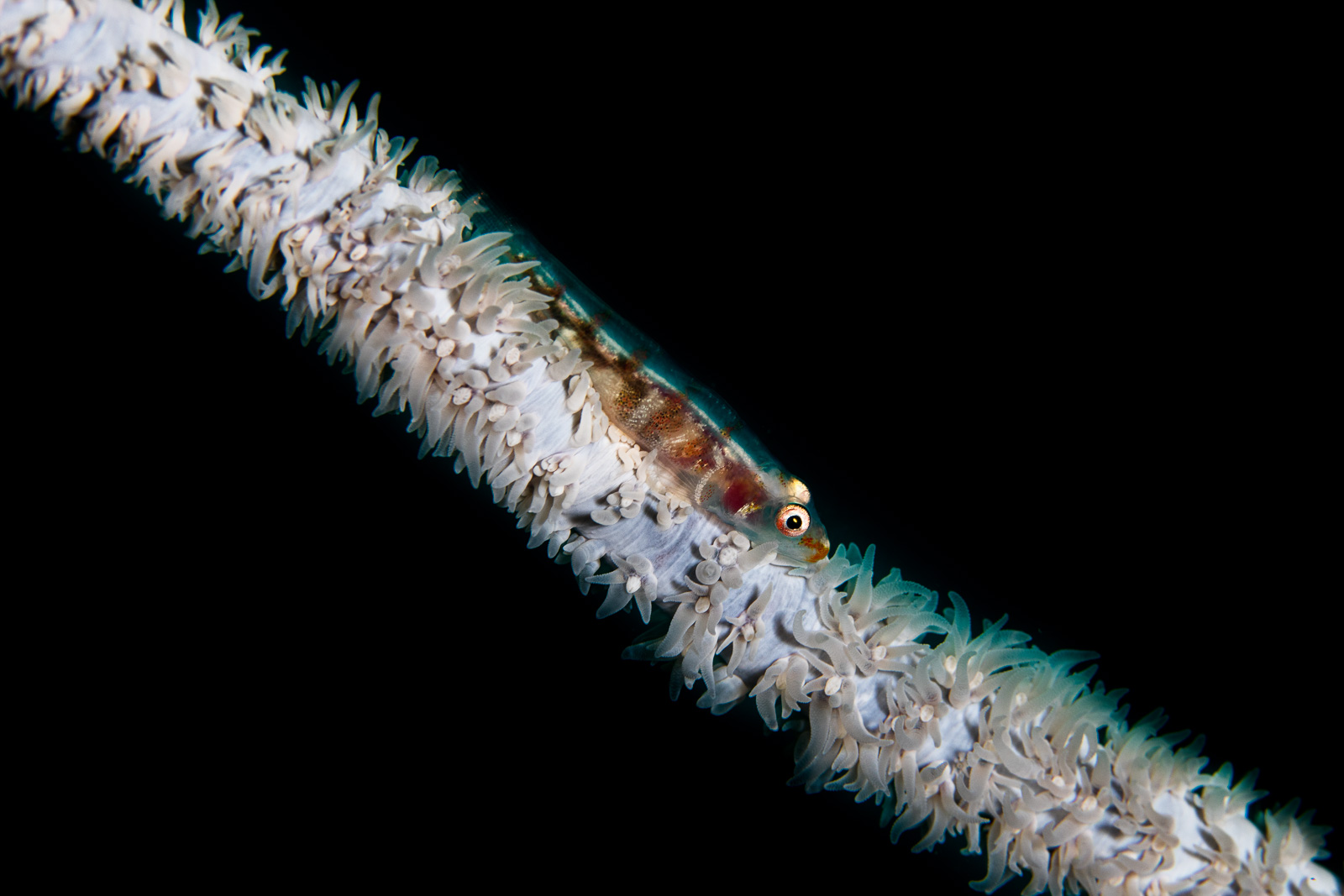
From the lens recorded in each frame. The settings are what was used here, not a recommendation. Lighting on the print frames: Dual Retra Maxi strobes, Sea & Sea YS-D2, Single Retra Strobe.
Wide-angle works well on the pinnacles, where soft coral covers structure and the current keeps everything open and feeding.
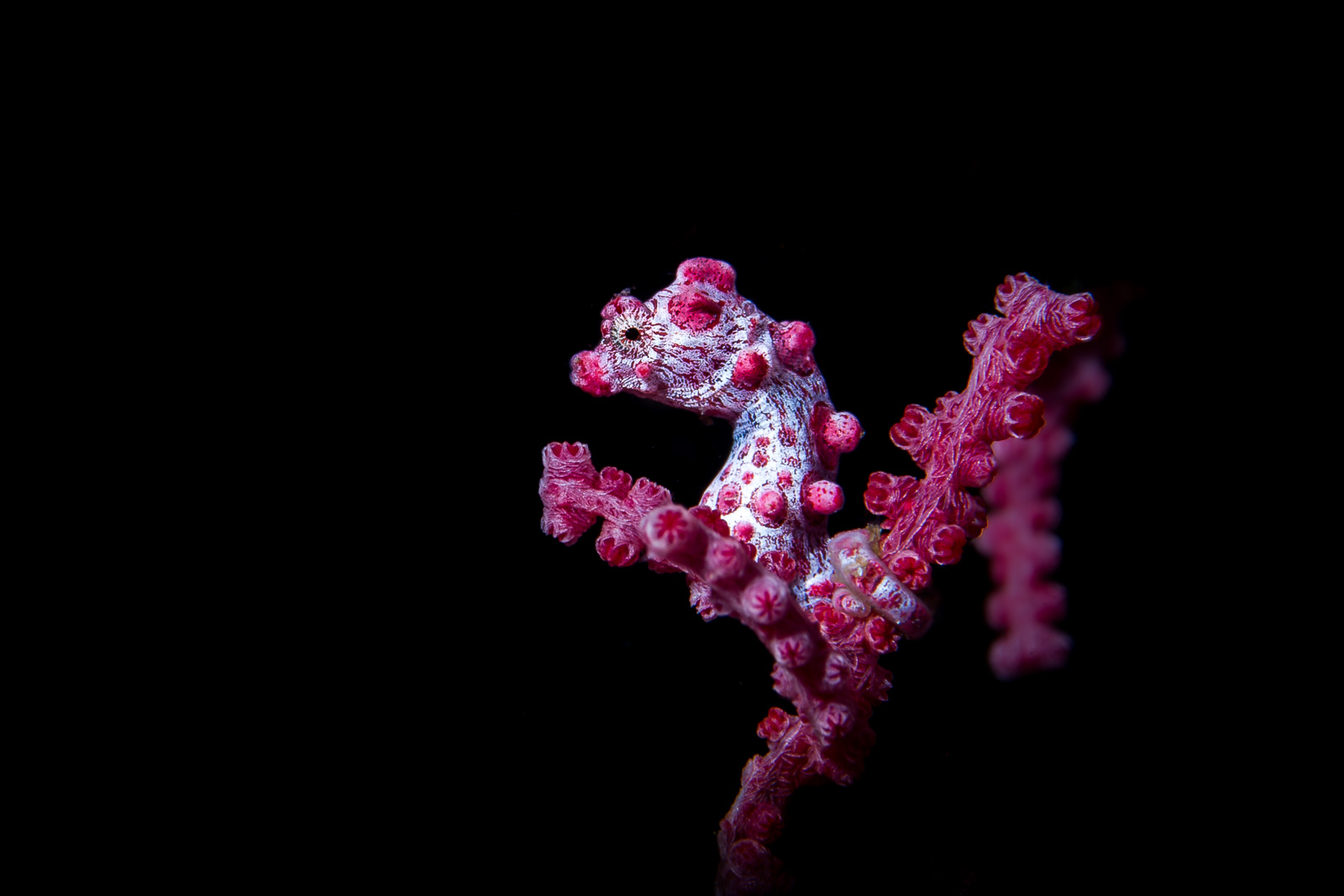
Macro is strong and under-rated here. The soft coral hosts crabs, shrimp and gobies that most people swim past on the way to the bigger scene.
The light is better than Lembeh's and the subjects are less strange. It is an easier place to make a conventionally beautiful photograph.
Every frame here was made in Bangka Archipelago. One is a limited edition of twenty, signed and numbered. Prices in US dollars. Printed on Canson Platine and shipped from British Columbia.
Six I dived more than once and would plan a week around, named as the resort names them.
Soft coral at full saturation
The signature site, and it is two dives on two separate pinnacles. Volcanic rock smothered in soft coral that only opens properly when the current runs. Time it wrong and it is a good dive; time it right and it is the reason people come back.
Three rocks, serious volume
Dramatic topography with schooling pelagics working the walls. Like Sahaung, it needs moving water to switch on.
Exposed, and the best of them on the right day
When the tide lines up this is the most active site in the group. When it does not, the boat goes somewhere else, and that is the correct call.
Sheltered and still rich
A gentler sloping reef for when the exposed sites are unworkable. Useful as a second dive when you have already spent your energy fighting current.
Macro under the floorboards
Shallow muck beneath a working jetty, and a sharp contrast to the soft coral sites. Bring the macro lens and stay under the structure where the light does interesting things.
Above the surface
White sand island for the surface interval. It is on this list because a week of diving is not only diving, and because somebody in your group is not a diver.
The reef doesn't change when you switch operators, but your experience does. To help you choose, each option is scored on the same five trip axes. The final rating is a simple equation: the baseline score of the reef plus the specific score of the operator.
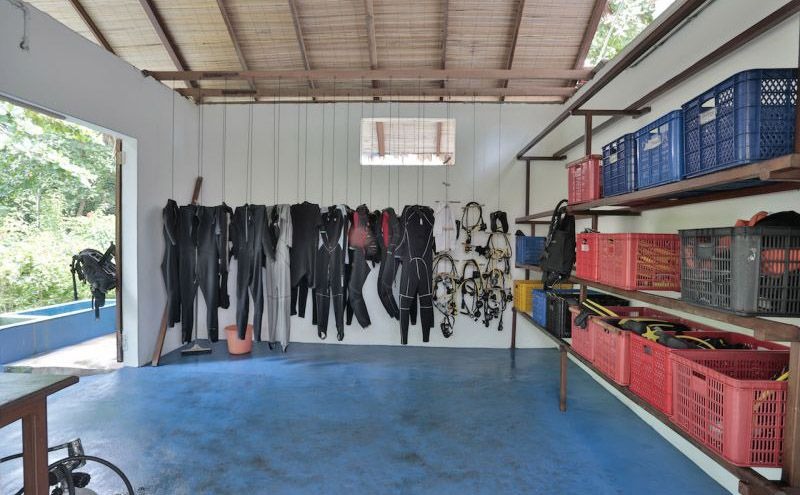
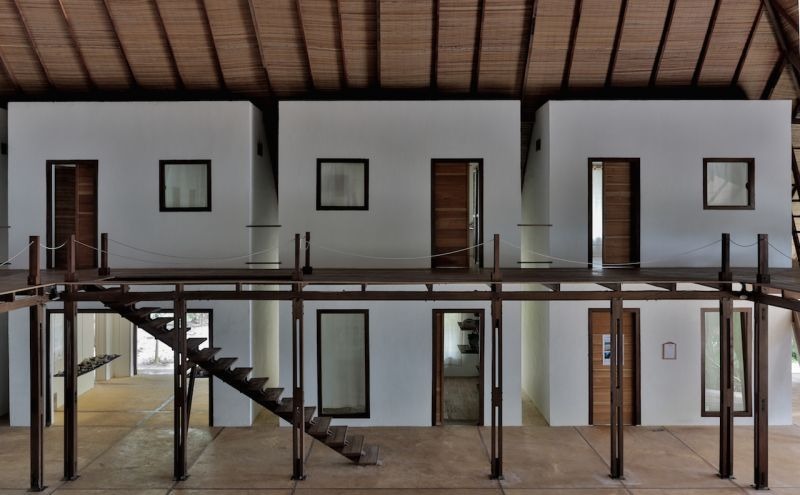
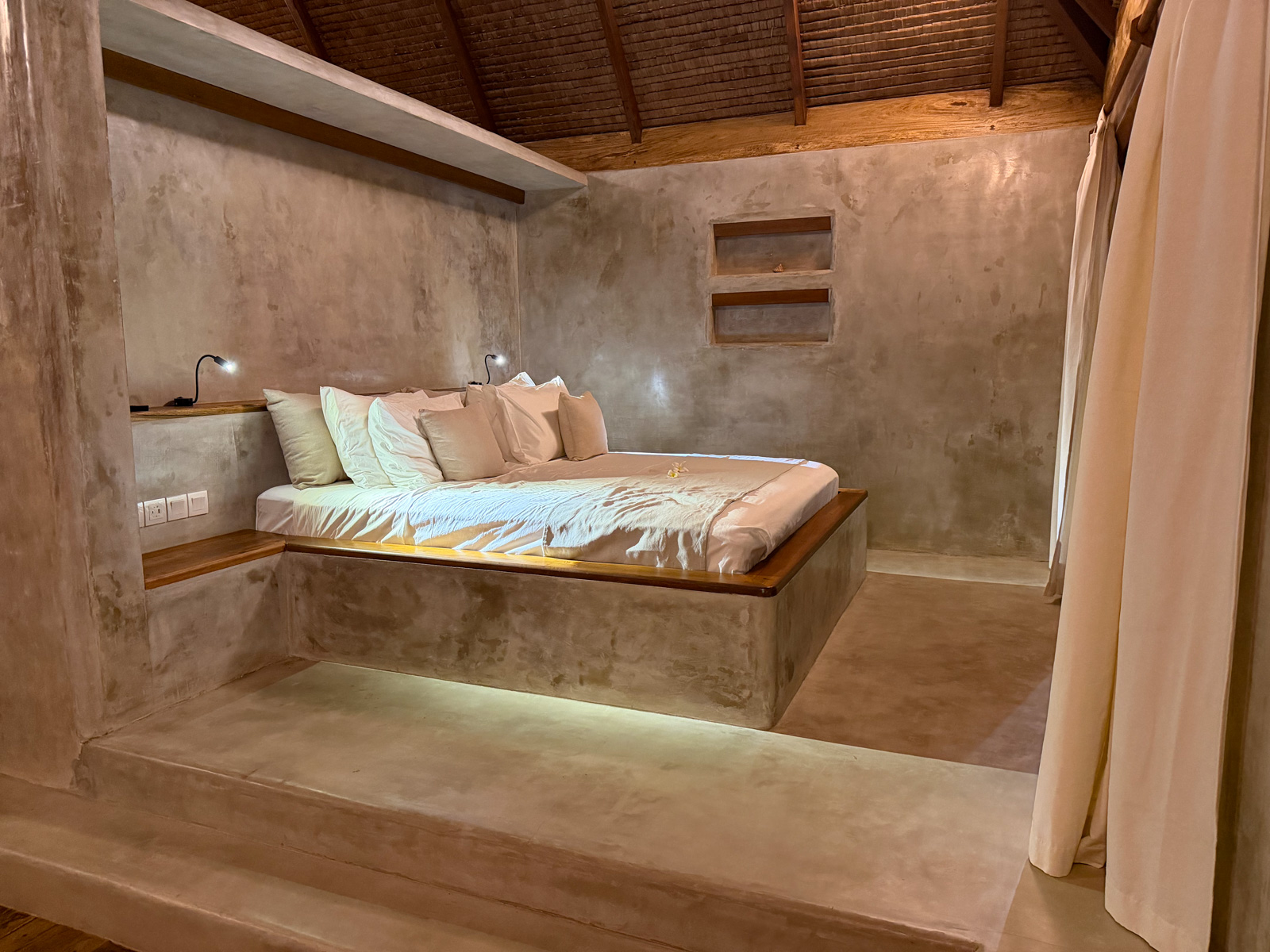
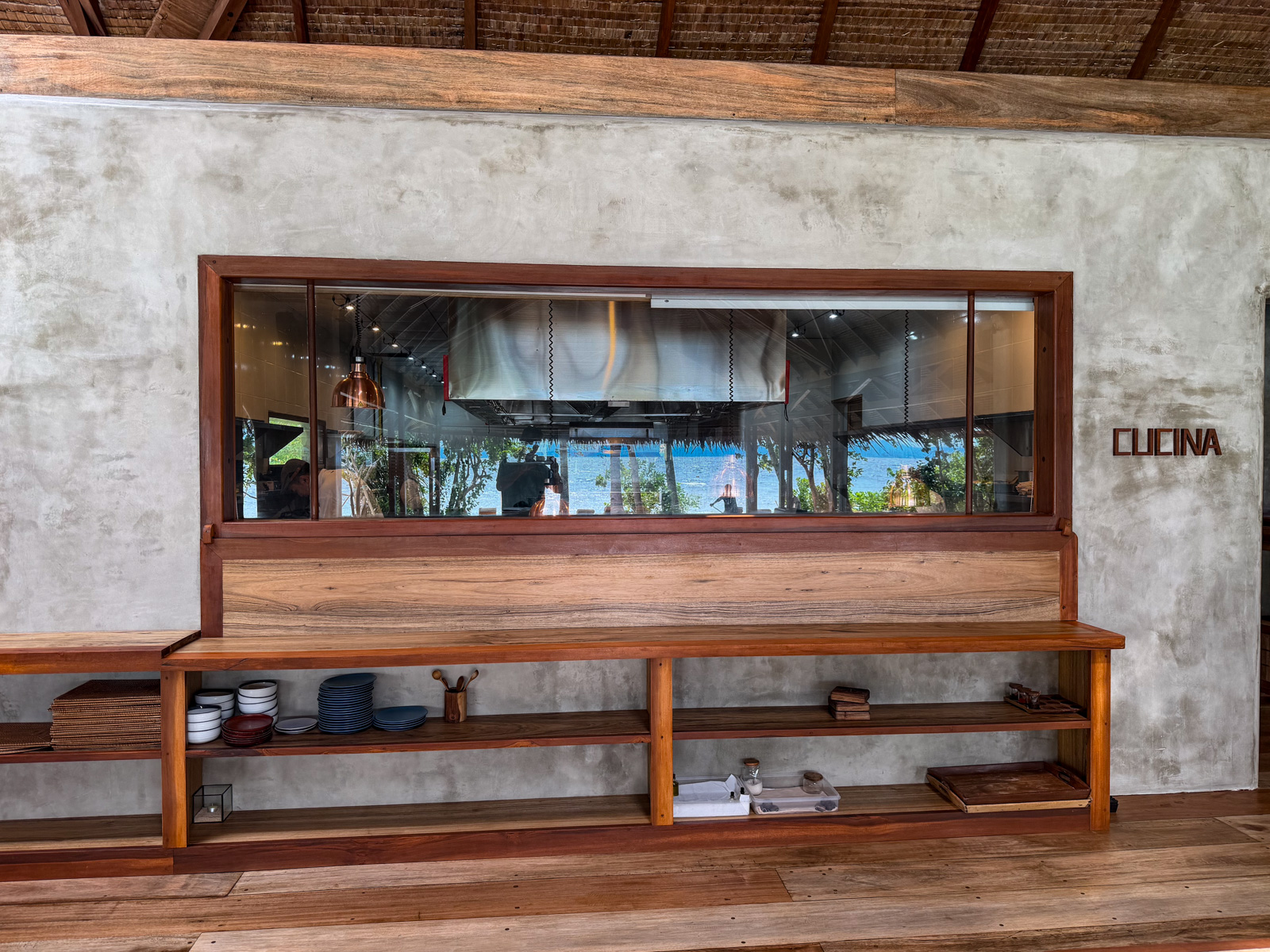
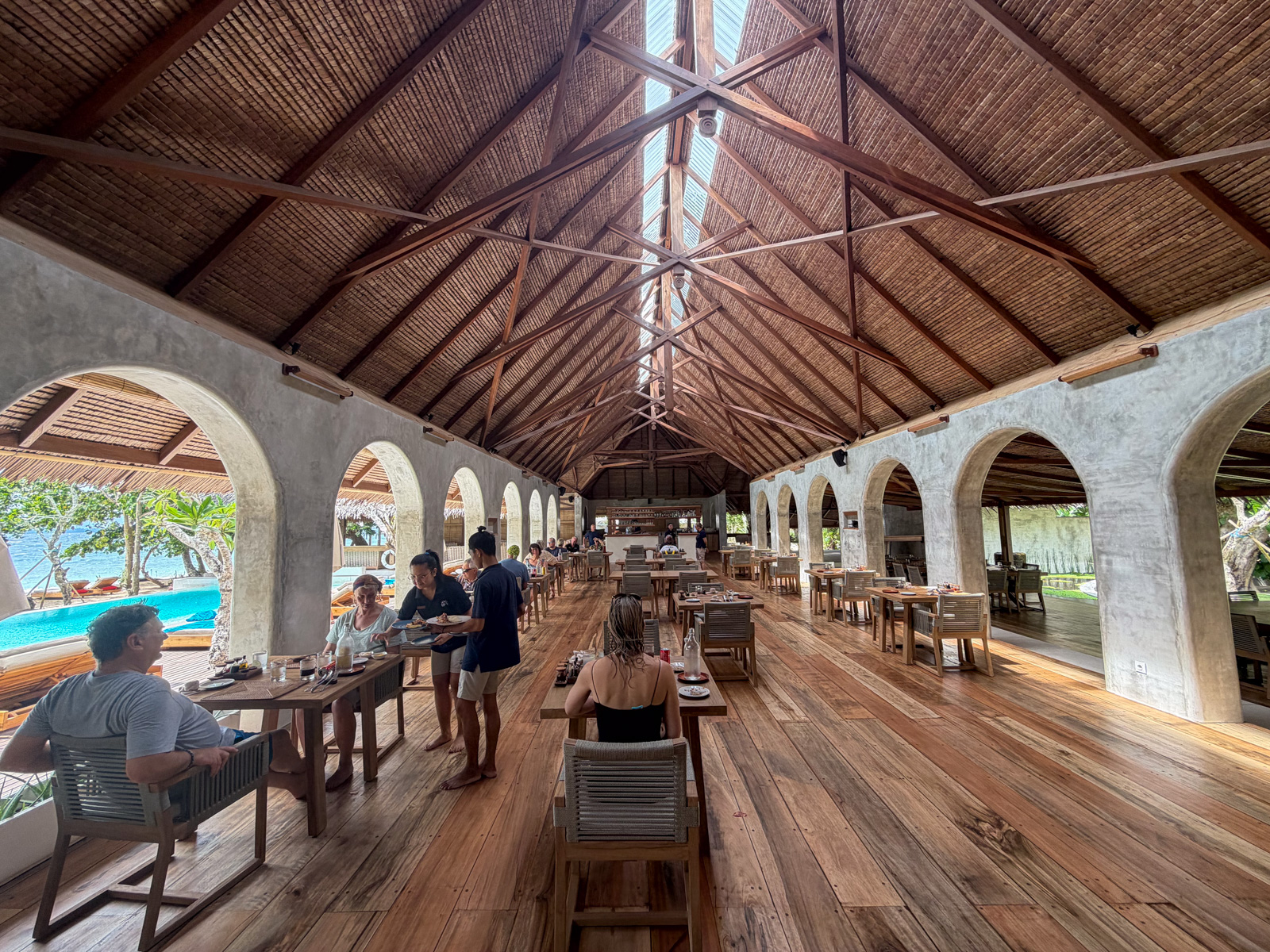
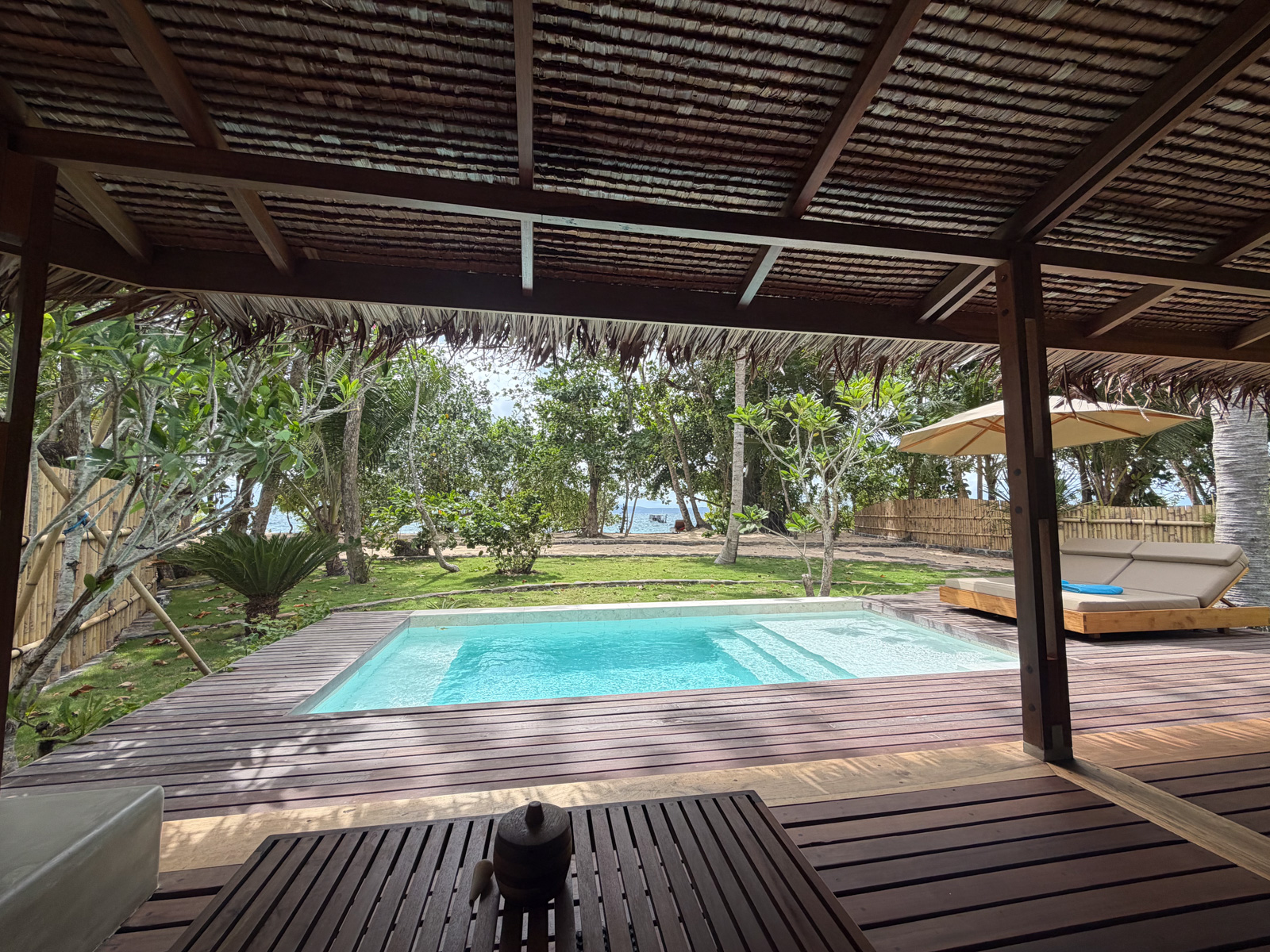
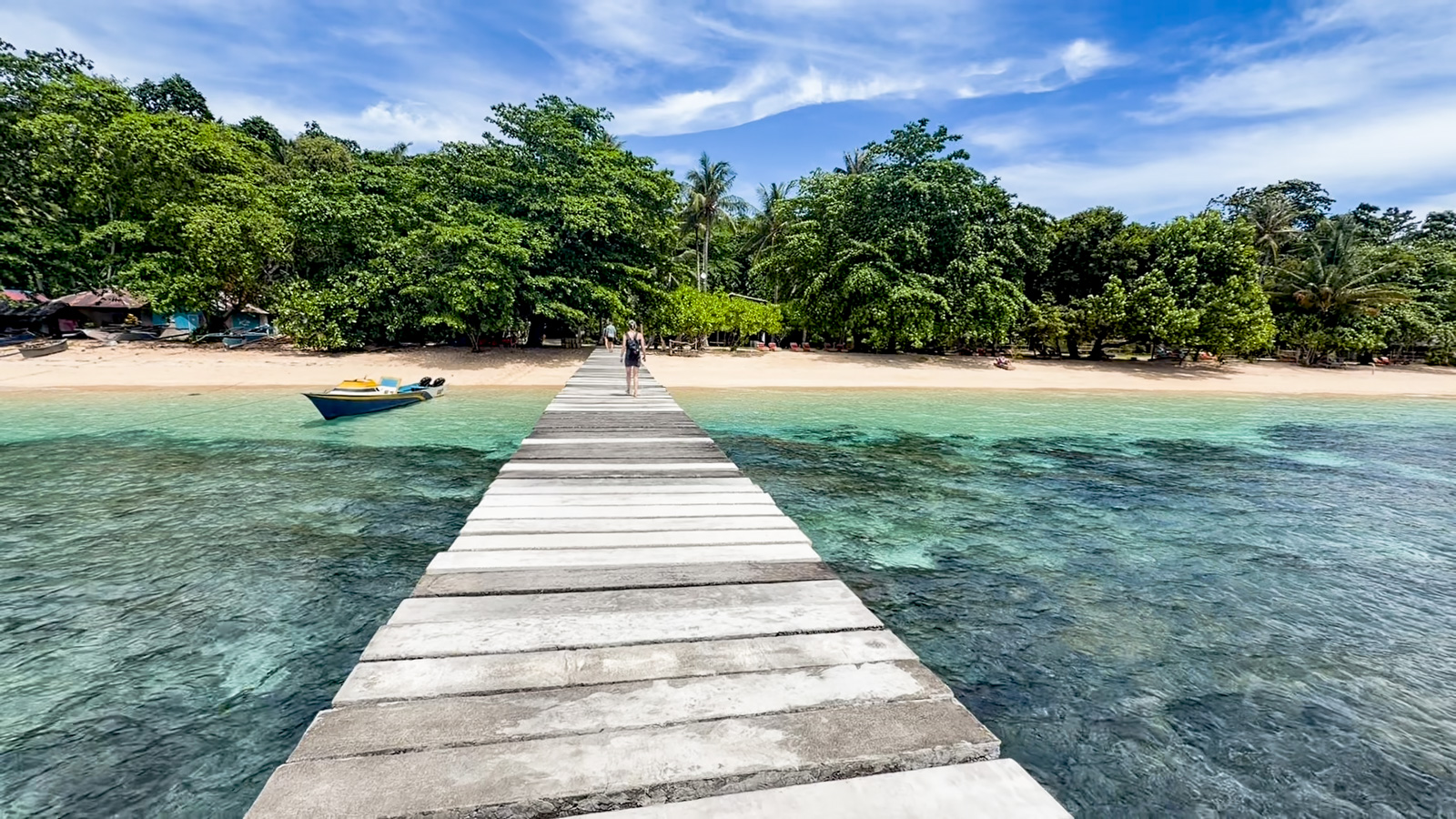
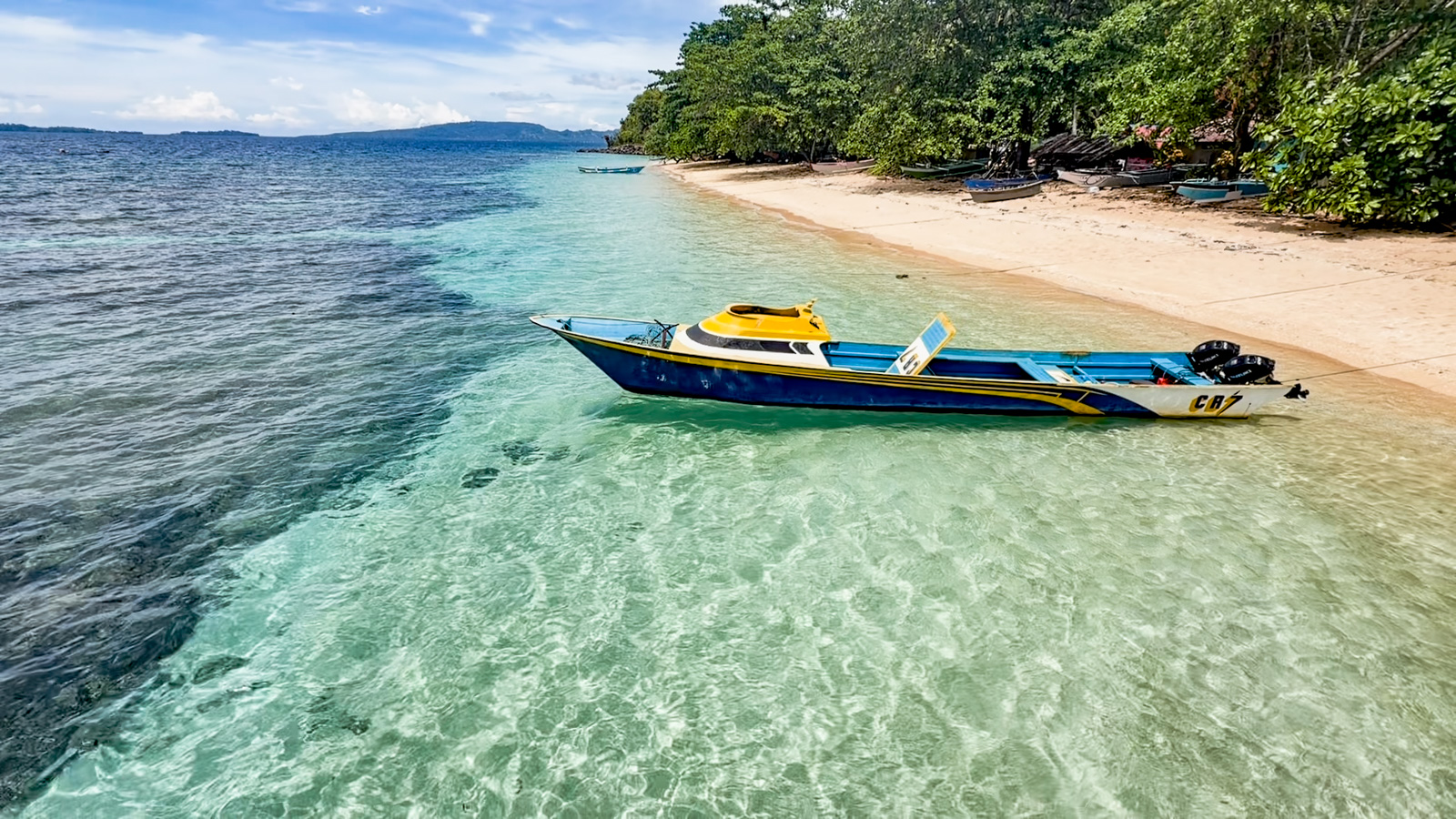
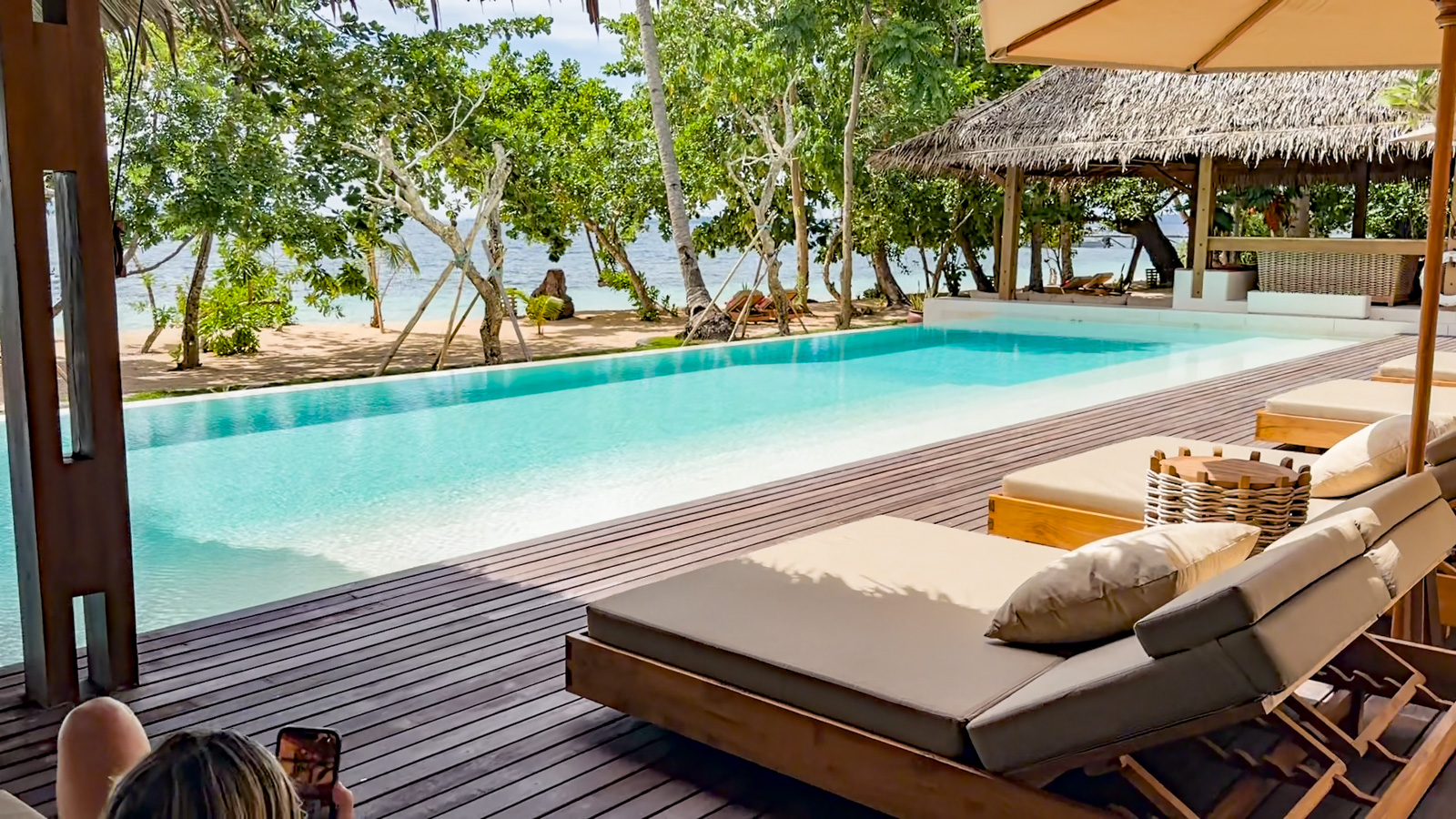
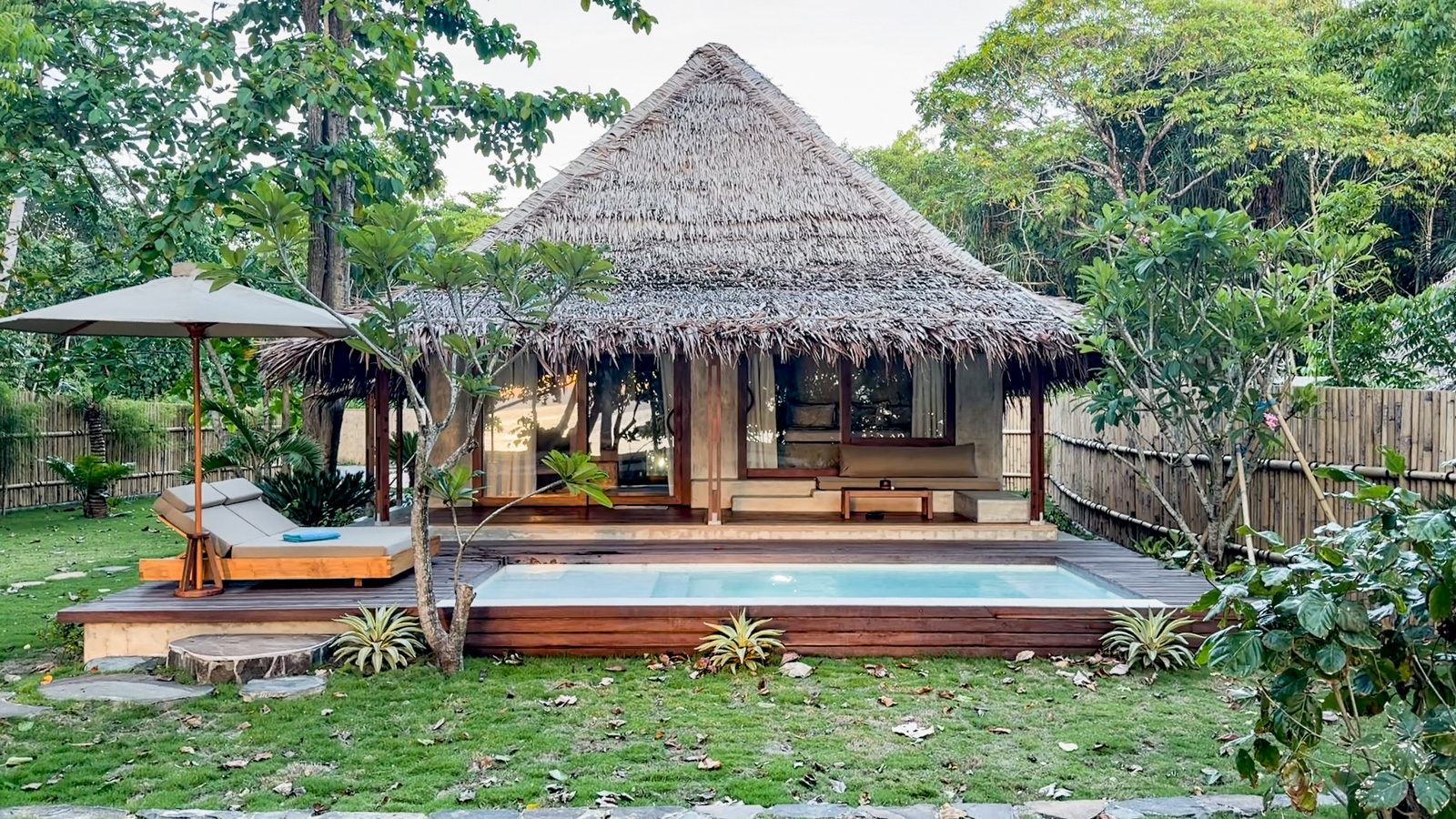
The old marine research station and a set of new self-contained cottages, bought by Siladen and expanded. Architecturally it is the most considered building on this site, and it is run to the standard Ana and Miguel built at Siladen over a decade. Food is ordered ahead, lunch in the morning and dinner at lunchtime, which is the Wakatobi format and works for the same reasons. The research station is still a research station, which is worth knowing: you are staying somewhere with a reason to exist beyond your booking. If you want the newest comfortable rooms in North Sulawesi with the reef straight off the beach, this is where to put the week.
Three things nobody tells you. The transfer is the trade-off: a three-hour cab from the airport, then another hour across the channel by boat. In bad weather the crossing doesn't run, and shoulder season is when that's most likely to bite your schedule. The resort is new, built over an old ranger station — parts of that history are still visible alongside the new self-contained villas, each with its own plunge pool, and a genuinely good kitchen. The resort itself is brand new and excellent — the real limiter was the weather. We arrived in November, right at the region's usual transition, and got genuinely rough conditions that cut into how much diving we actually did.
* Value benchmark.
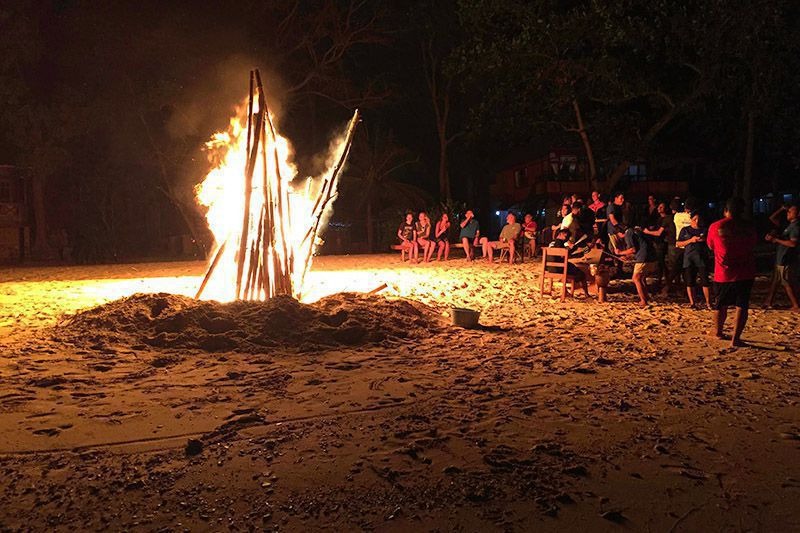
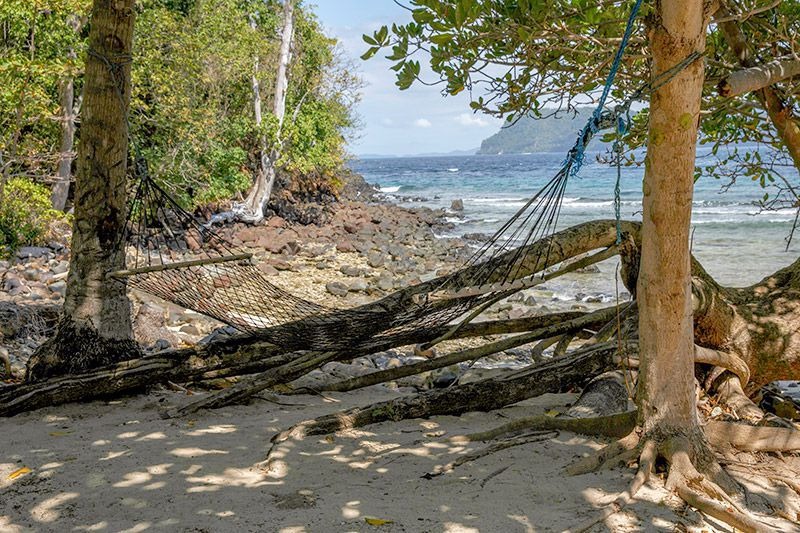
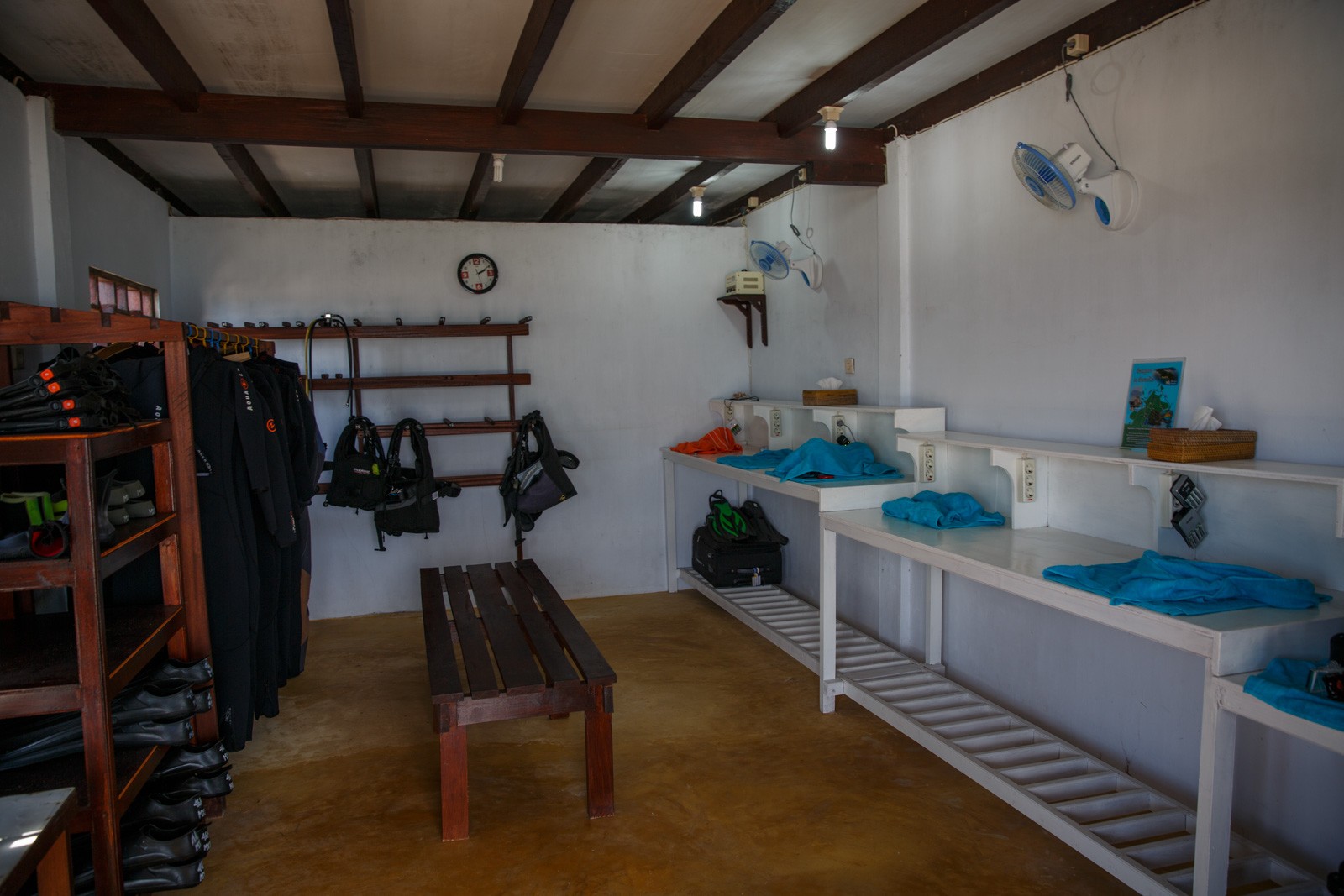
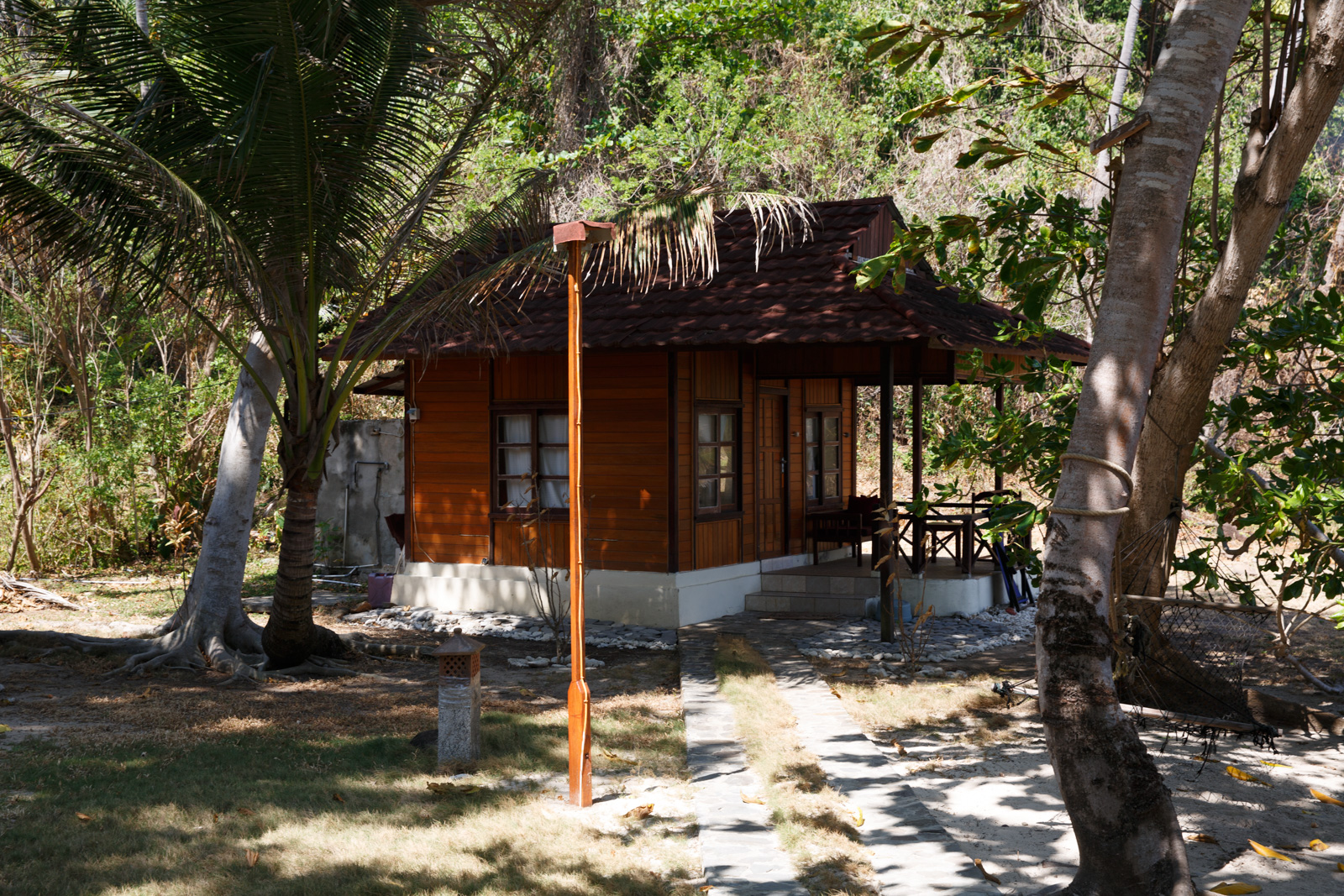
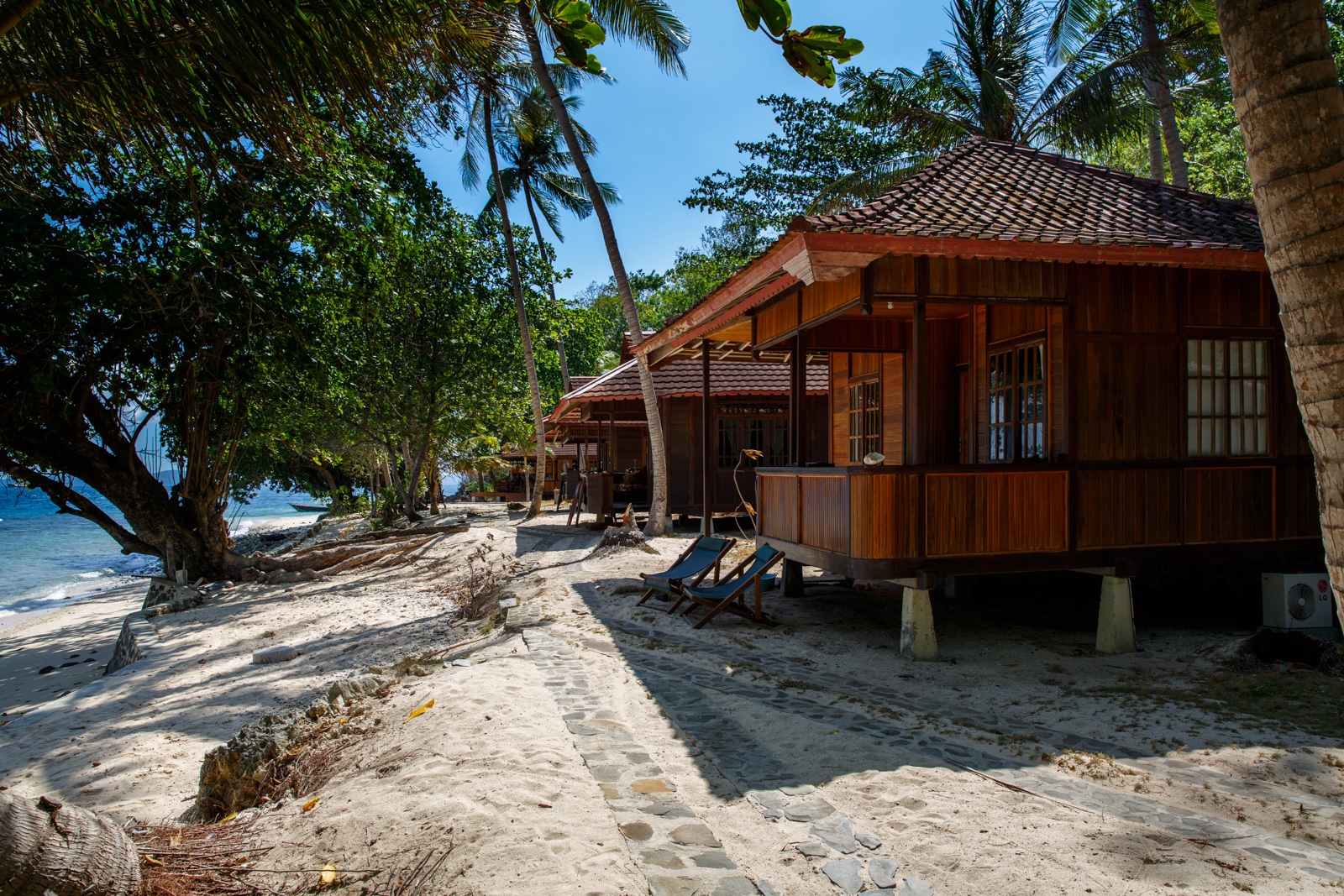
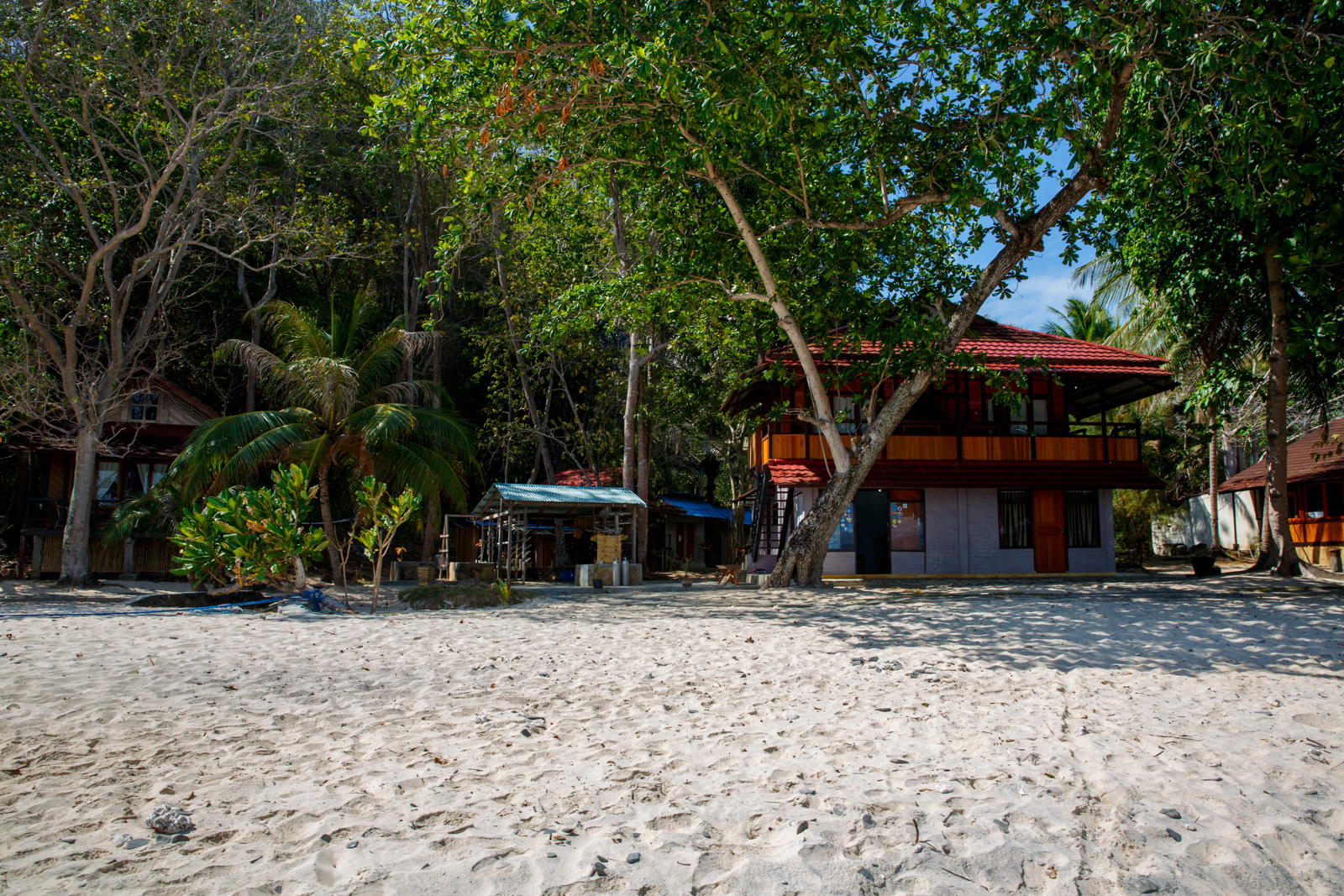
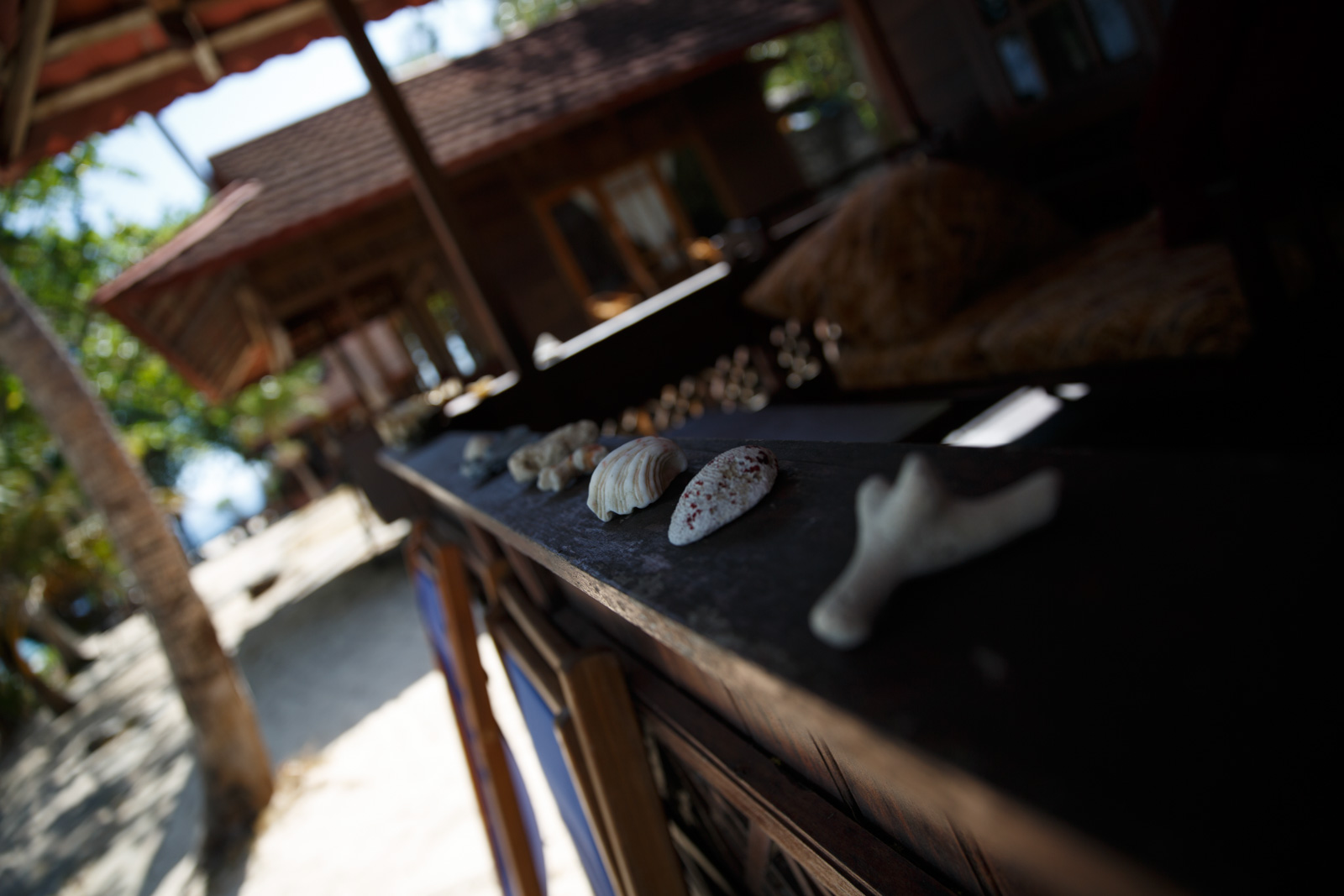
The Value benchmark for this entire site, and it earns it by being unfashionable. Simple rooms, excellent boats, guides who have worked this reef for years, and a price that reads like a misprint next to the rest of the library. Murex also runs Manado and Lembeh Resort, which makes their Passport to Paradise the easy way to combine all three. In 2015 I built my own version, Siladen to Murex Bangka to Lembeh, because I wanted Ana and Miguel and did not want to stay in Manado. It remains the best mix I have done in Indonesia.
Asked in the order they actually matter, answered with specifics.
Coral Eye covers both ends inside one property: simple rooms in the original marine research station, or self-contained cottages with private pools. Murex Bangka is the value option and holds the Value benchmark for this whole site.
That is the right way to do it. Murex sell it as Passport to Paradise: Manado, Bangka and Lembeh. I built my own version in 2015: Siladen, Murex Bangka, then Lembeh, skipping Manado.
Fly to Manado, then roughly two hours by road and a short boat crossing. The resorts handle the transfer end to end.
Soft coral bommies, sloping reef and macro that turns up without hunting. Currents are moderate. It is a good place to build skills and an easy place to dive twice a day for a week without tiring.
The reefs work year round. March to November is the settled window; December to February brings more rain and occasional swell on the exposed sites.
The right-hand column is the useful one. Bangka Archipelago asks something specific of you, and going for the wrong reason is an expensive way to find that out.
There is no trip here yet. Where they go next is decided by who puts their hand up, so this counts as a vote for Bangka Archipelago — and it also gets you each new guide as it is finished. Four or five emails a year.
Four emails a year, unsubscribe in one click, and the address goes nowhere else.