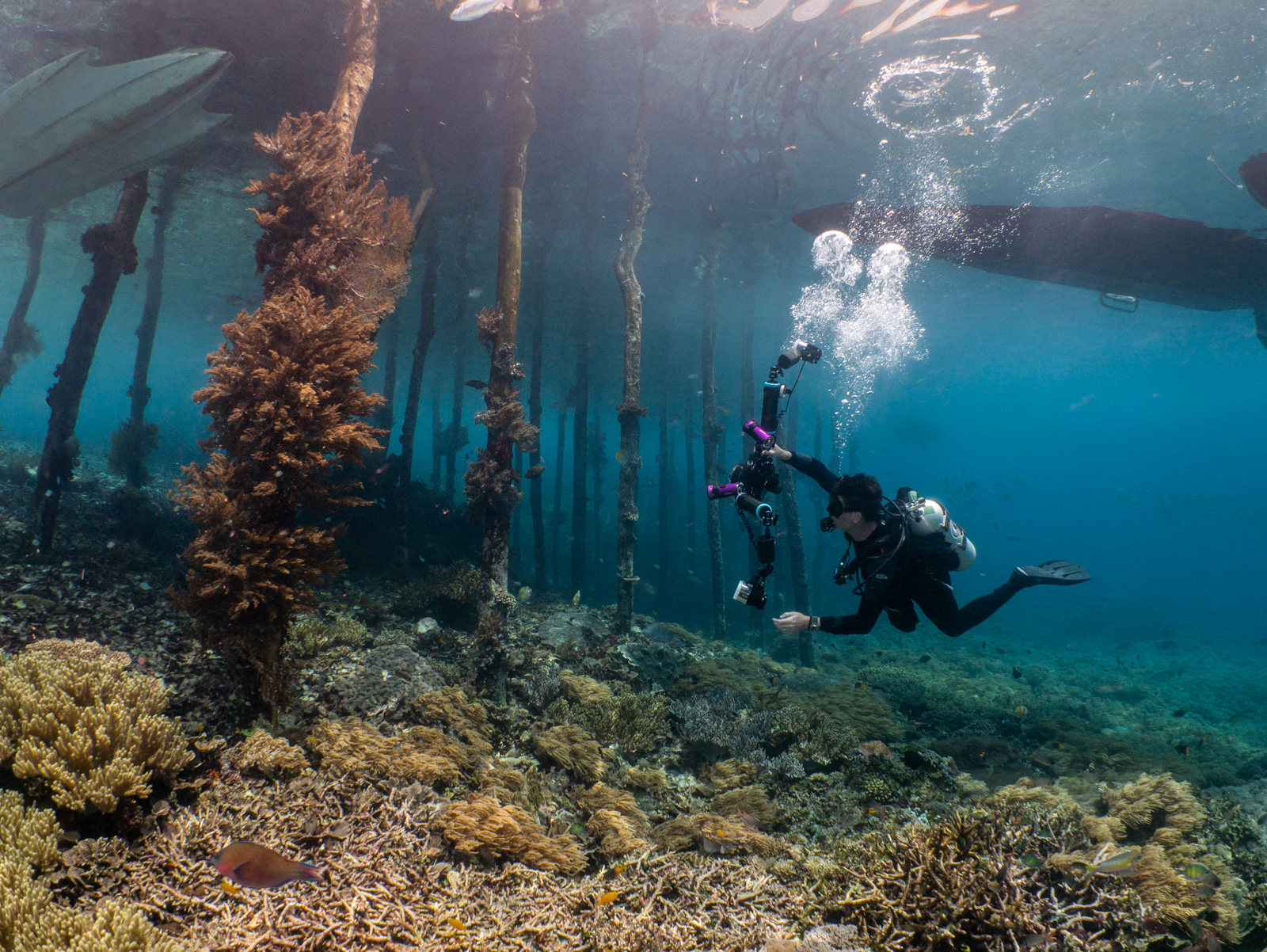
Dampier Strait, Northern Raja Ampat, Indonesia
Guides  /  Northern Raja Ampat, Indonesia
Destination guide

Dampier Strait

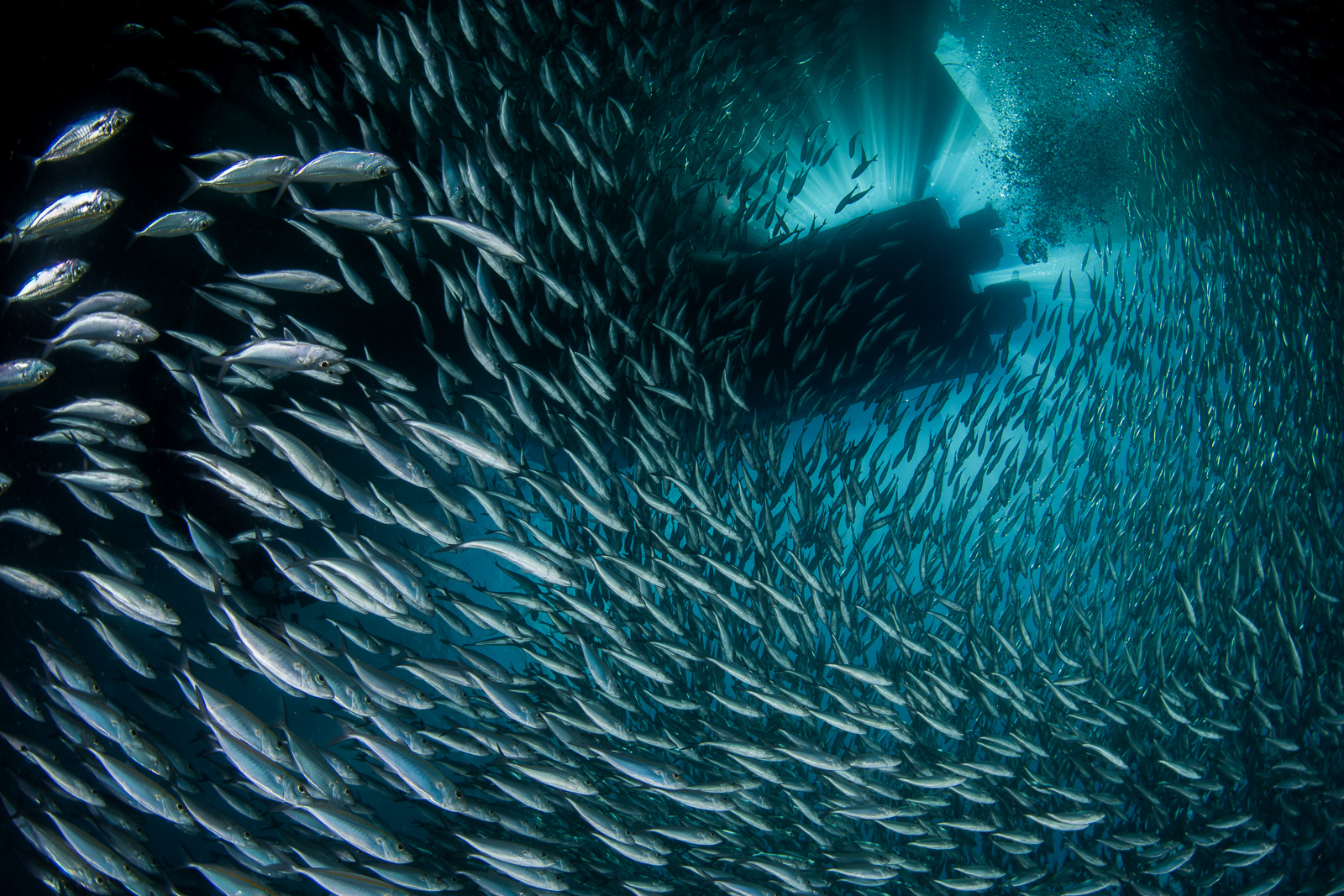
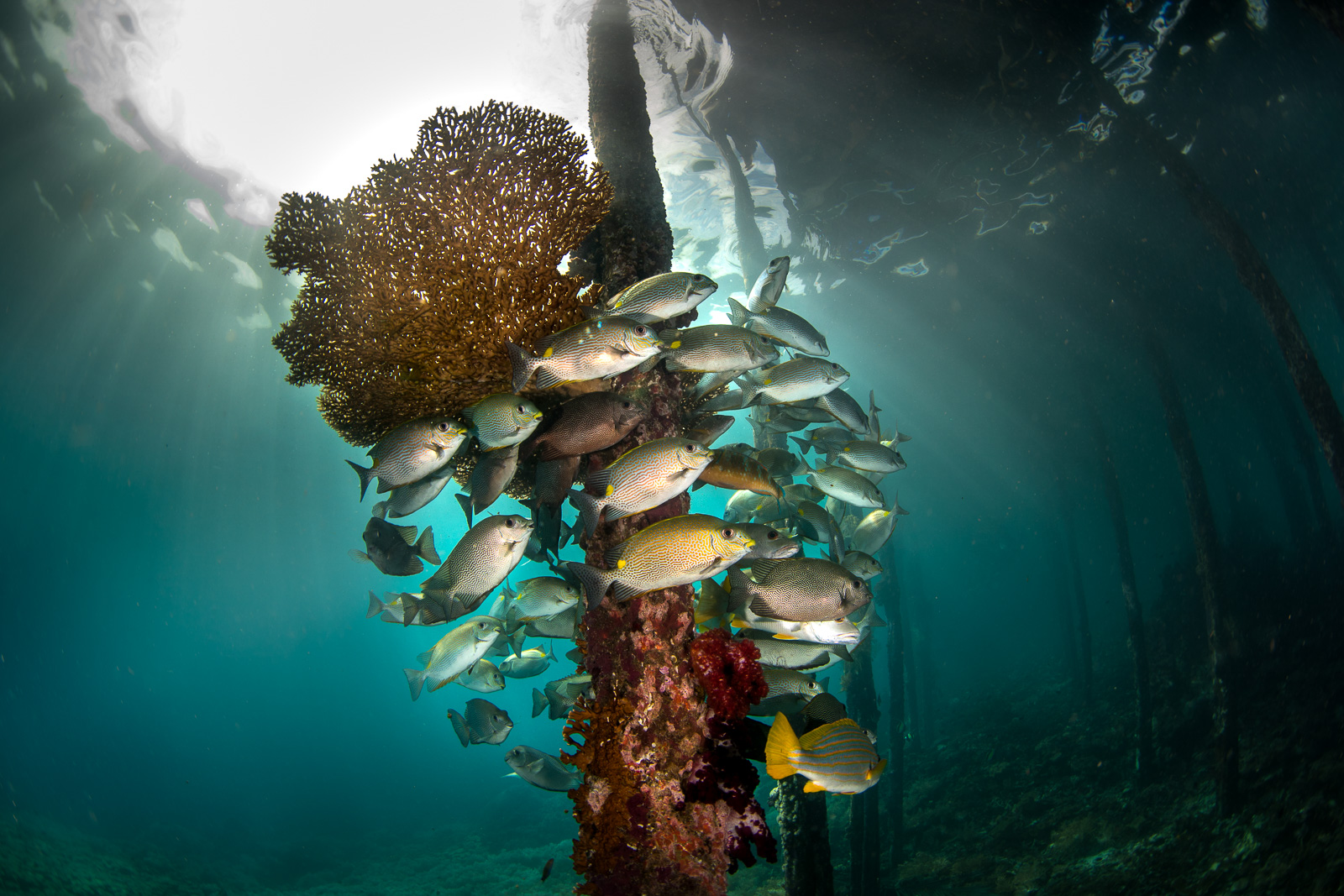
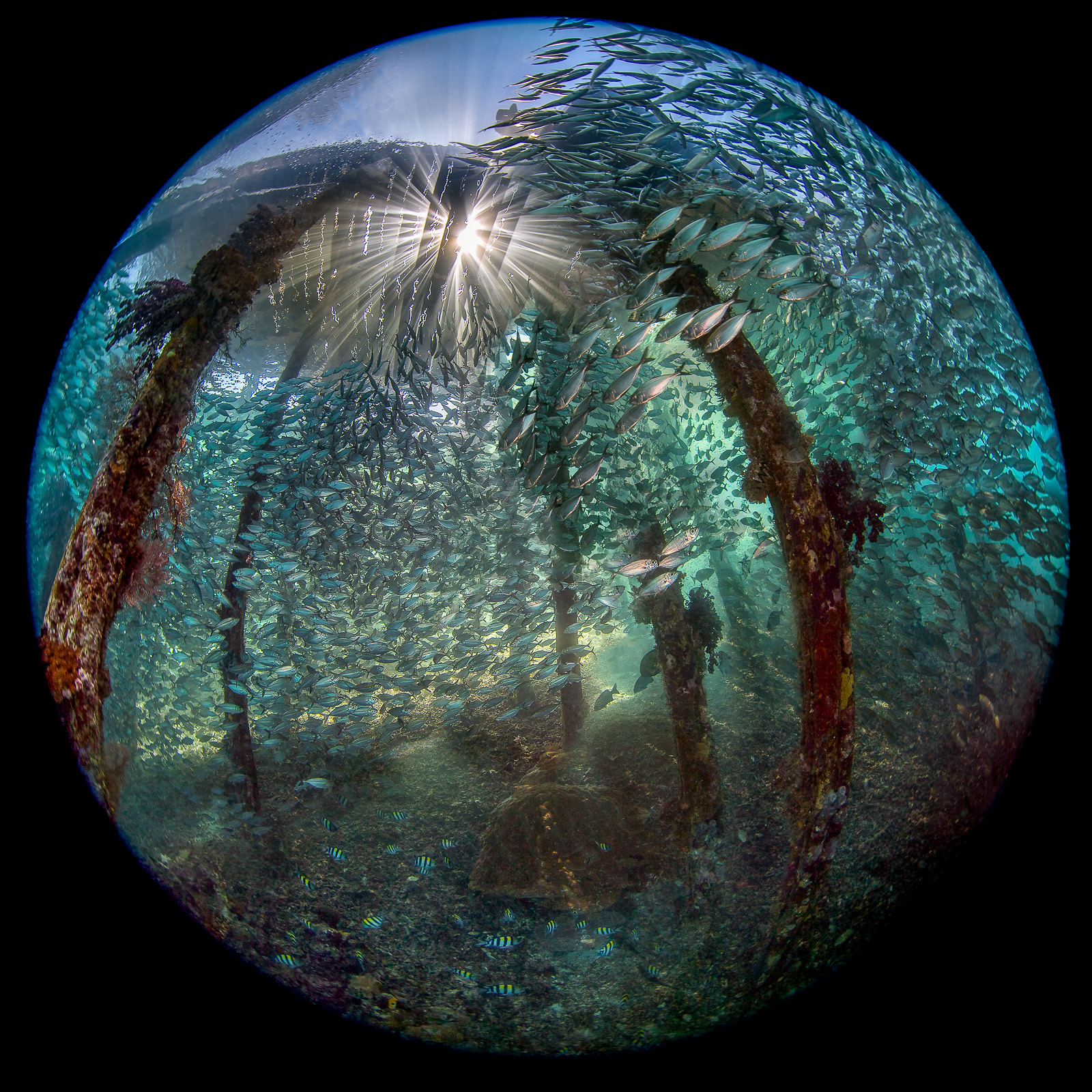
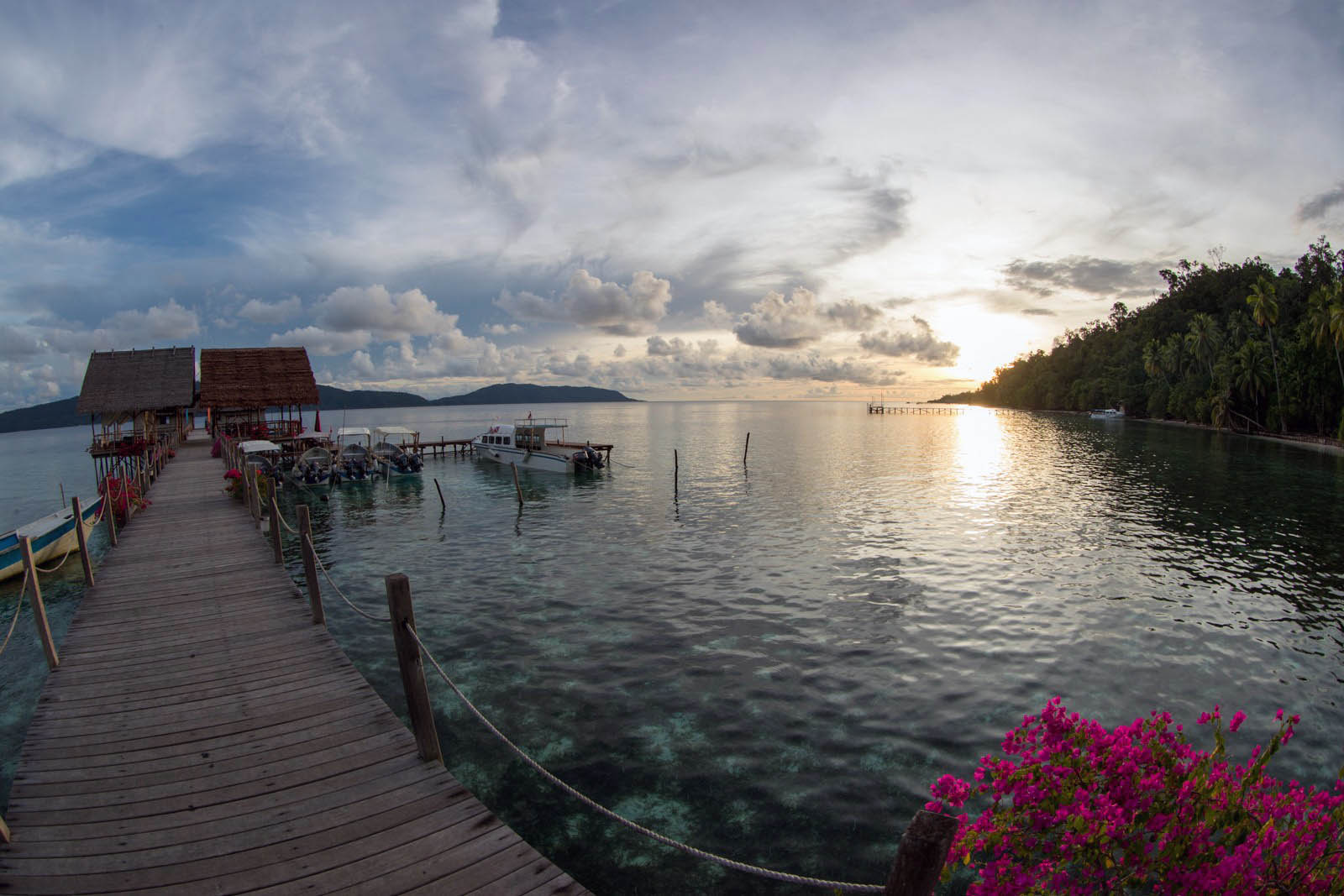
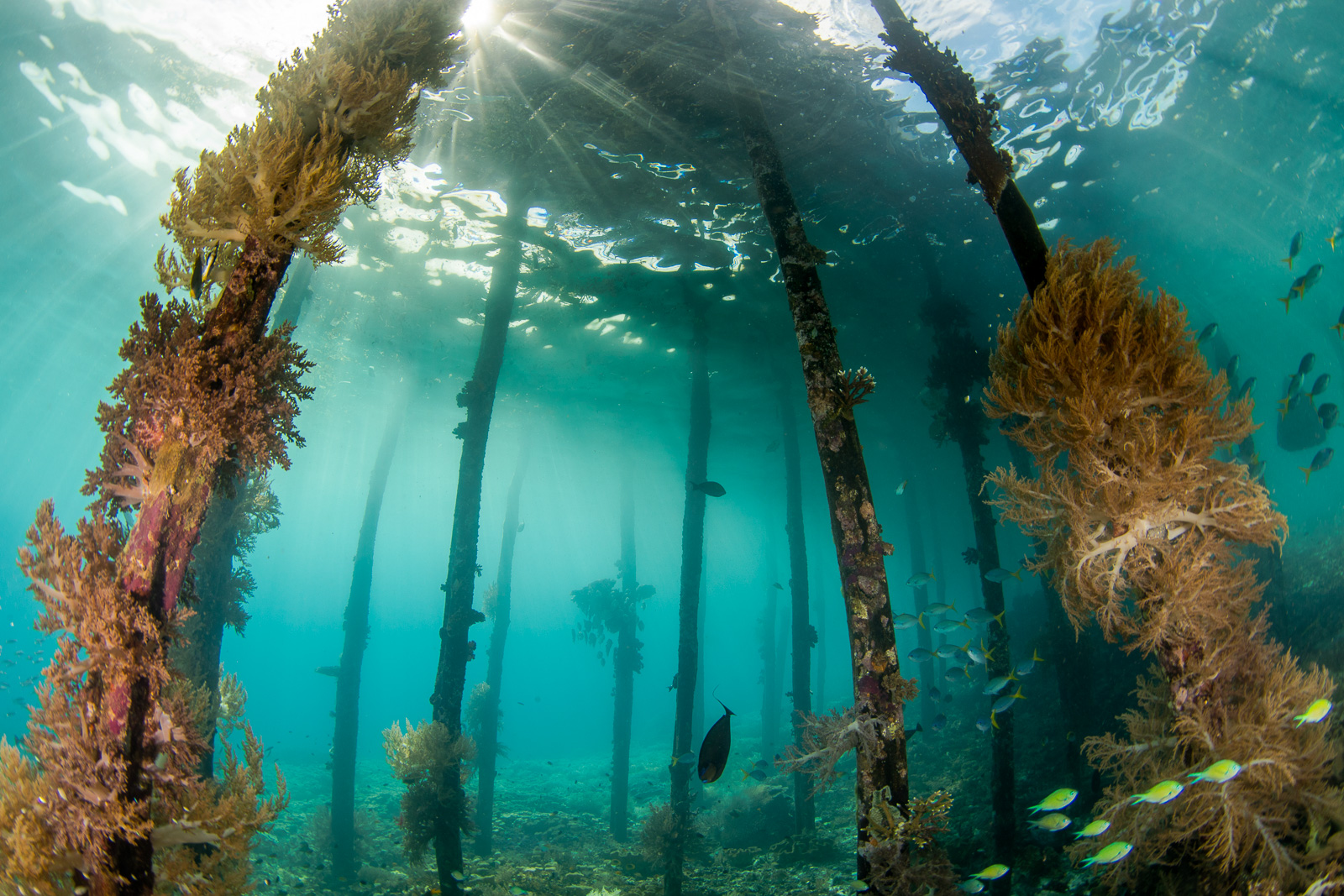
Arborek jetty, an hour before high tide. The pilings are empty. Then the water starts to move and the whole structure fills with fish, and you have about forty minutes.

Last visited 2018Northern Raja Ampat, IndonesiaResort · day boats Level AdvancedTen days, all in $$$Scores reviewed August 2026
ScoreWhat it takesWhy this placePicturesBest time to diveSignature divesOperatorsBefore you goWho it suitsGetting there
01The score

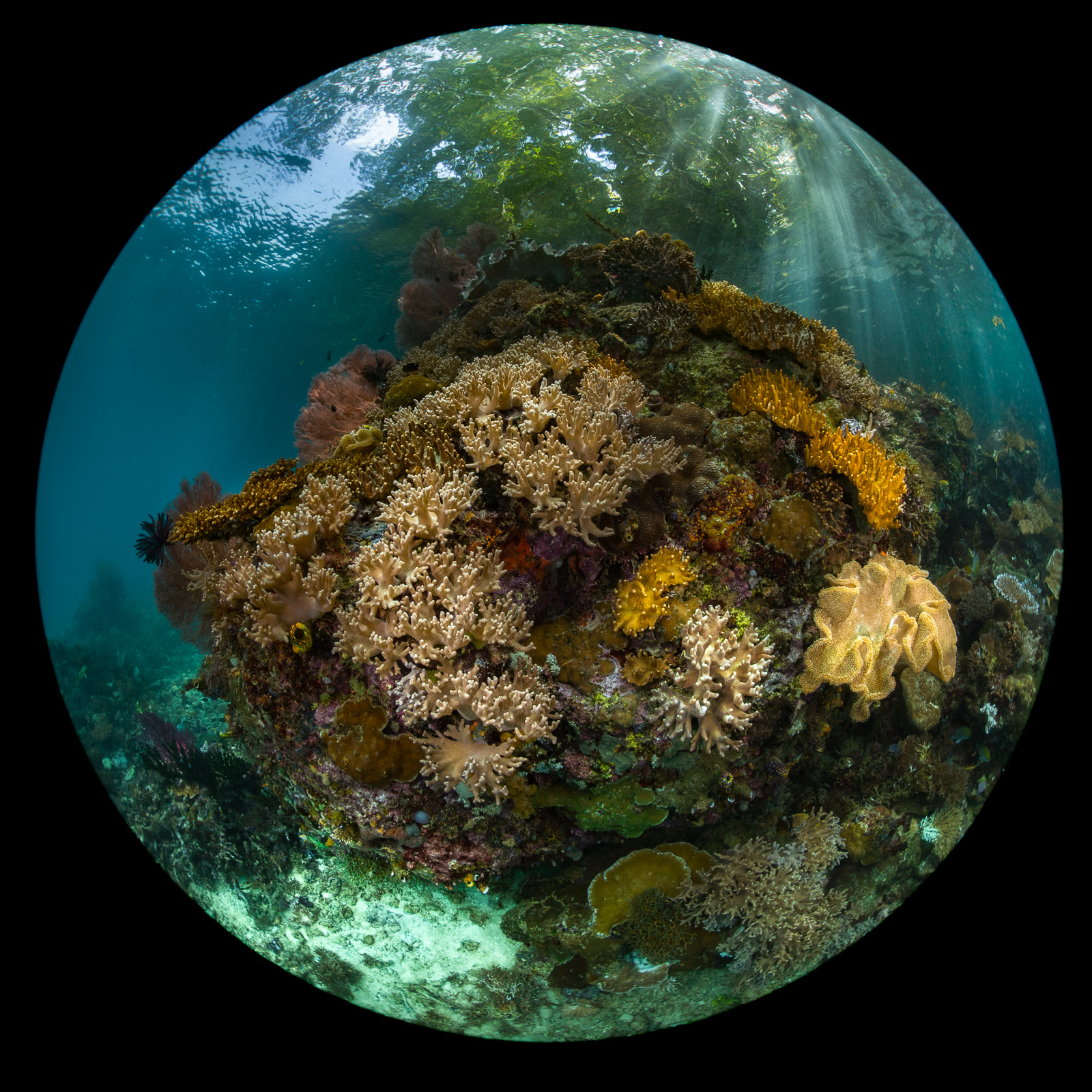
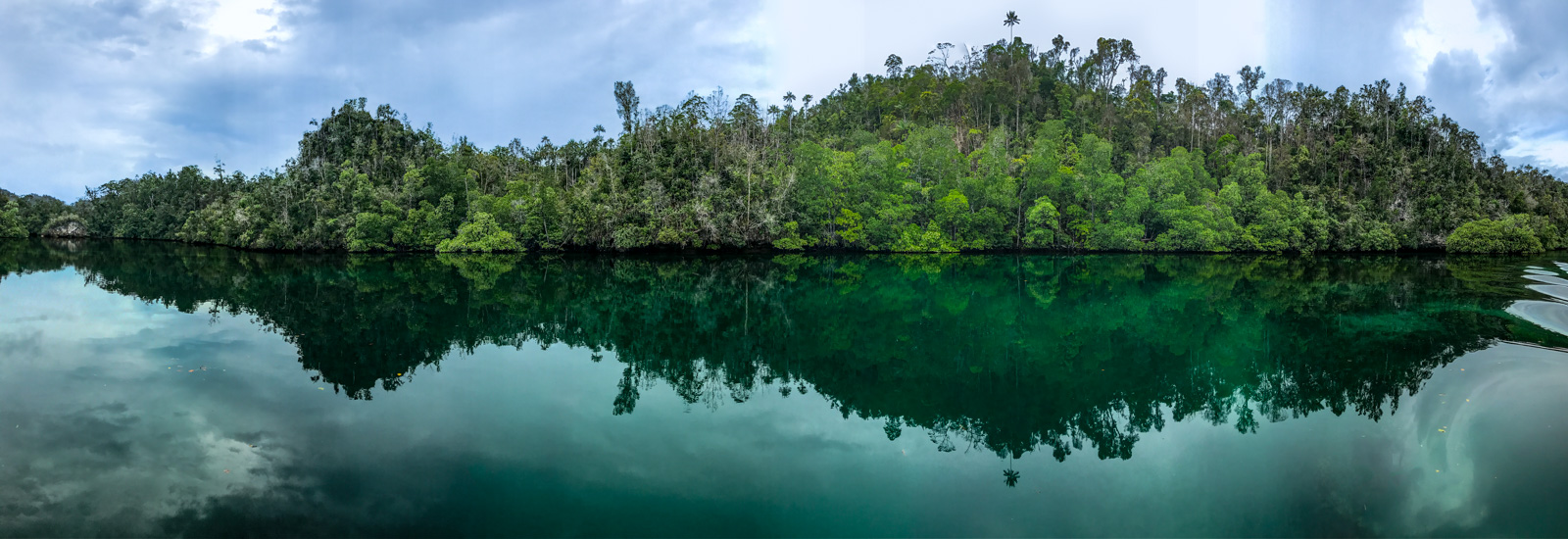
There is a place here where mangrove roots meet living hard coral, and if you get the light right you can hold both in one frame — the tangle above, the reef below, in the same breath of water. I know of nowhere else that offers it. That is the Dampier Strait: it keeps handing you pictures you did not plan for.

Underwater · the place
The story
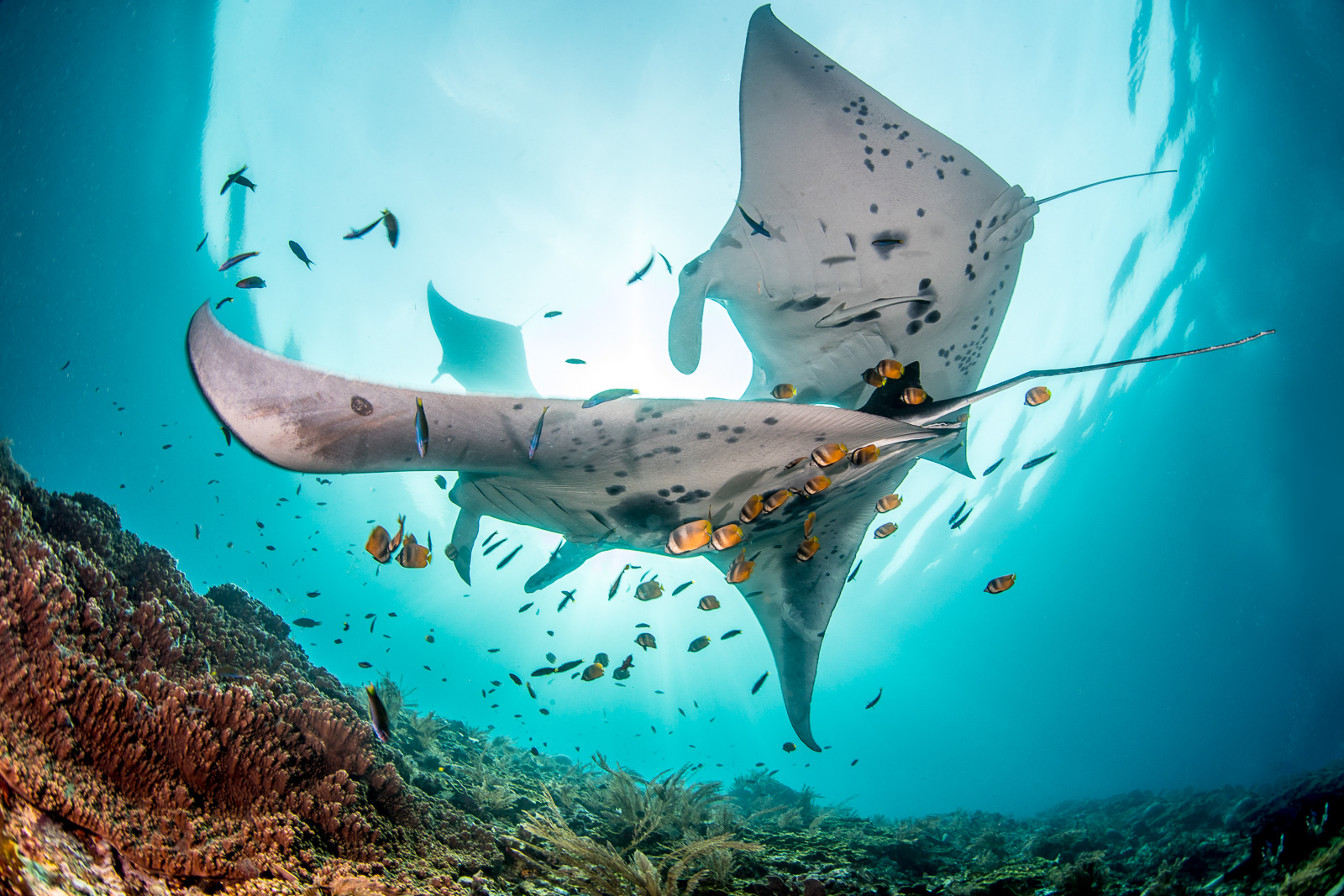
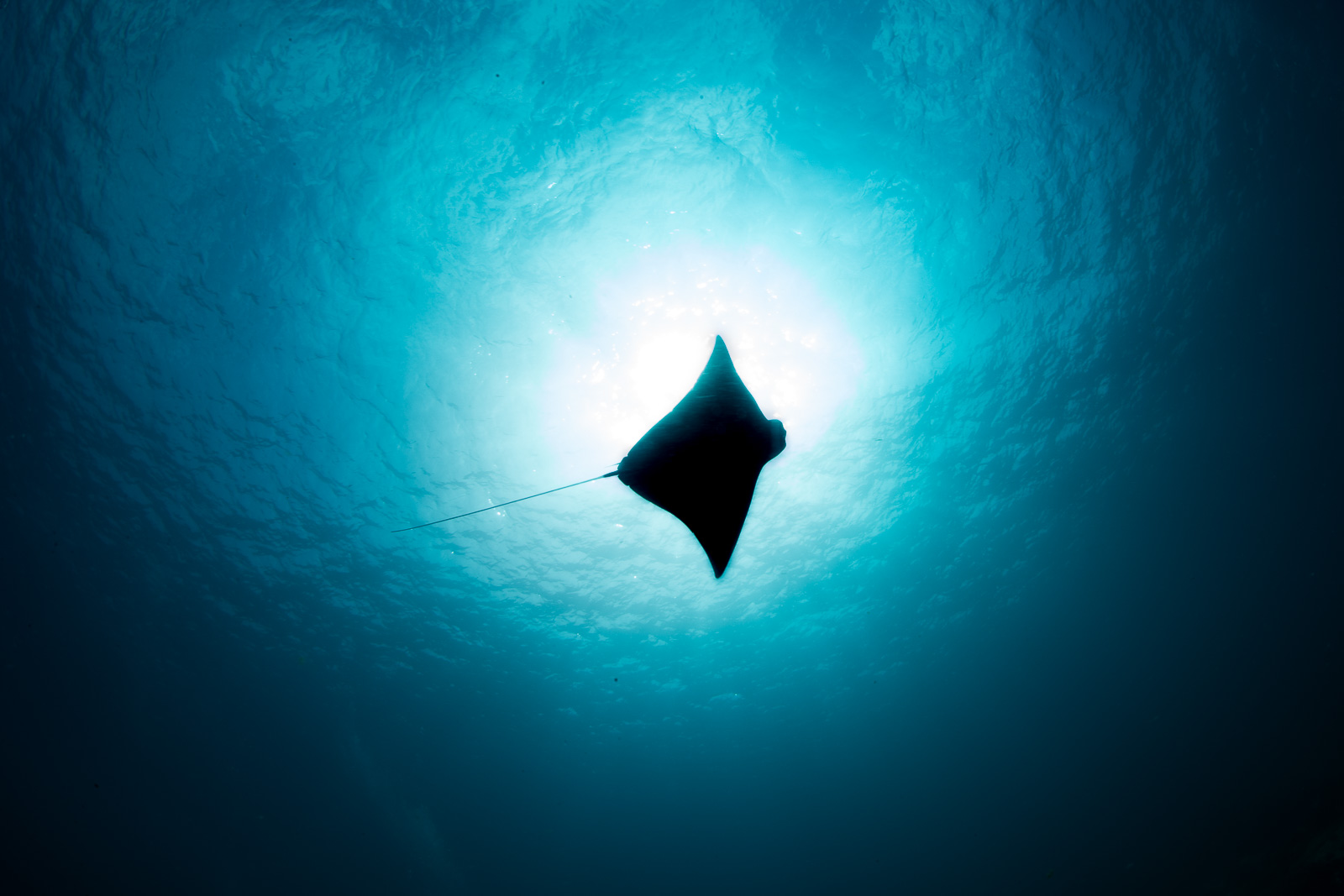
A reef manta settles onto a cleaning station at Manta Sandy and the wrasse go to work. A school of jacks closes around her, opens again, closes. She stays for twenty minutes and shows no interest in leaving. Three metres away you are holding onto a rock in a current that has other ideas, watching something that happens here most mornings, to nobody in particular, whether or not anyone has come to see it.
02What it takes

Am I good enough for this?

For most divers, yes. Nothing in the strait is deep or technical, there is no surf, and every dive begins with a backroll off a day boat. What it asks is simpler but strict: descend fast enough to be on the reef before the current carries you past it, and be comfortable hooked in with water pouring over you. That current is exactly why the fish are stacked at Cape Kri and Blue Magic.

01
Open Water
02
Intermediate
03
Advanced
04
Demanding
05
Expedition
Water
28–30 °C
3 mm or skin
Visibility
15–30 m
Current and plankton dependent
Best months
Oct – Apr
Manta season and calmer crossings
Format
Resort or liveaboard
Both reviewed below
Getting there
Sorong (SOQ)
Book this flight first — see planning
Current
Strong
This is the point
03Why this place

The strait does not ask you to choose

The Dampier Strait declines to specialise. Most great reefs are built around one thing and organise your week accordingly. This one hands you a manta cleaning station before breakfast, a jetty boiling with silversides at lunch, and a current-swept pinnacle in the afternoon, and treats none of them as the headline.

In a single day you can shoot a cleaning station, a jetty full of schooling fish, a mangrove edge and a current-swept pinnacle — and none of them will feel like the consolation prize. That range is rarer than any one of those subjects on its own.

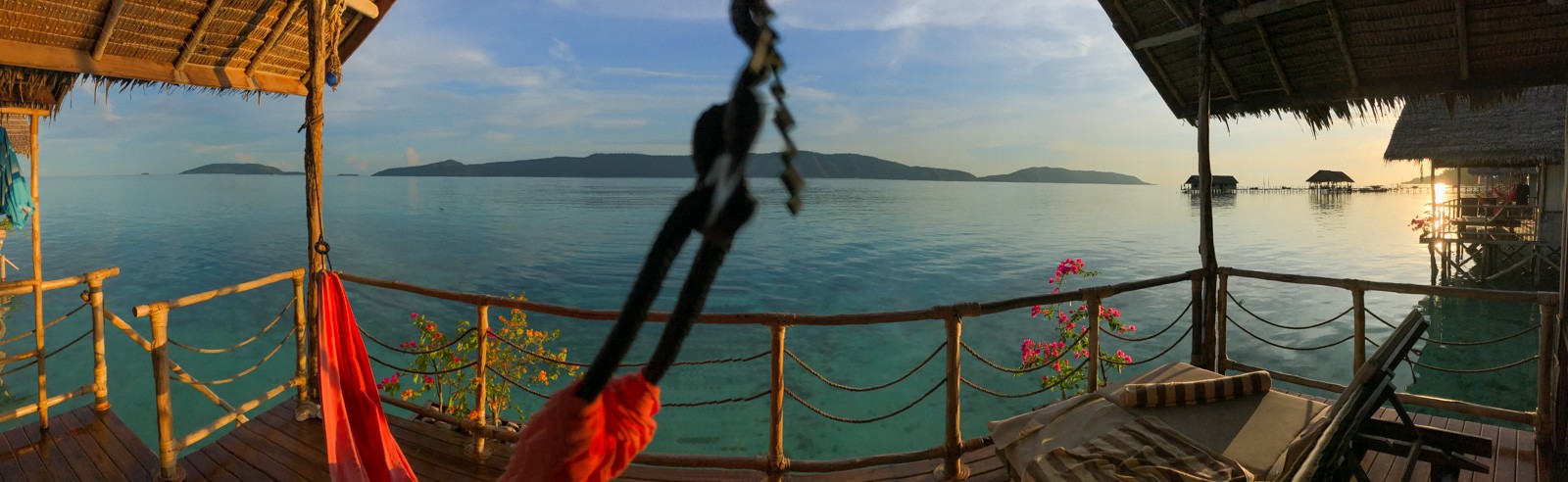
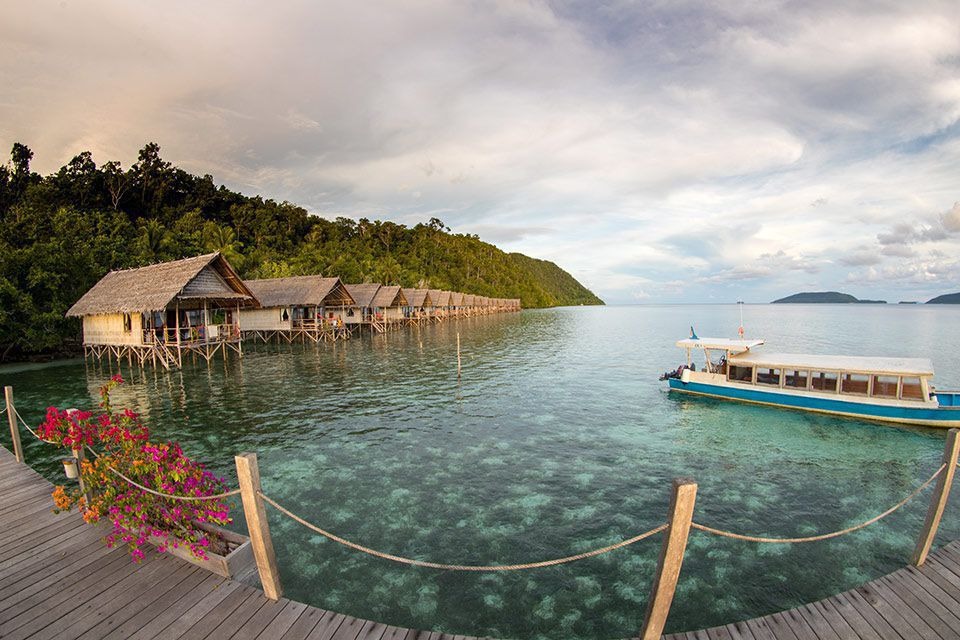
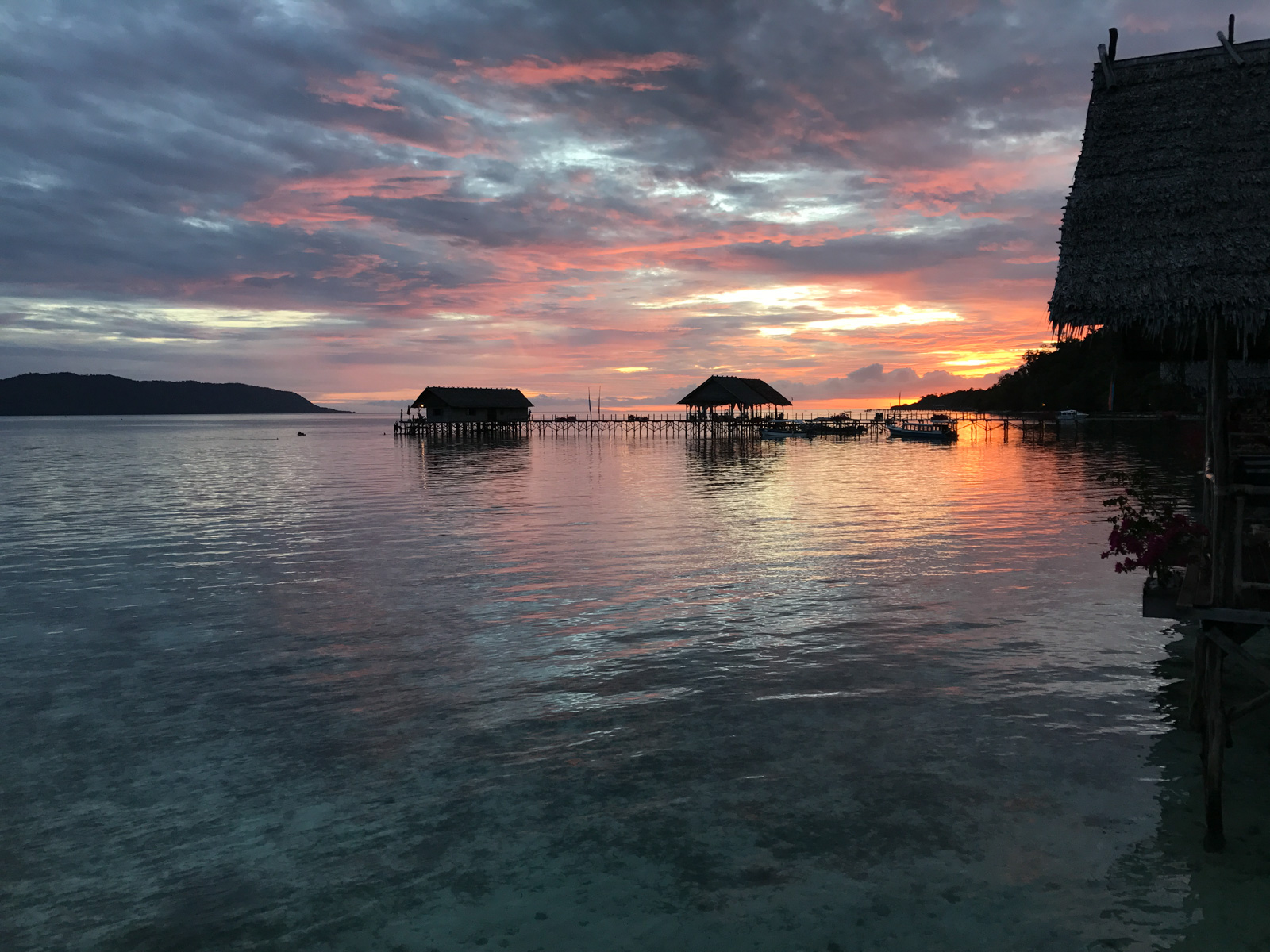
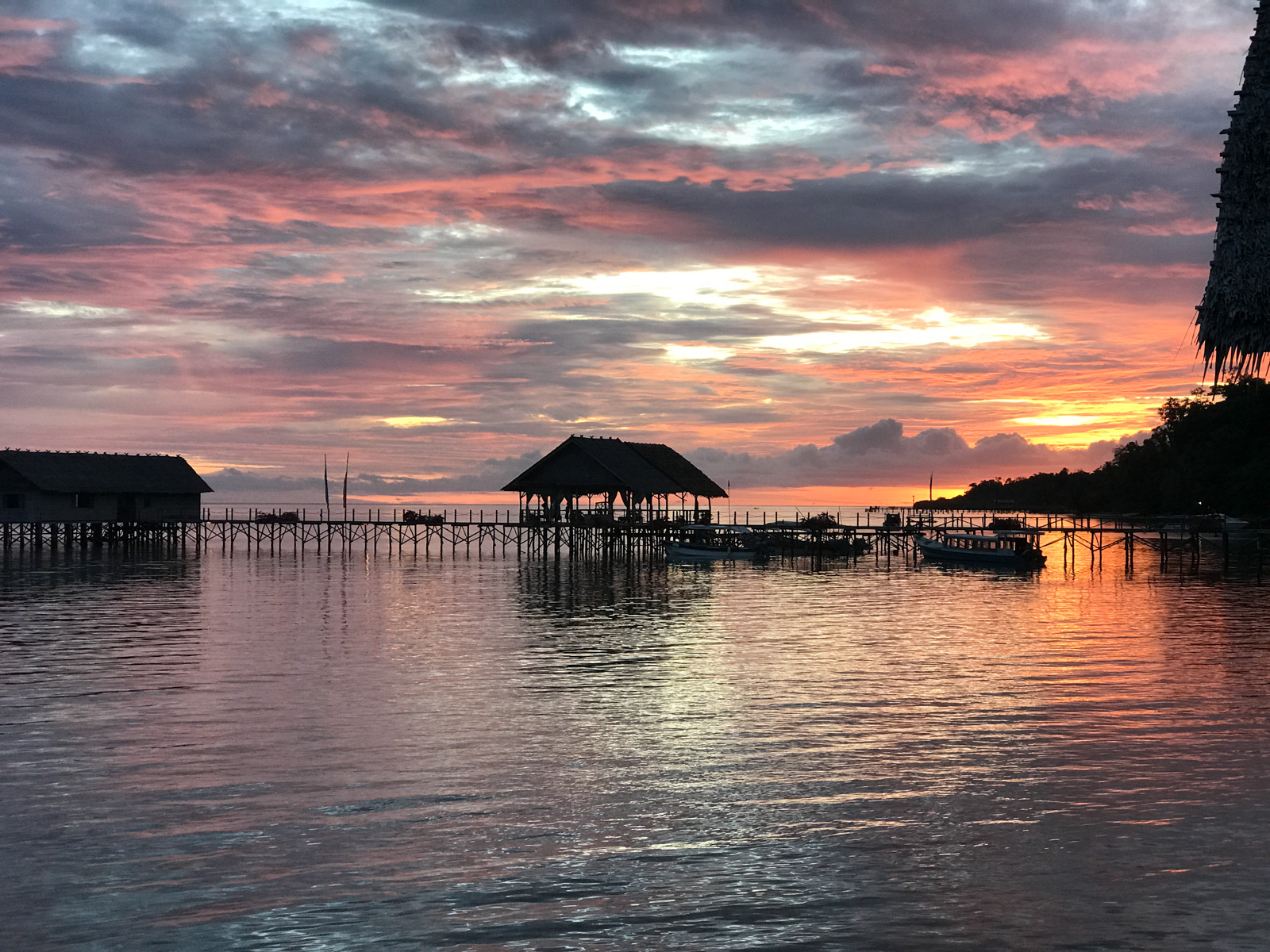
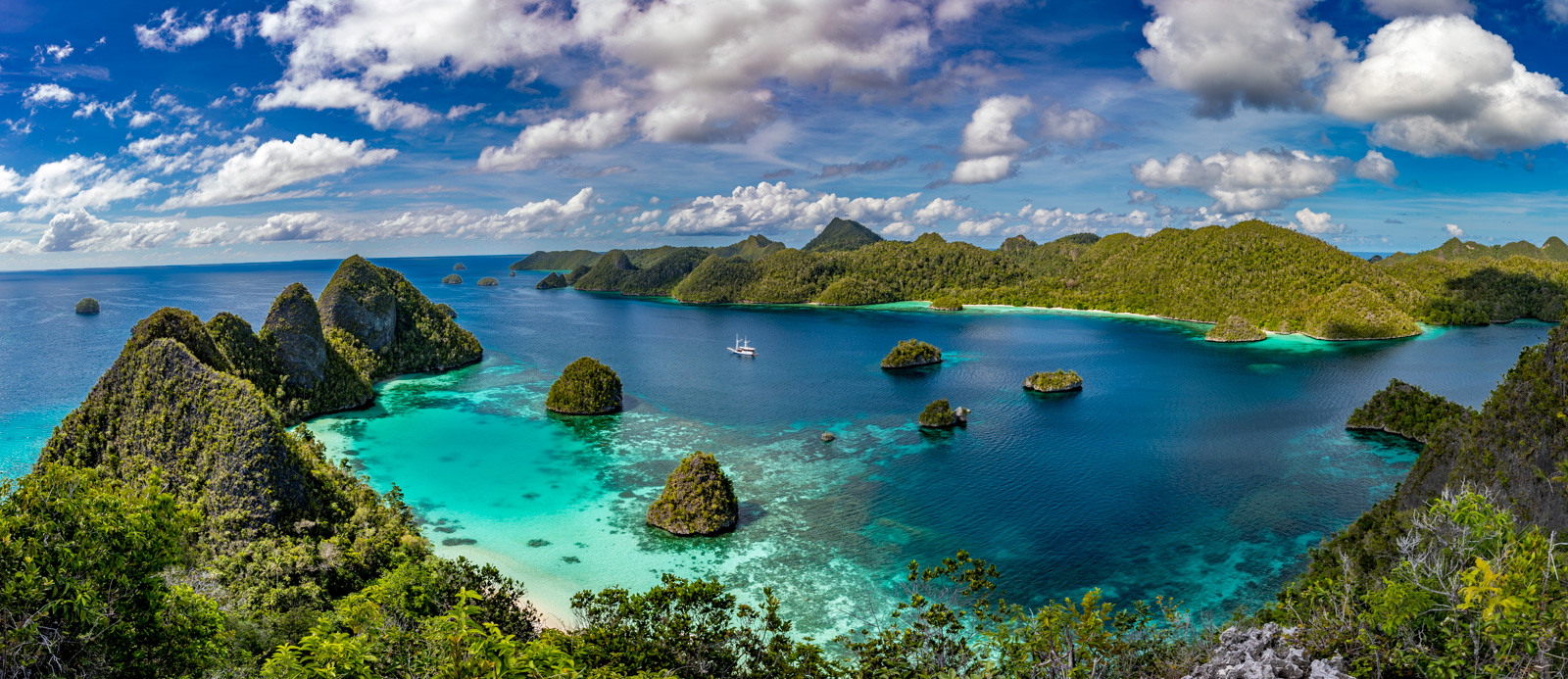
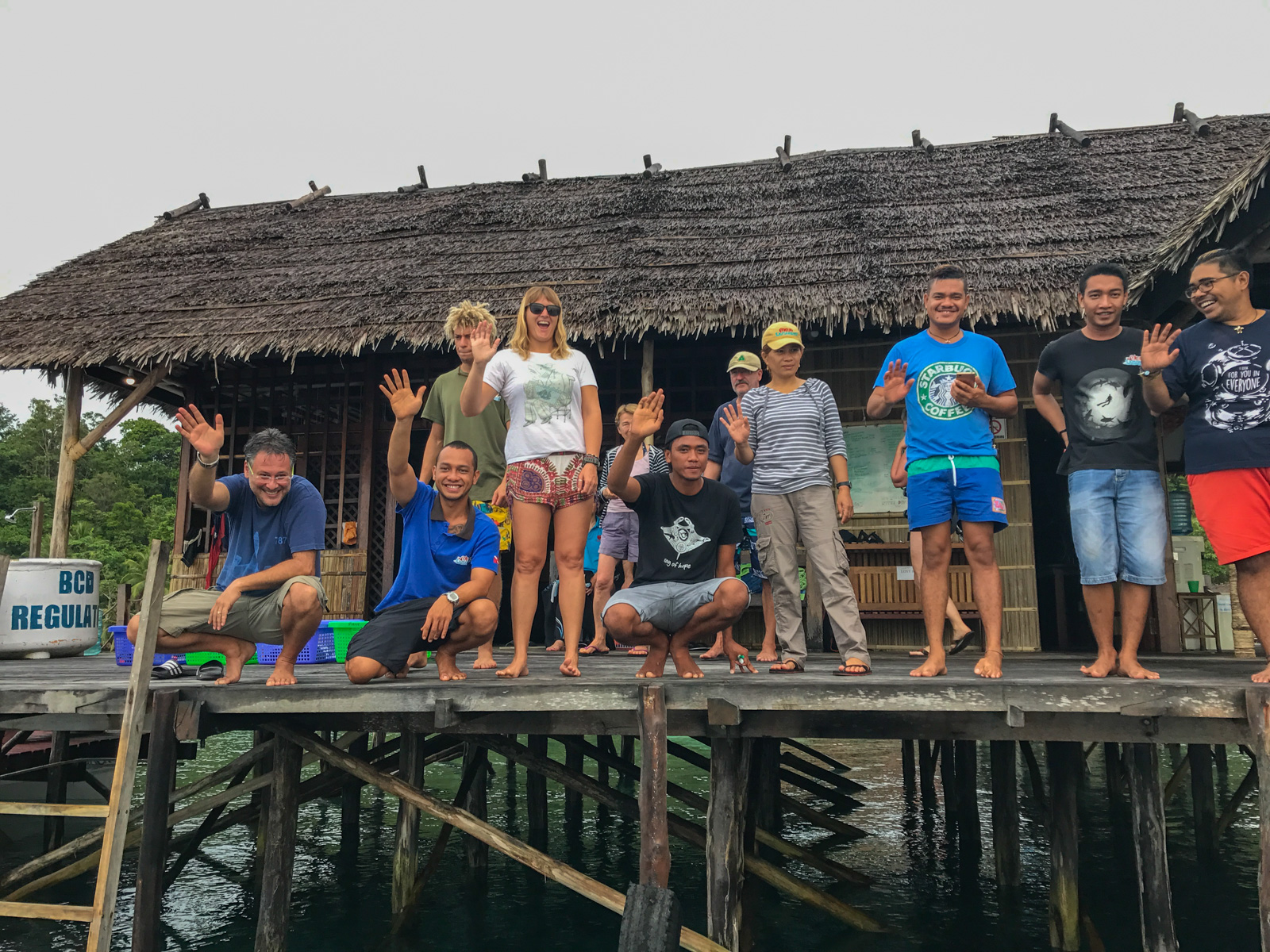
Above the water it does the same thing. Wayag and Piaynemo are the karst towers everyone has seen photographs of, and they are better in person than the photographs suggest. Most guests sleep in a cabin standing on stilts over the water. You wake up above the reef you are about to dive.
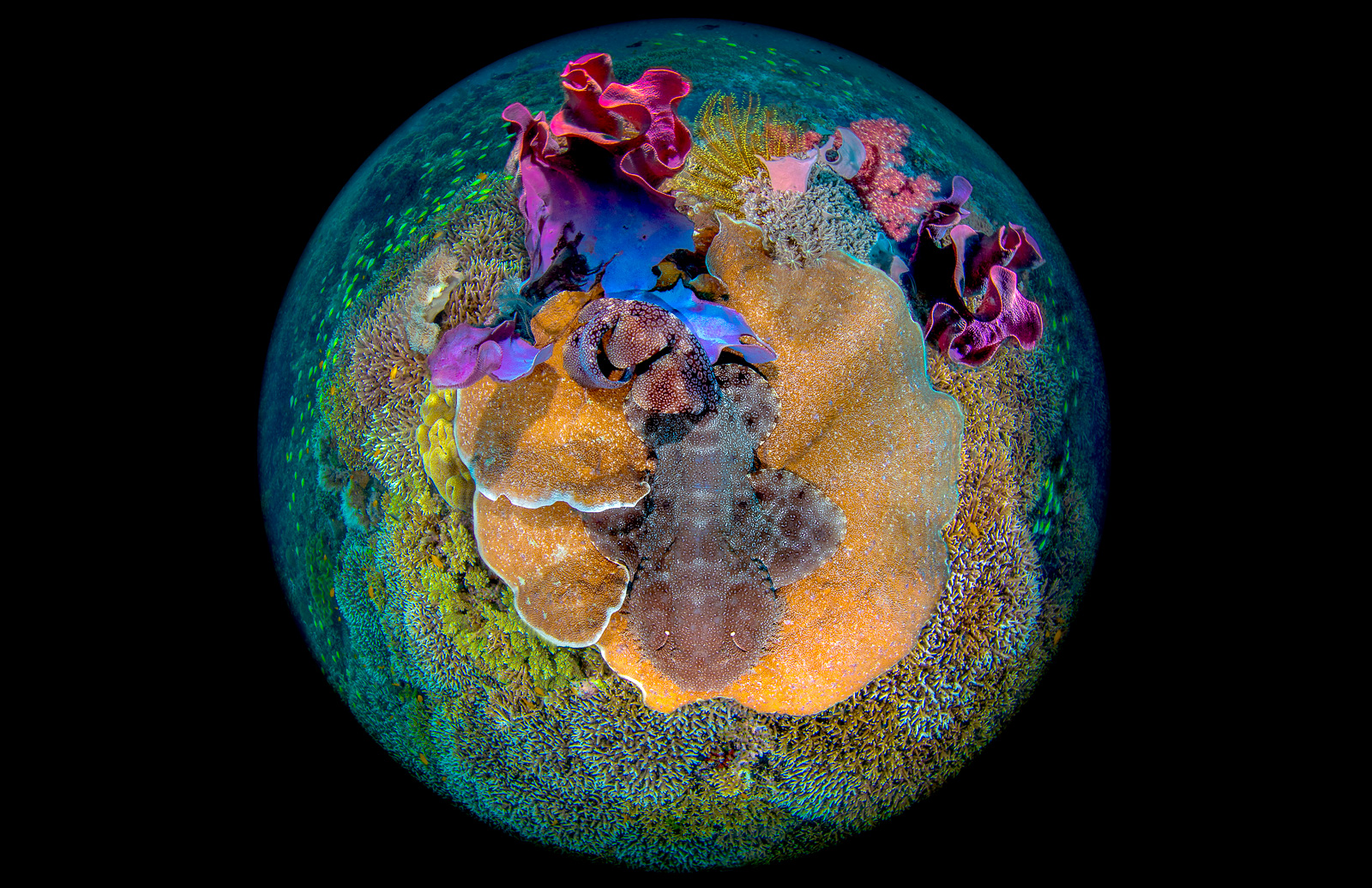
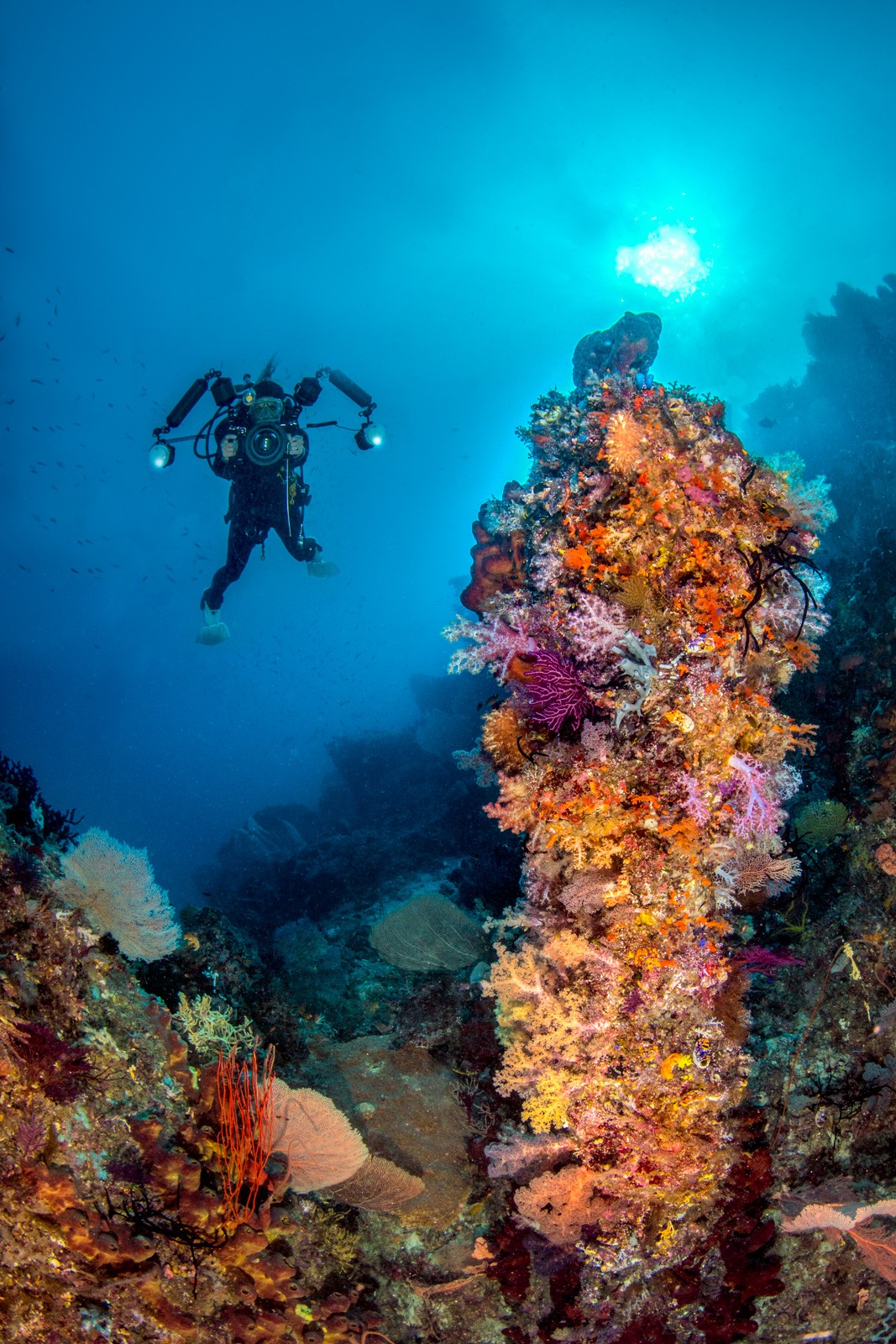
One of the world's great underwater photography destinations

It is not just that the biodiversity is high. It is that it translates into imagery. The reefs have shape, density, movement, scale and colour. You are not documenting biodiversity, you are working inside it.

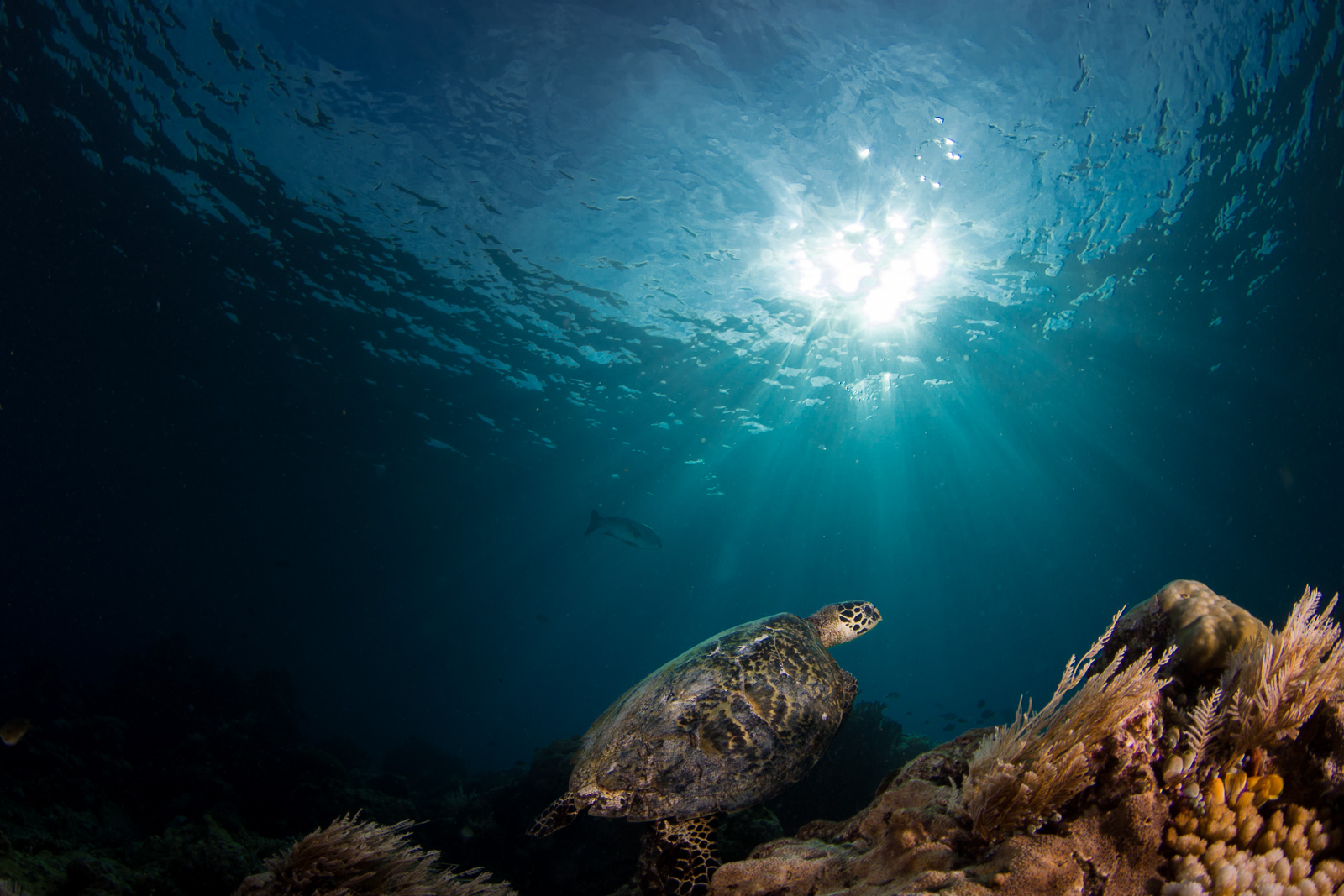
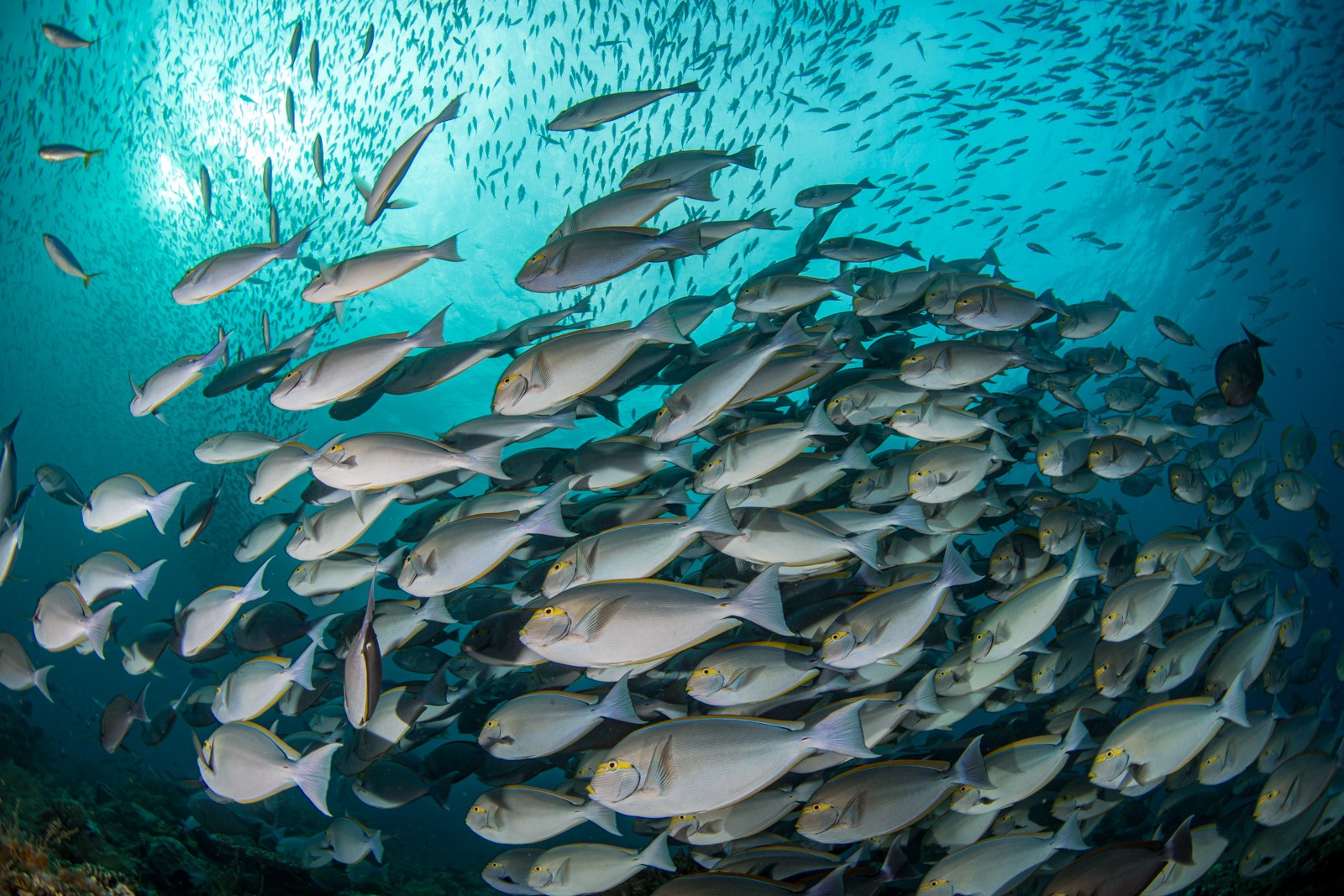
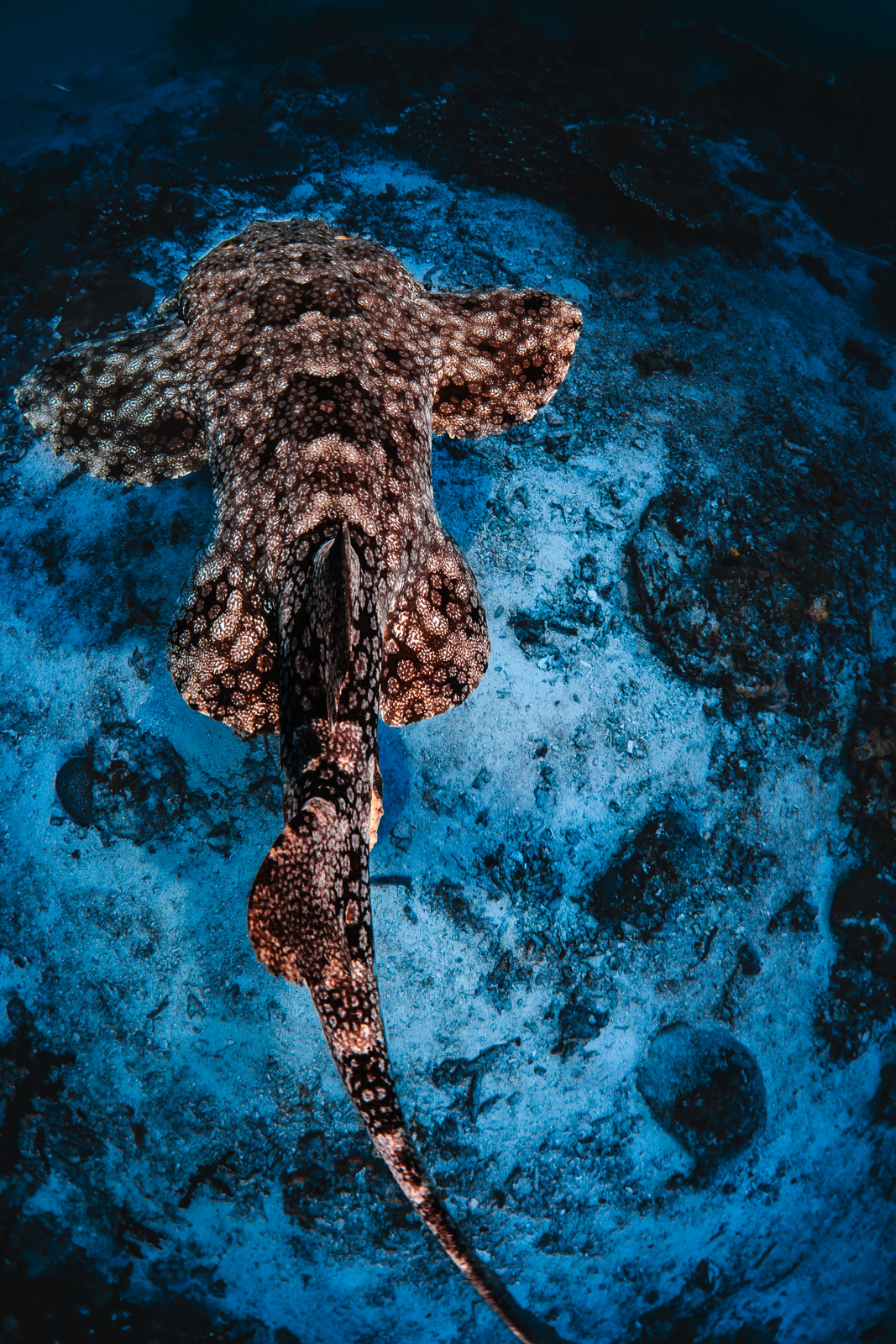
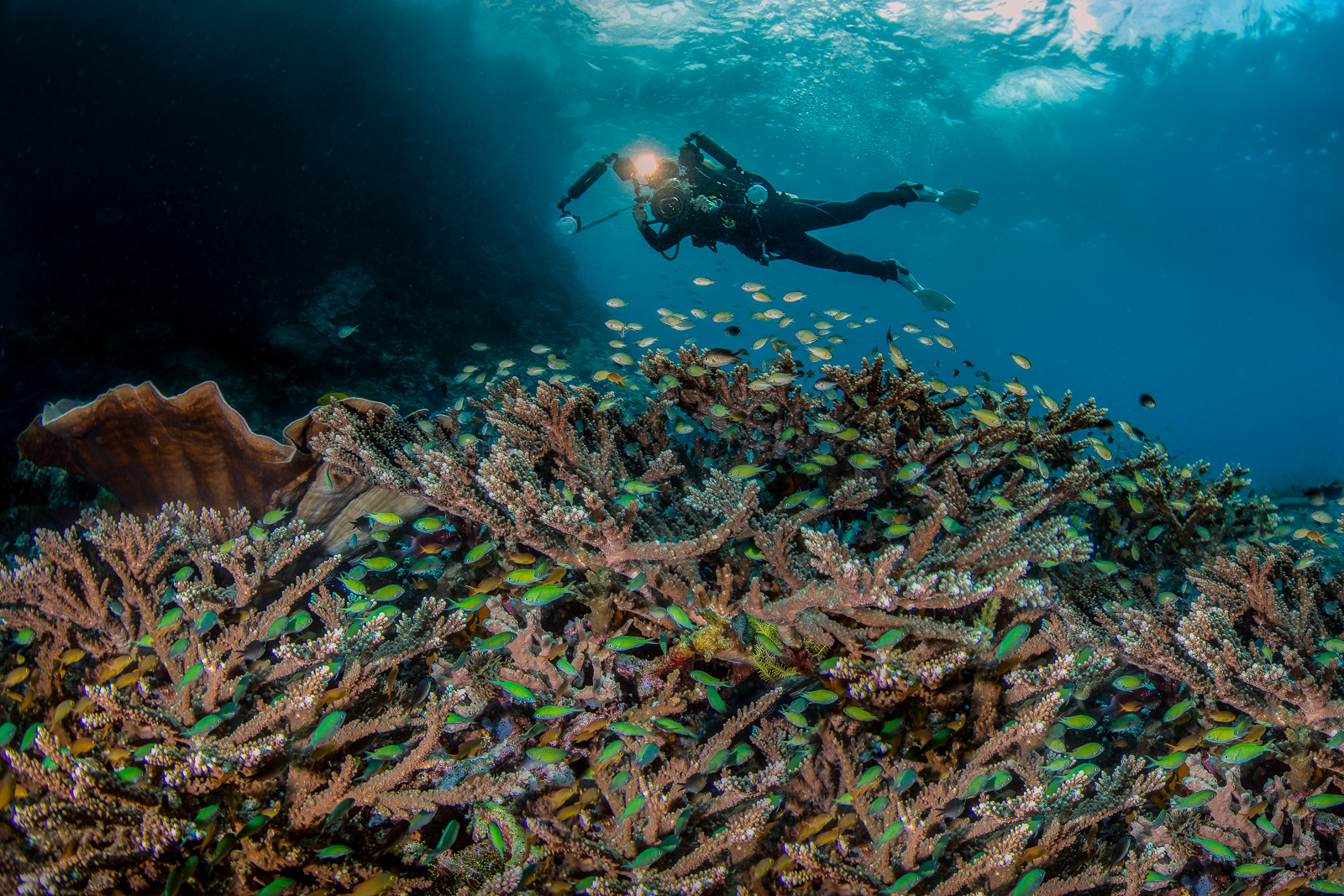
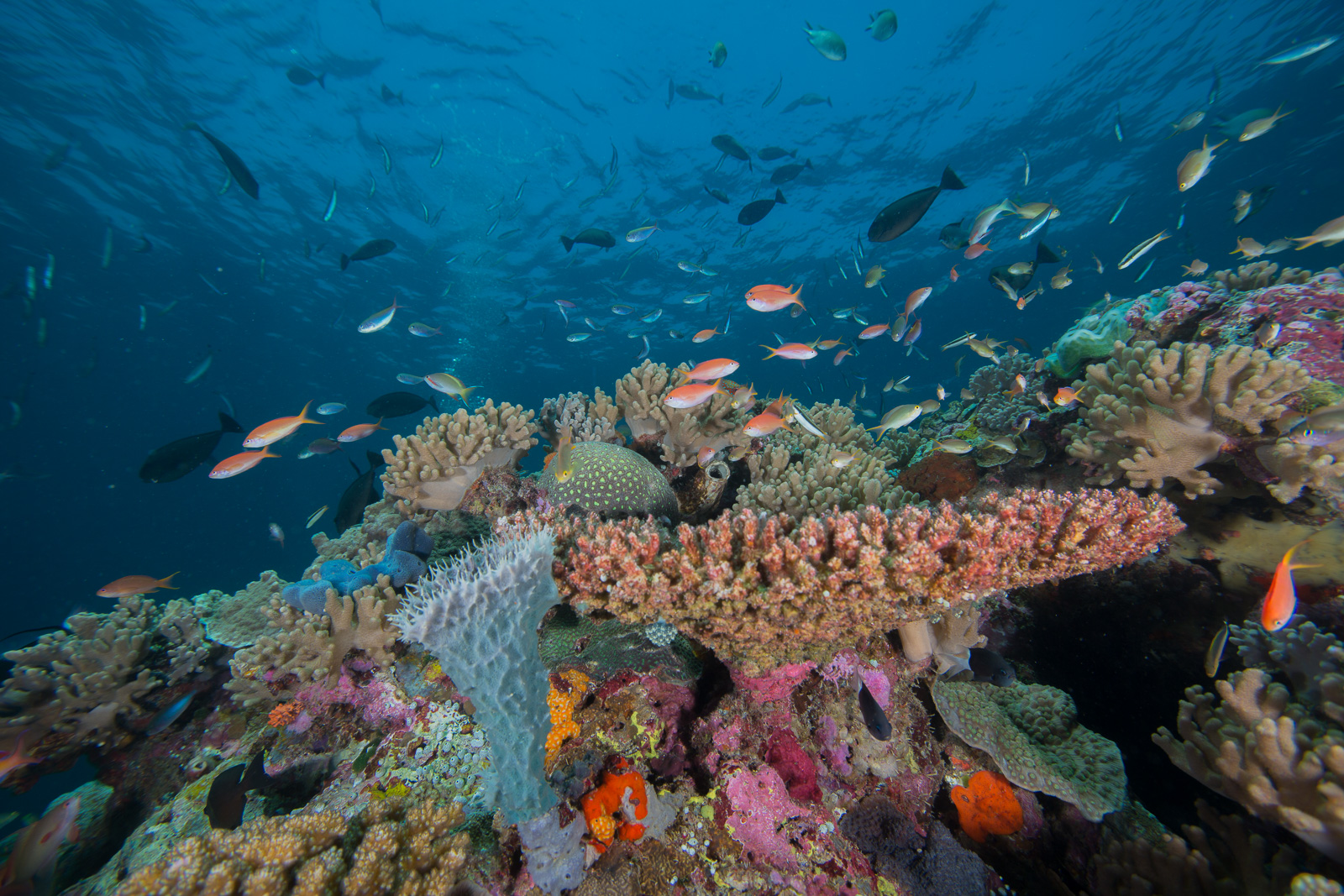
Wide-angle is where the region becomes dominant. The Dampier Strait has the current, reef structure and fish aggregation that make images feel layered. Sweetlips, fusiliers, surgeonfish, jacks, barracuda, bumpheads, reef sharks and mantas all become part of the frame depending on the site.

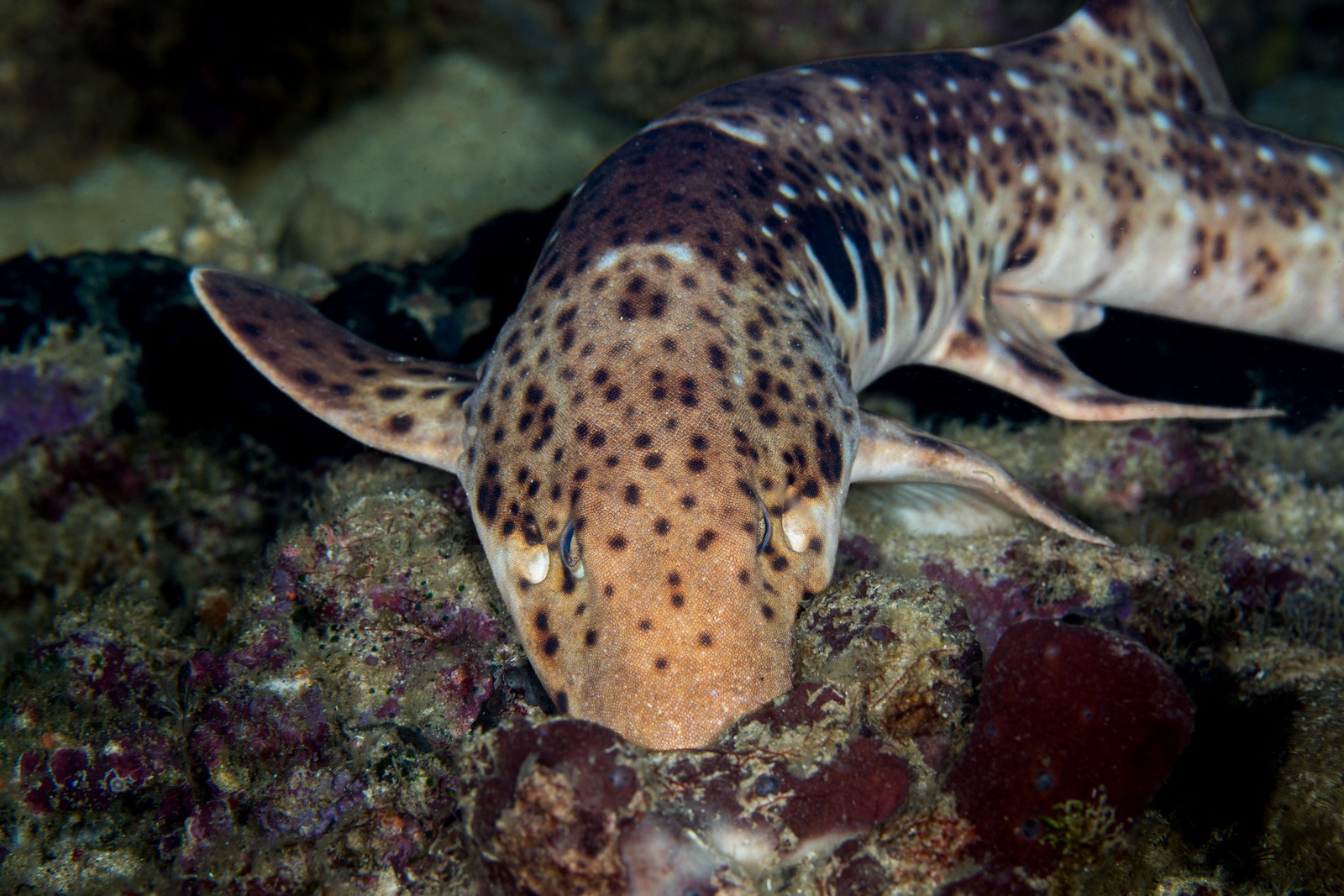
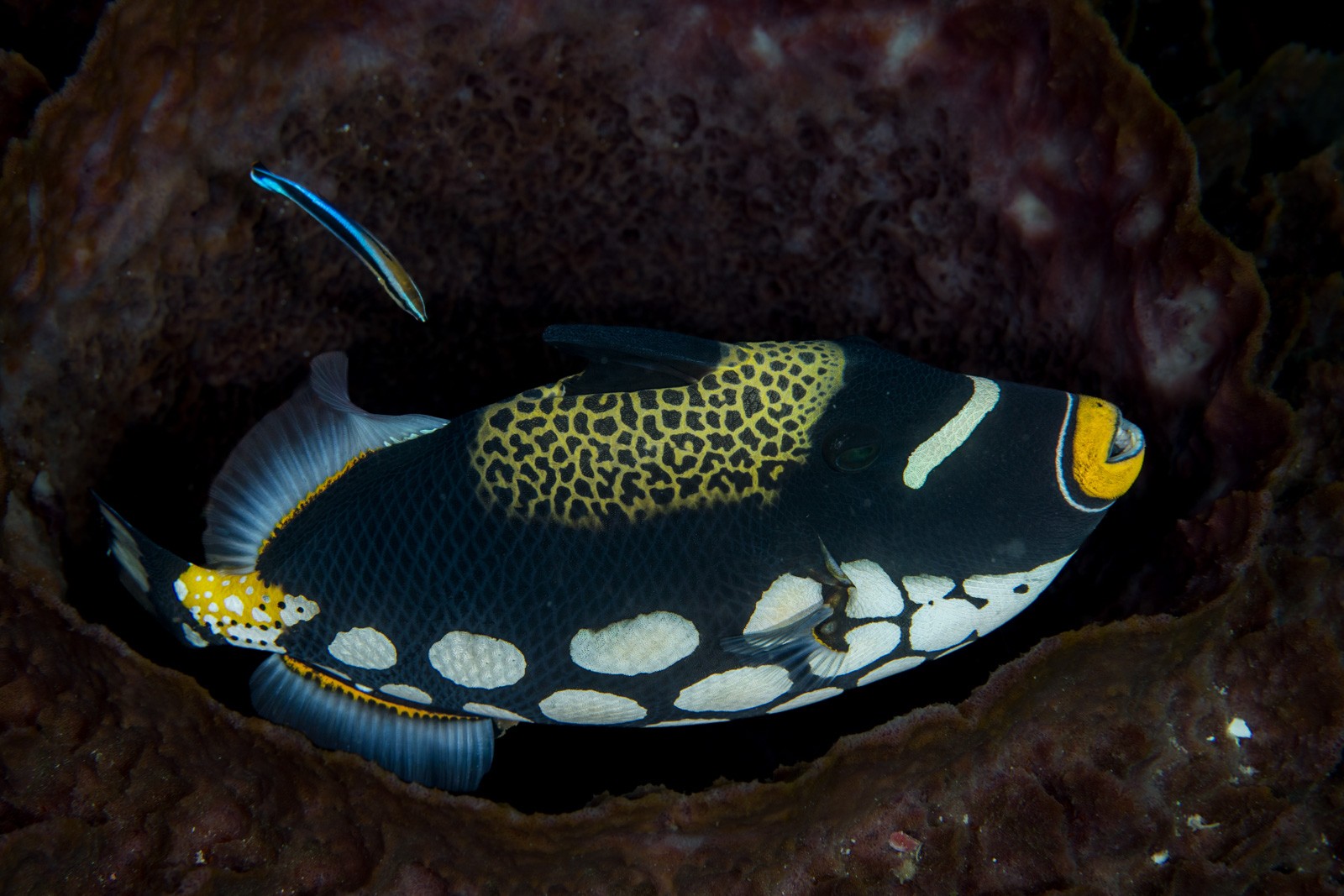
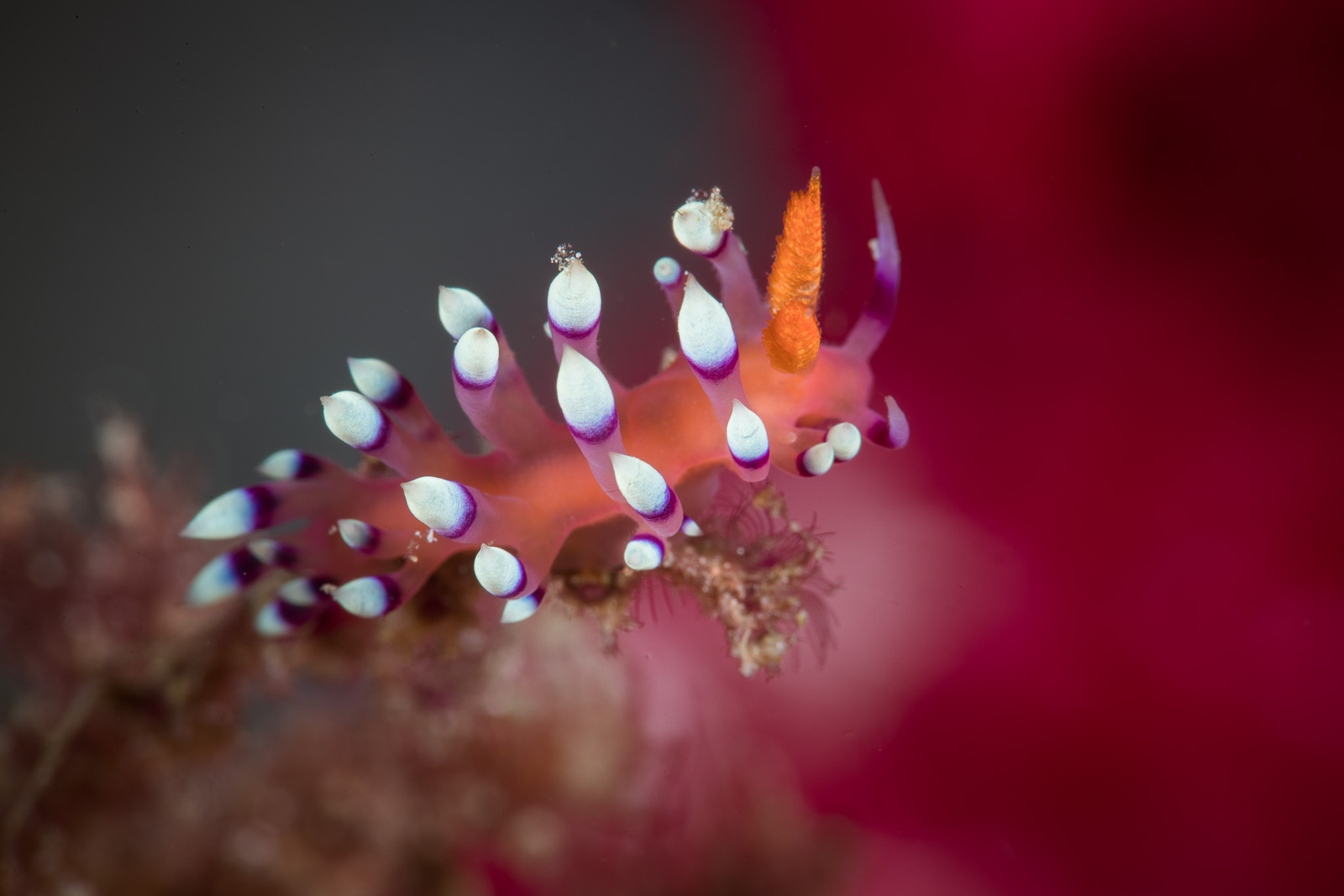
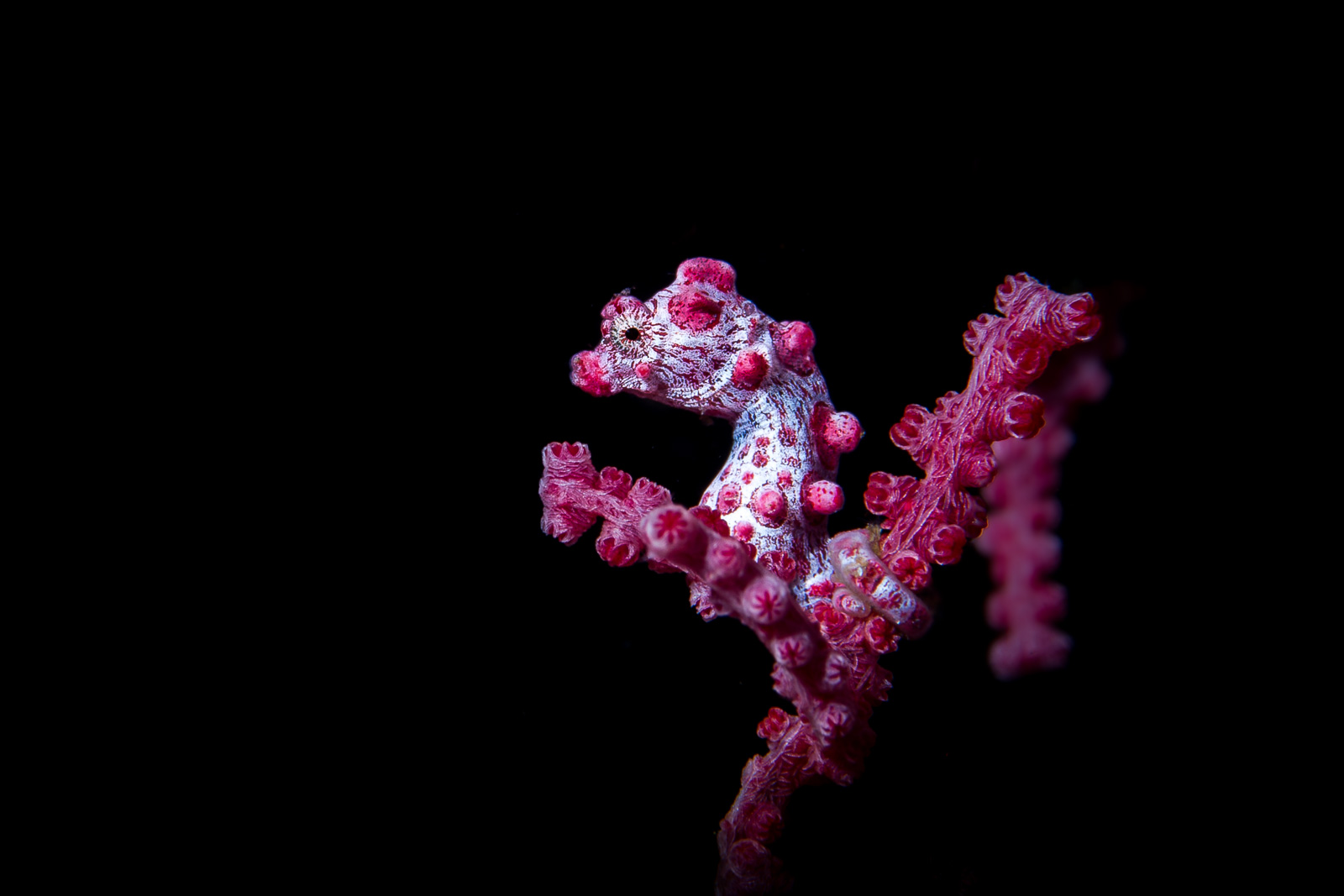
Macro is there — nudibranchs, pygmy seahorses, shrimp — if you slow down and dive with intention. But this is not a muck destination, and packing for it as one is a mistake.

04The pictures

What the ten days actually looked like

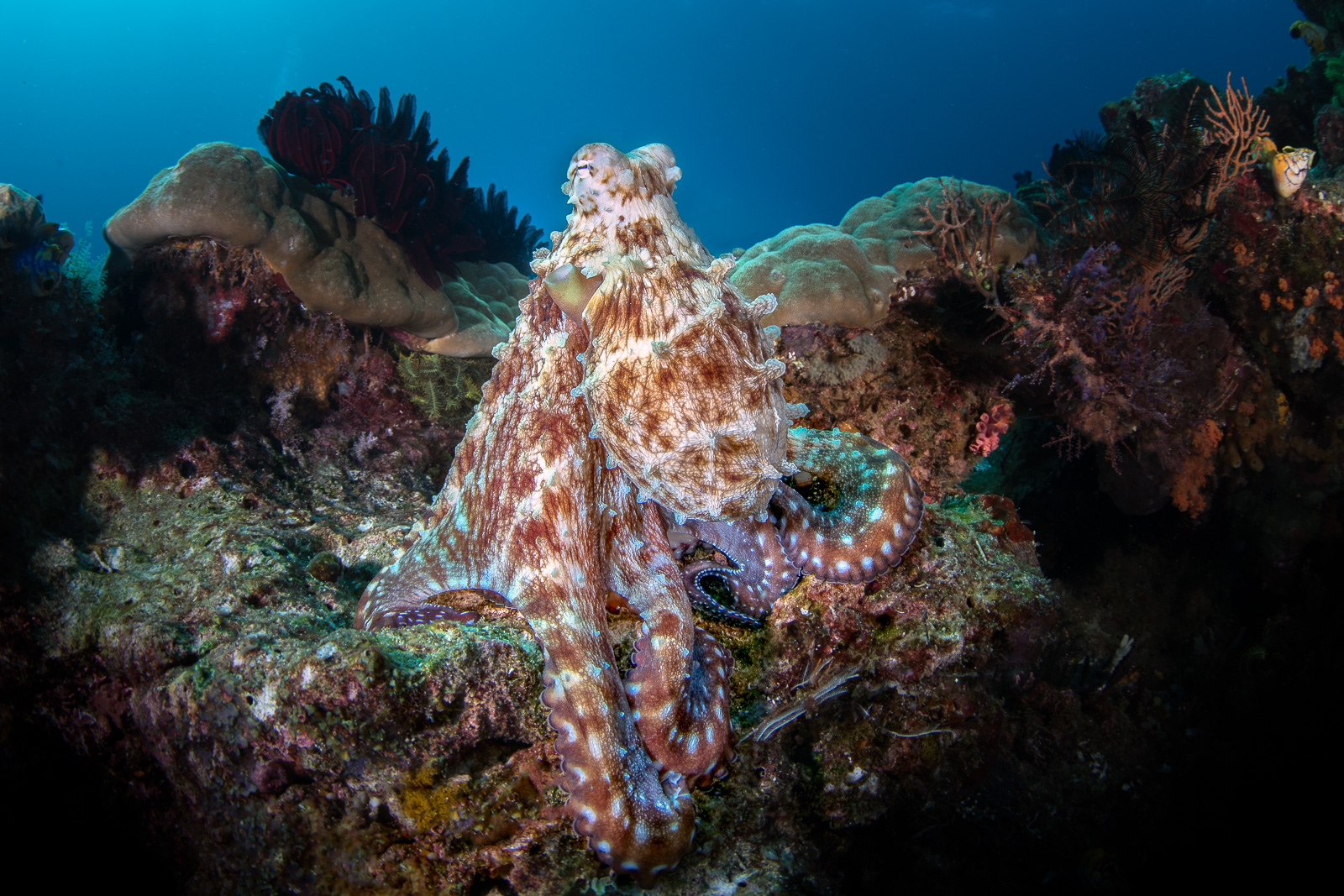
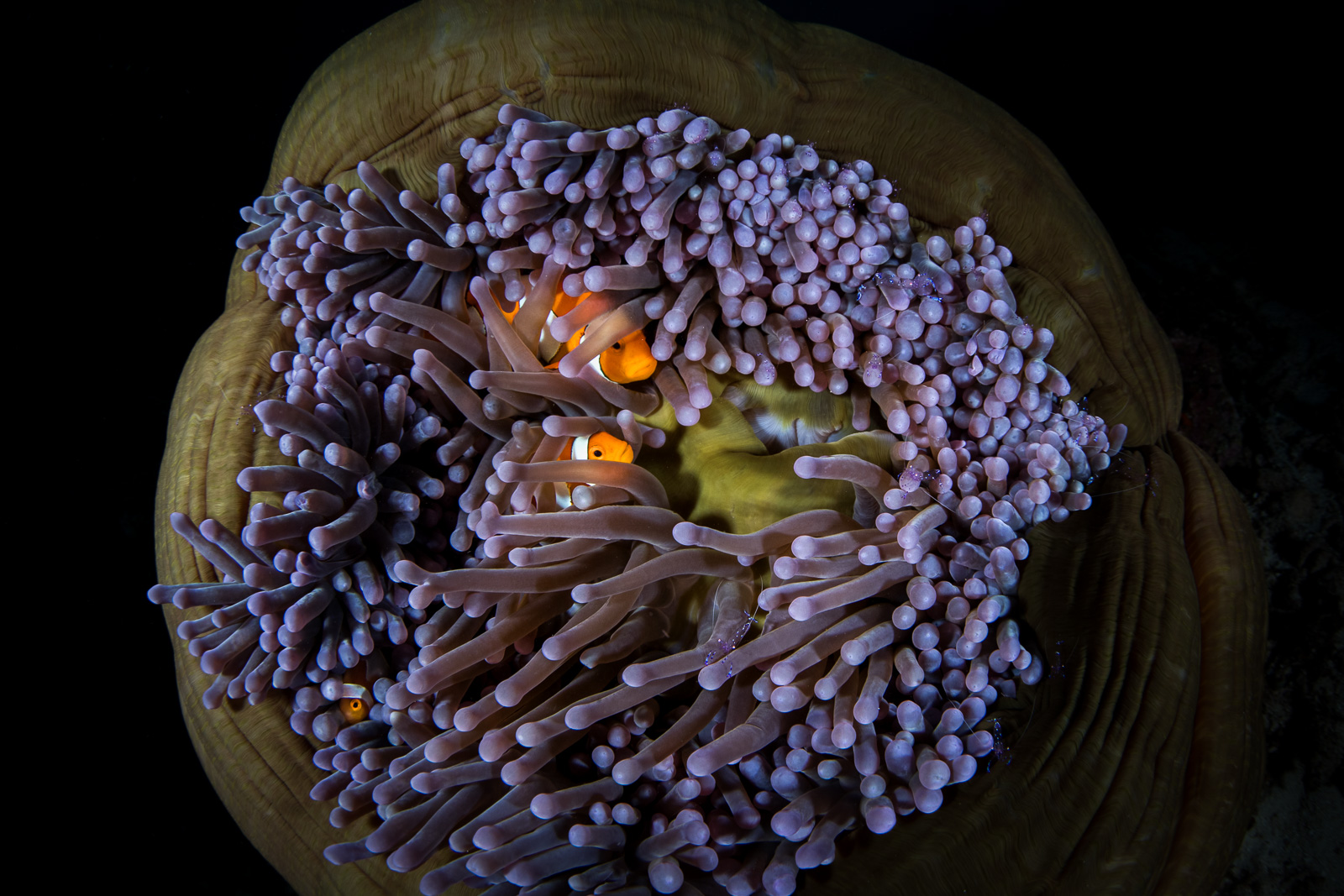
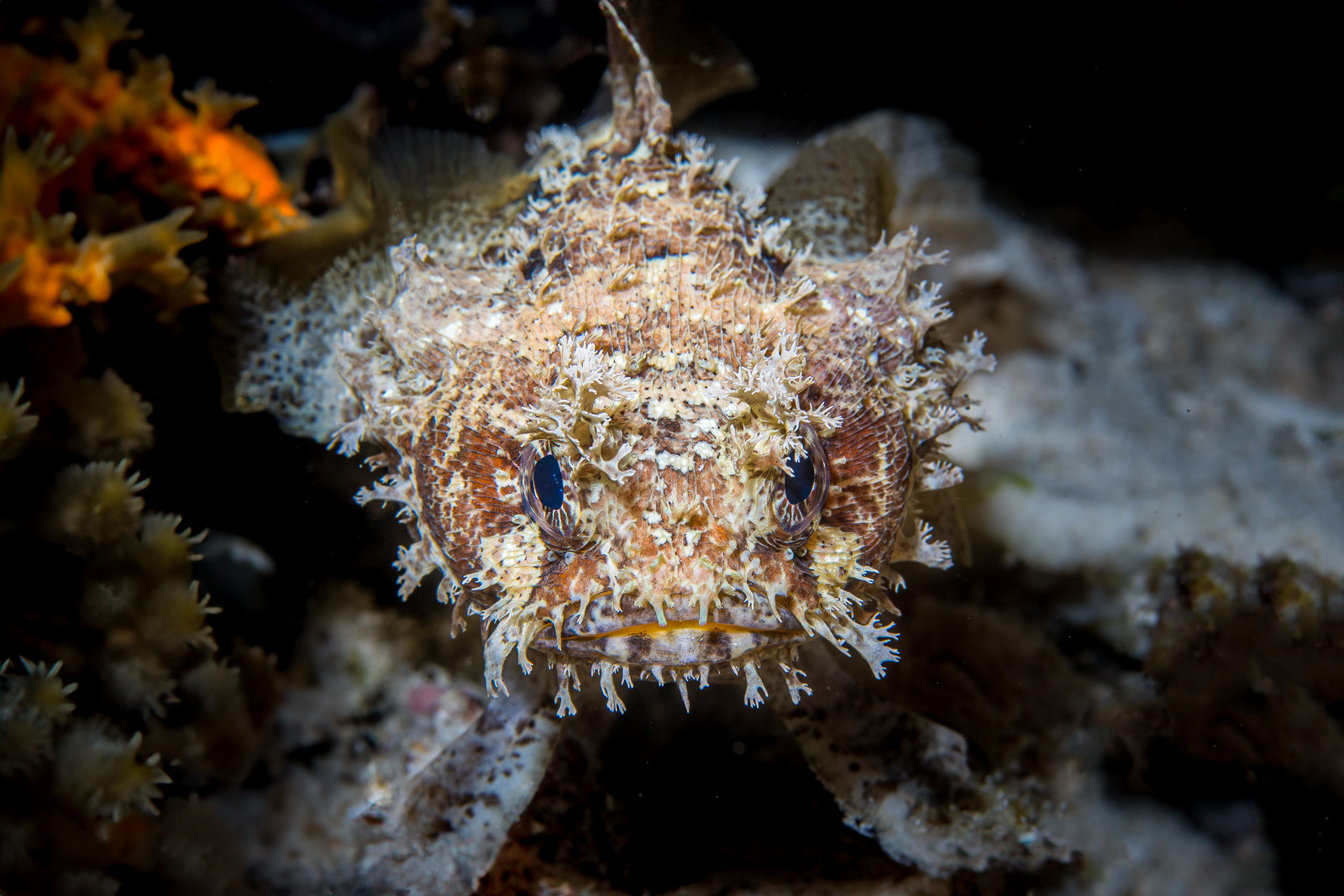
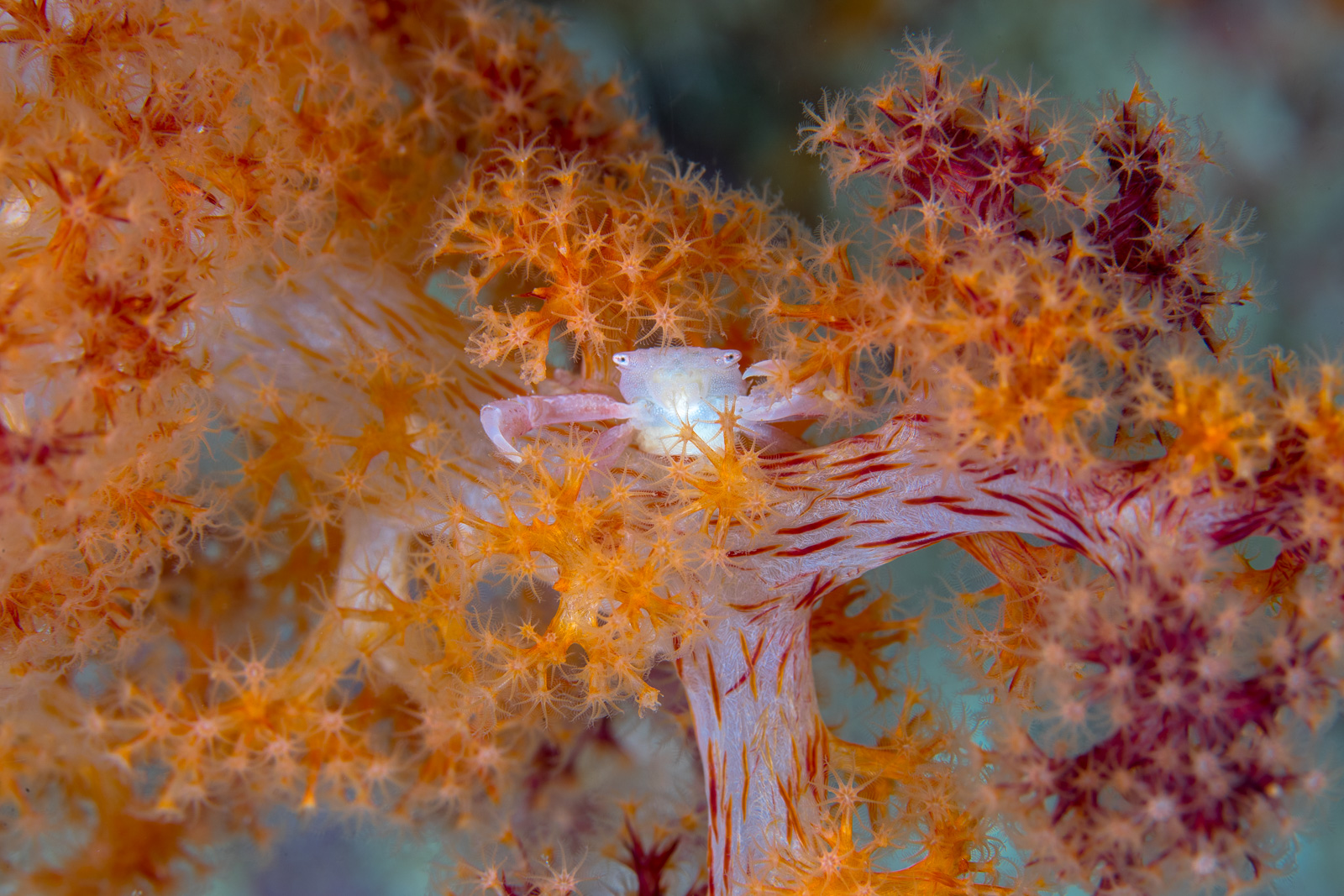
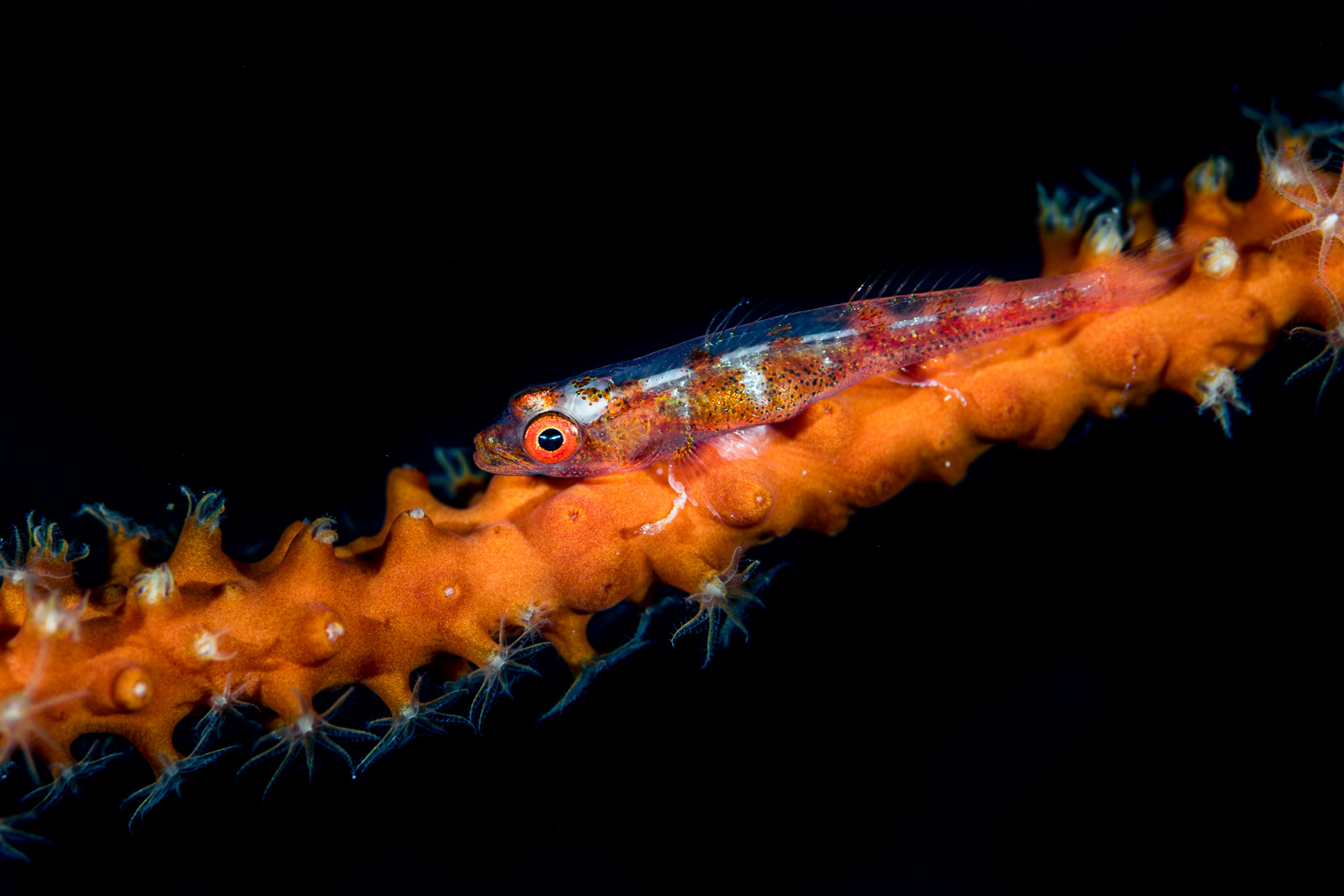
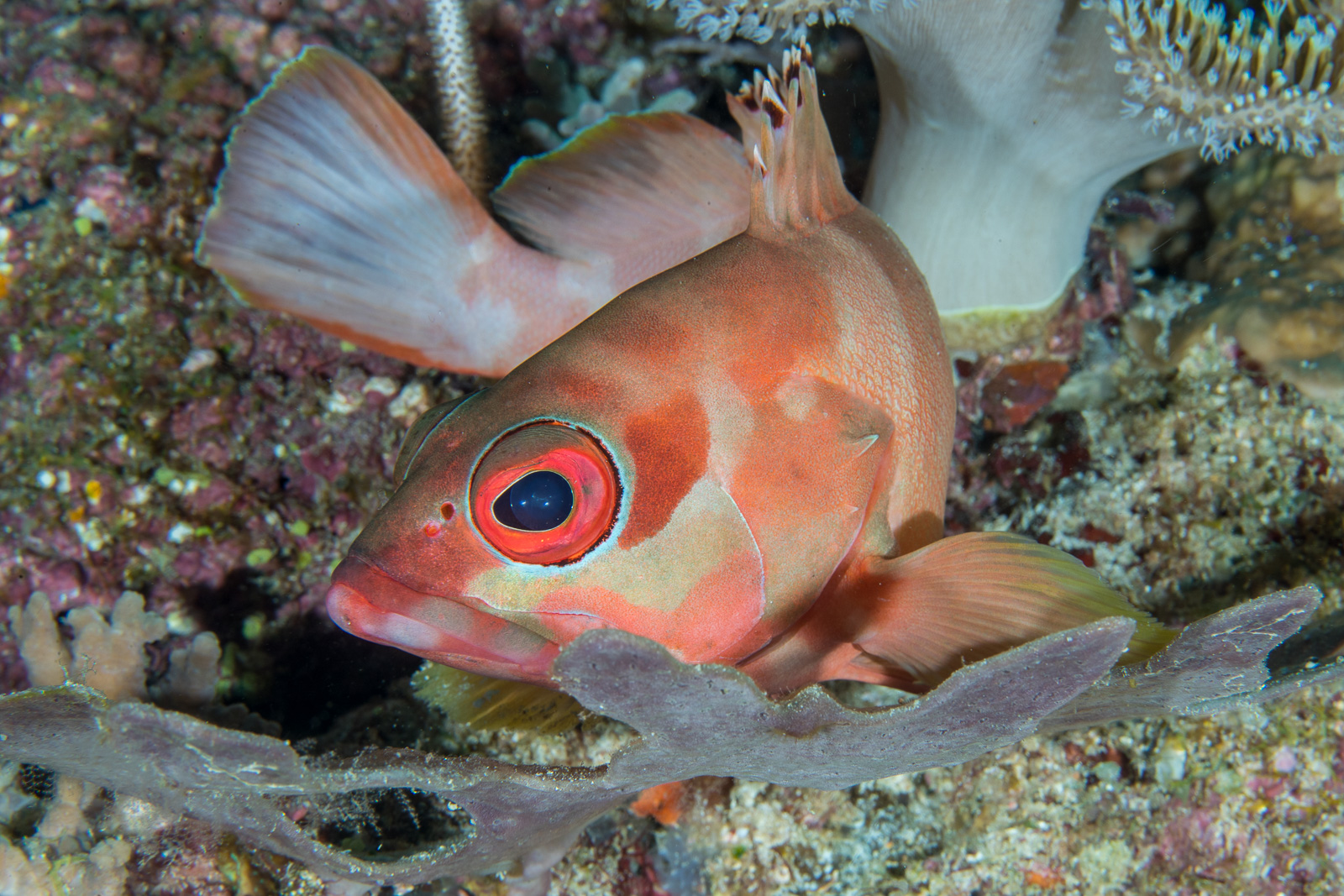
Every frame here was made at Dampier Strait in 2016 and 2018, in the conditions that turned up rather than the ones I hoped for. Click any of them to open it full size.

Dampier StraitDampier StraitDampier StraitDampier StraitDampier StraitDampier StraitDampier StraitDampier StraitDampier StraitDampier StraitDampier StraitDampier Strait

Any frame on this page can be licensed for editorial use. Licensing terms.

05Best time to dive

November to March is what you are aiming for

November to March is when Dampier Strait is at its best, and nothing operates June to September. Tap any month for what the water is actually doing.

High seasonShoulderClosed

Visibility, sea state, what is in the water and how much of it you can count on. The season turns at November and again after March.

06Signature dives

The six that define the strait

Six I dived more than once and would plan a week around, named as the resort names them.

01

Cape Kri

The world record, and what it feels like

Gerry Allen counted 374 species here on one dive in 2012 and nobody has beaten it. What that means in the water is tearing current and enough going on that experienced divers stop shooting and just watch. Get down fast, get to the corner, then decide what you are pointing at.

02

Blue Magic

Oceanic mantas over a submerged pinnacle

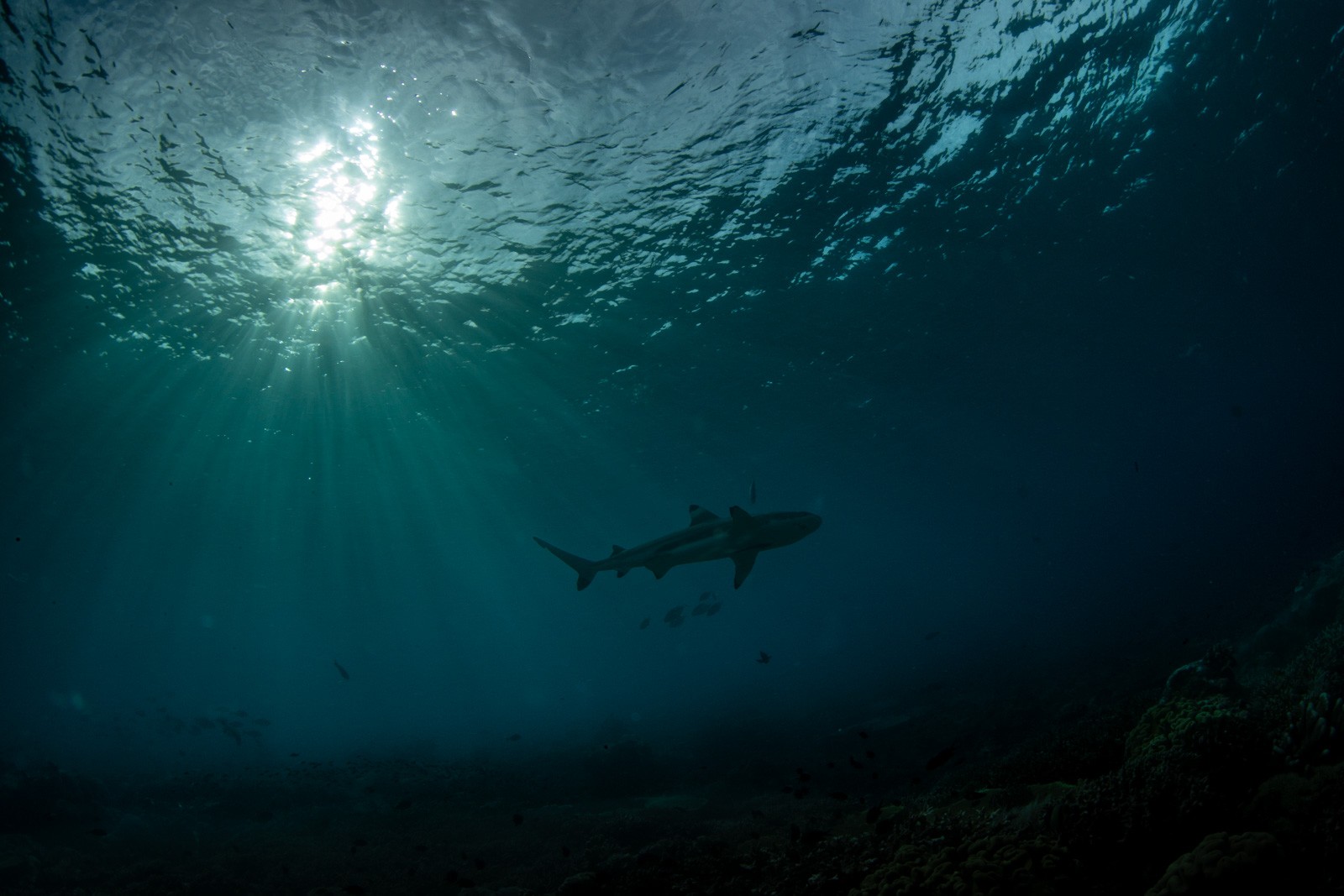
An offshore seamount that pulls in oceanic mantas, grey reef sharks, jacks and resident barracuda. Hook onto the corner on a running tide and hold. The trevally close over the top of you until the reef disappears behind them.

03

Manta Sandy

A cleaning station with rules

There is a marked line on the sand and you stay behind it. Settle, switch off, and let the mantas come to the station on their own terms. Divers who creep forward are the reason the line exists, and they are also the reason the mantas leave.

04

Mike's Point

Structure rather than fish soup

Wall, overhangs and real topography, with more visual character than the sites that trade purely on biomass. It needs current to come alive. On a slack tide it is pleasant; on a running one it is the best dive of the week.
05

Melissa's Garden

The hard coral argument

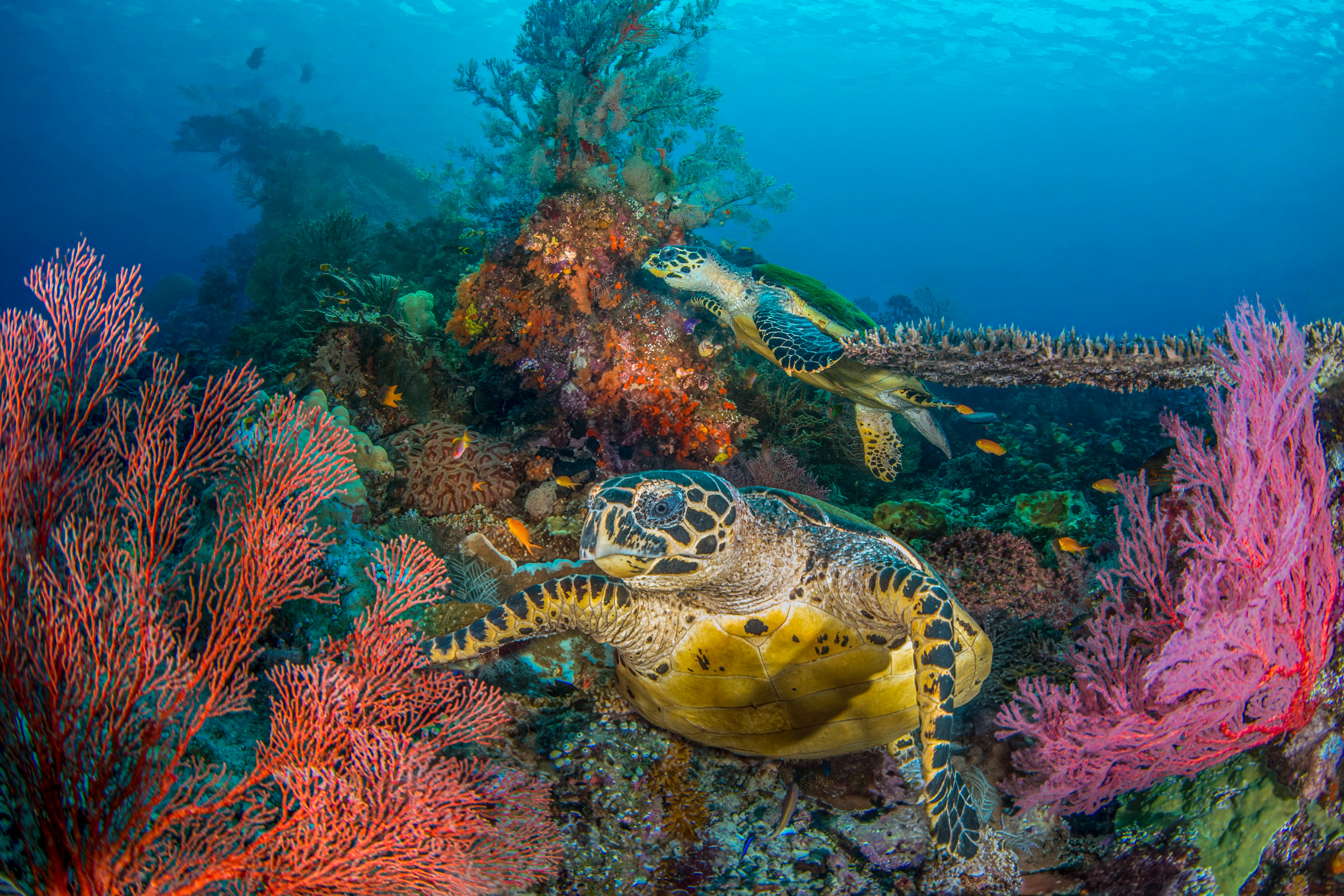
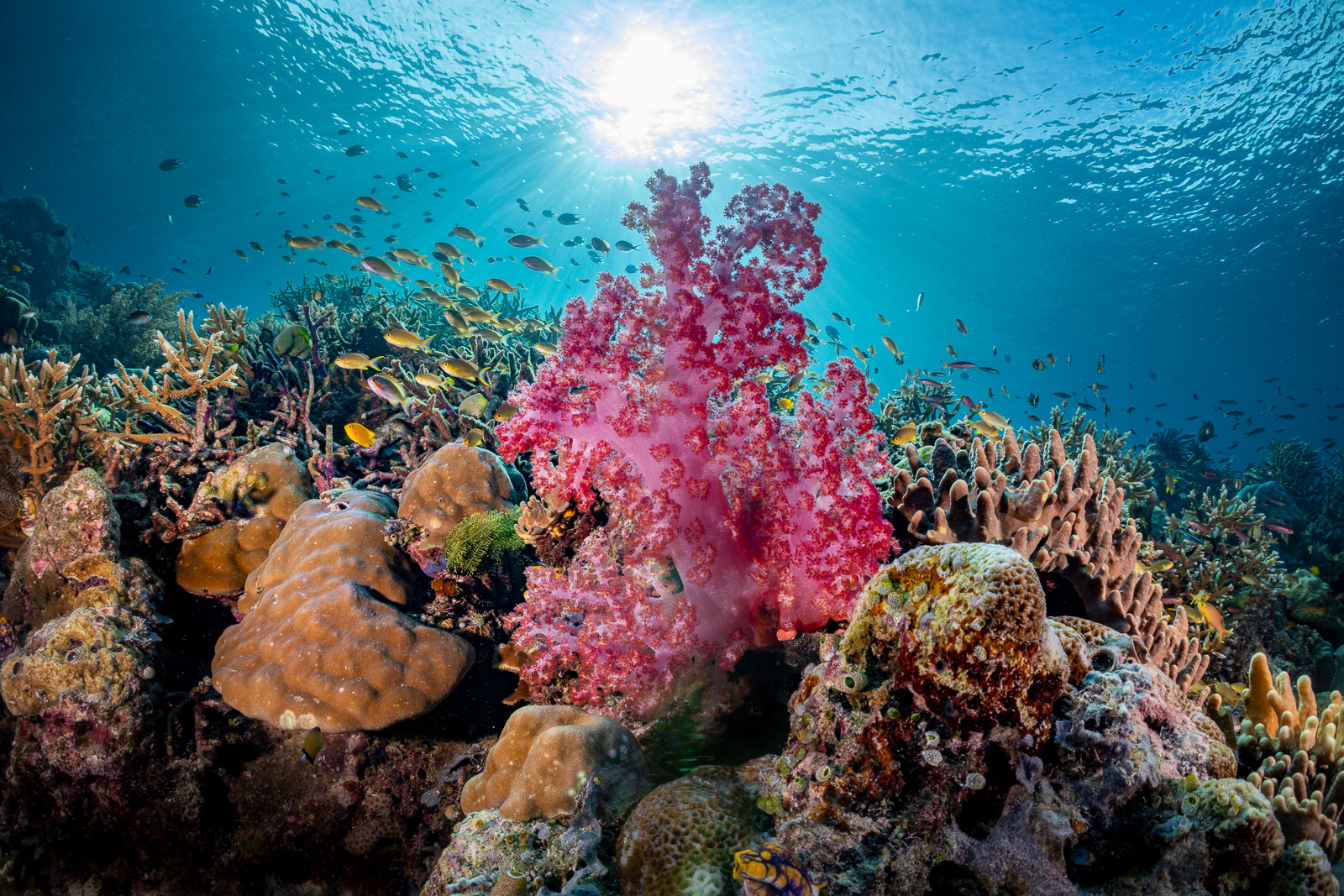
Shallow, bright, and the clearest single reason Raja Ampat has the reputation it does. If somebody asks why you flew this far to photograph coral rather than animals, show them this.

06

Sardine Reef

Fish in numbers that break autofocus

Fusiliers pour over the crown, batfish hang behind them, and the current holds the whole arrangement in place long enough to compose. The problem is never finding a subject.

07Operators

Two operators, one reef

The reef doesn't change when you switch operators, but your experience does. To help you choose, each option is scored on the same five trip axes. The final rating is a simple equation: the baseline score of the reef plus the specific score of the operator.

08Before you go

The questions that decide whether the trip works

Asked in the order they actually matter, answered with specifics.

01

How far are the dive sites?

From a Gam or Kri base, Cape Kri, Manta Sandy, Blue Magic and Mike's Point are part of the daily rhythm rather than distant excursions — most are inside thirty minutes. That short transit is what lets you dive a site three times in a week until it finally works.

02

Is diving included in the price I have been quoted?

Usually not at the resorts. The headline rate is accommodation; diving, marine park permits and nitrox are added on top. Get the dive rates in writing and add them up yourself before you commit.

03

Resort or liveaboard?

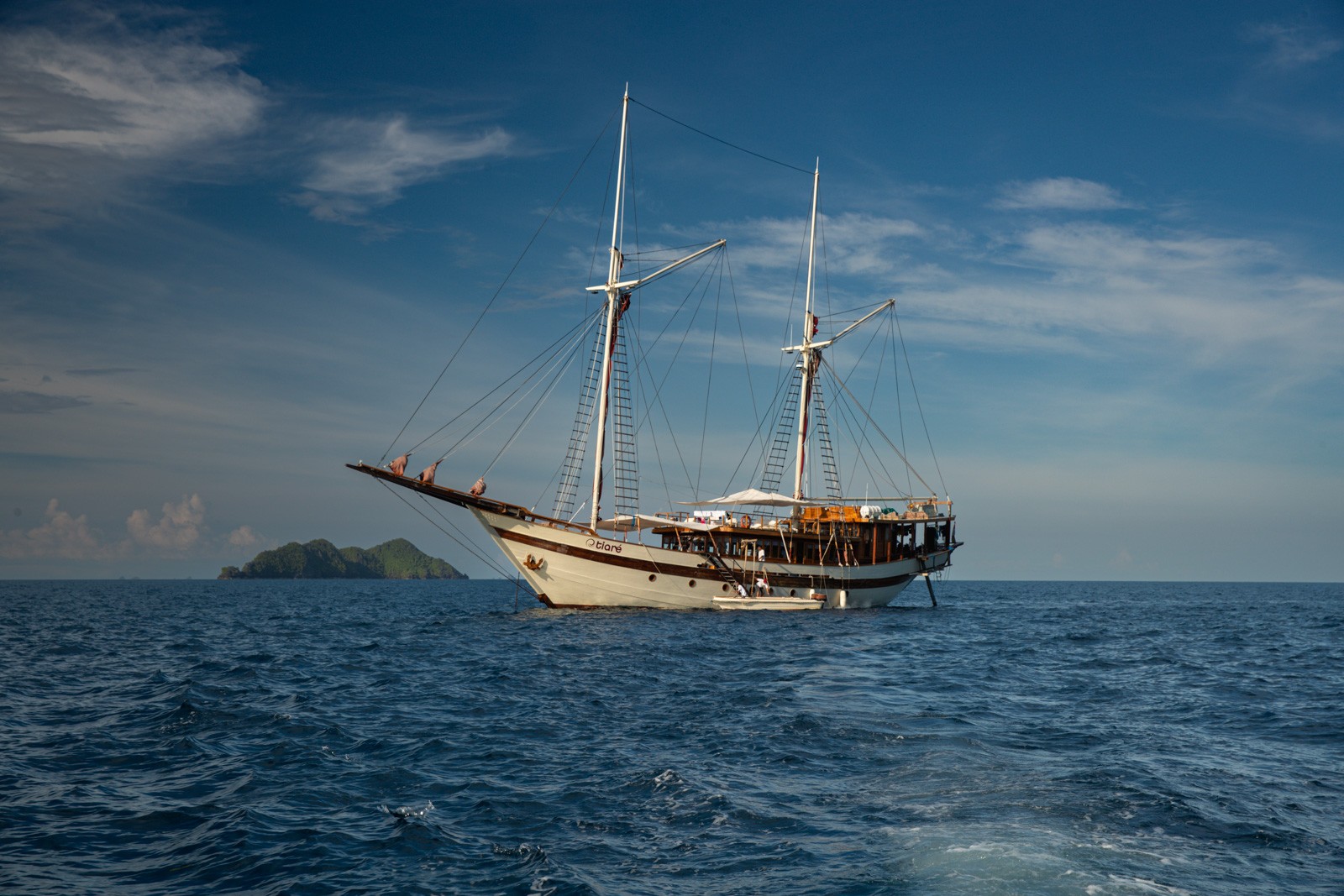
A resort gives you second chances at the same site. A liveaboard gives you range — Piaynemo, the far north, sites a resort day boat cannot reach — but you see each one once. If your best frame usually takes three attempts, stay put.

Wayag from a resort: it is a long day trip, roughly four hours each way in good conditions and longer when it is not. You will be back after dark, and it is worth every hour for the hike and the view over the karst.
04

When do I need to book?

Raja Ampat is busy from October to April and the good resorts fill twelve to eighteen months ahead. The marine park entry permit is bought on arrival and is valid for a calendar year.

05

What is the flight actually like?

Two long-haul legs to Jakarta or Makassar, then an overnight flight to Sorong, then a ferry or speedboat. Build in a buffer day at each end — the domestic connection is the one that goes wrong.

09Who it suits

And who should cheerfully book elsewhere

The right-hand column is the useful one. Misool is expensive enough that going for the wrong reason is an expensive way to find out.

Book it if

  • You want variety inside one week — jetty, mangrove, pinnacle and cleaning station, all inside an hour of the boat
  • You shoot wide and you would rather be surprised than scheduled
  • You are steady in current. It is what brings the fish, and it is not optional here
  • You want a choice of operators at different prices rather than one door at one price

Book elsewhere if

  • You want the most protected reef in Indonesia above everything else. That is Misool — a different week, not a better one
  • Macro is why you travel. It is good here; nobody flies this far for a nudibranch
  • Your dates are fixed and cannot move. This is a monsoon coast and the window is roughly October to April
  • You want to arrive rested. Sorong is two flights and a boat from almost anywhere on earth
10Getting there

Flights, transfers and what to sort first

Everything begins in Sorong. From there you either transfer by boat to a resort in the strait or join a liveaboard at the harbour.

Flights
Sorong (SOQ). Book first. Miss the group boat and a private speedboat can run well over $2,000.
Wayag
Roughly six hours each way by speedboat. Not a day trip — plan it as a multi-day excursion or take a liveaboard.
Resort or boat
A fixed base puts Cape Kri and Manta Sandy in the daily rhythm. A liveaboard trades that for range. Both reviewed above.
Marine park fee
Payable on arrival, separate from the trip cost.
Nitrox
Worth taking for the repetition rather than the depth.
Prototype — not live